
In-Building DAS Is Becoming Core Infrastructure for Healthcare Campuses
Healthcare campuses are expanding in size, complexity, and connectivity demands. Traditional wireless solutions are struggling to keep pace with the realities of modern hospital environments.
In-building Distributed Antenna Systems (DAS) are emerging as a foundational layer of infrastructure, ensuring consistent, reliable cellular coverage across entire facilities.
Organizations investing in DAS are strengthening clinical communication, improving patient experience, and reducing operational risk tied to connectivity gaps.
In-building DAS is becoming core healthcare campus infrastructure because reliable cellular coverage now directly affects clinical communication, patient experience, emergency response, and operational continuity. As hospitals expand, renovate, and support more mobile devices and connected systems, DAS helps eliminate coverage gaps, reduce communication risk, and create a scalable foundation for long-term healthcare connectivity.
In This Guide
Coverage Challenges in Healthcare Facilities
How DAS Solves Indoor Coverage Gaps
Clinical Communication and Indoor Connectivity
Patient Experience and Reliable Cellular Service
From Reactive Fixes to Strategic DAS Infrastructure
Healthcare DAS Frequently Asked Questions
Establishing a Stronger Foundation for Healthcare Connectivity
Healthcare Facilities Create Unique Coverage Challenges
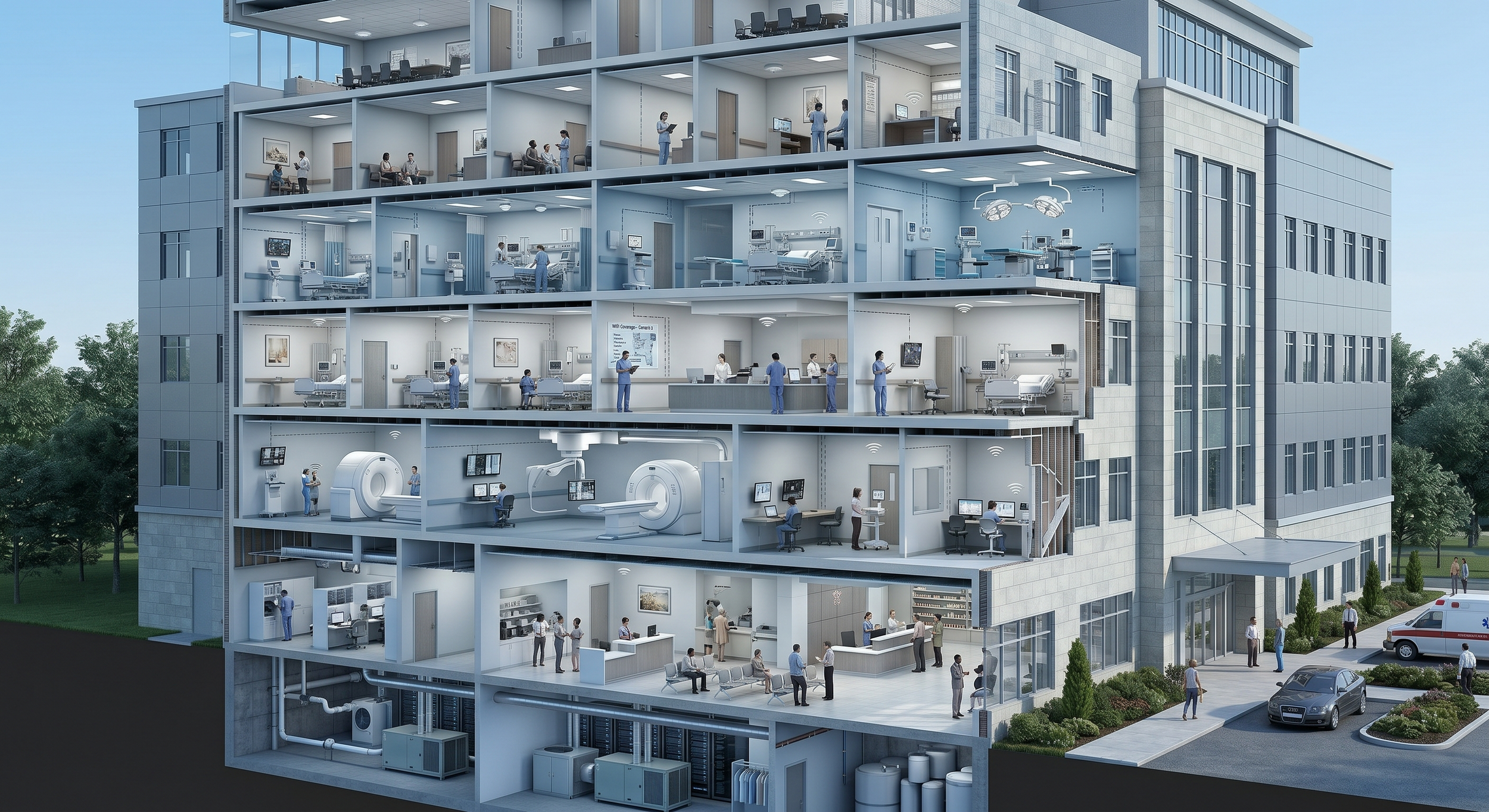
Hospital environments introduce structural and operational barriers that limit traditional wireless performance.
Common challenges include:
Dense construction materials that block or degrade cellular signals
Large, multi-building campuses with inconsistent coverage zones
Critical areas such as radiology, operating rooms, and basements with limited connectivity
High device density from staff, patients, and connected medical equipment
These conditions create dead zones that disrupt communication and workflows, especially in high-acuity environments where in-building wireless is a critical infrastructure layer.
DAS Solves Coverage Gaps at the Infrastructure Level
Distributed Antenna Systems are designed to provide uniform cellular coverage throughout complex indoor environments.
Key capabilities include:
Signal distribution across large facilities and multiple buildings
Consistent coverage in hard-to-reach and high-interference areas
Support for multiple carriers and frequency bands
Scalable architecture that grows with the facility
DAS operates as a dedicated layer of infrastructure, designed specifically to address in-building coverage challenges that Wi-Fi and traditional networks cannot fully solve.
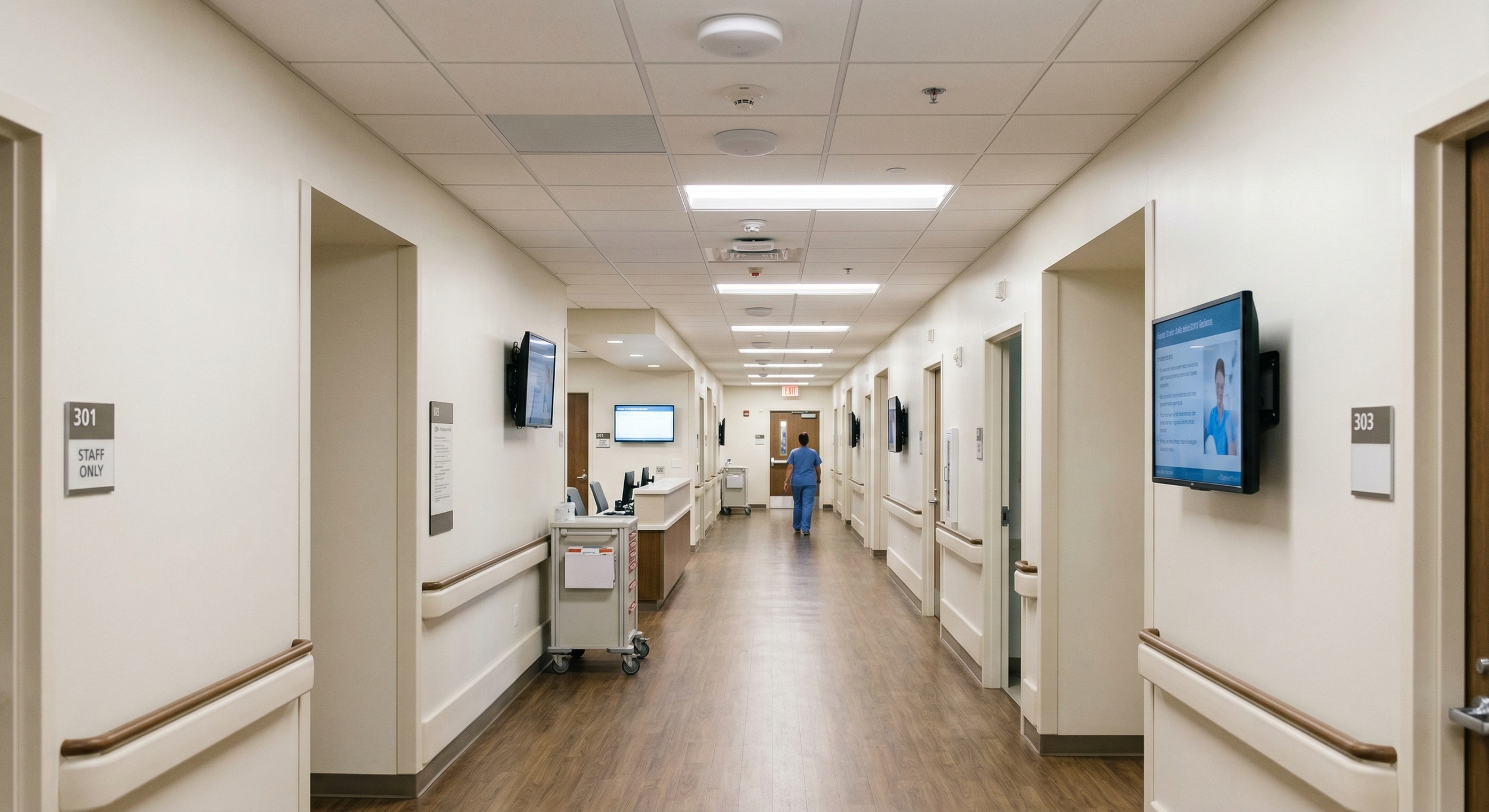
Clinical Communication Depends on Reliable Indoor Connectivity
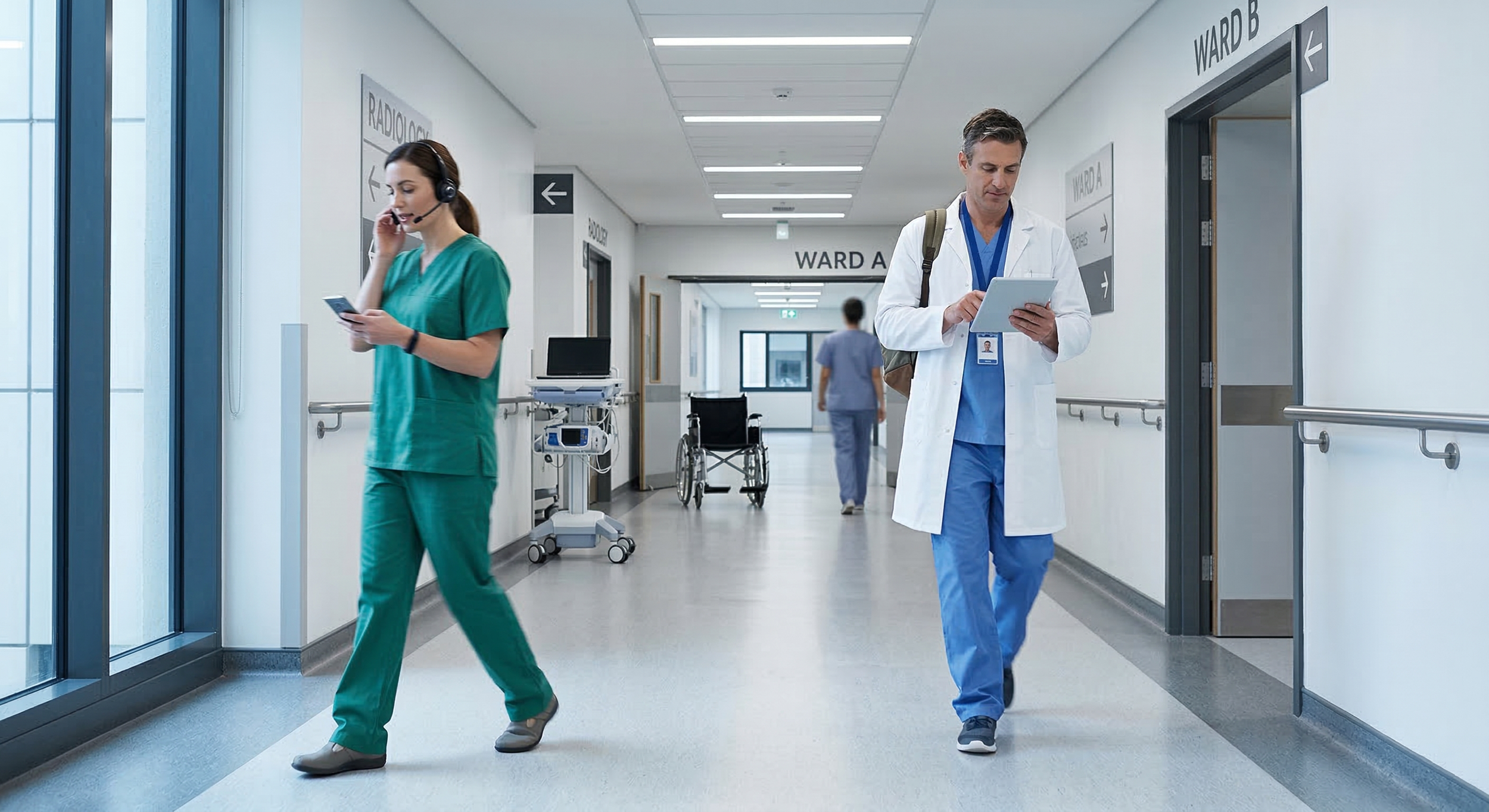
In-building cellular performance directly impacts how care teams communicate and coordinate.
DAS supports:
Real-time communication between physicians, nurses, and support staff
Reliable access to mobile clinical applications and devices
Emergency response systems that depend on uninterrupted connectivity
Reduced reliance on fragmented or overloaded communication channels
Consistent connectivity improves speed, coordination, and decision-making across care teams, reinforcing why healthcare connectivity is now a strategic priority.
Patient Experience Is Increasingly Tied to Connectivity
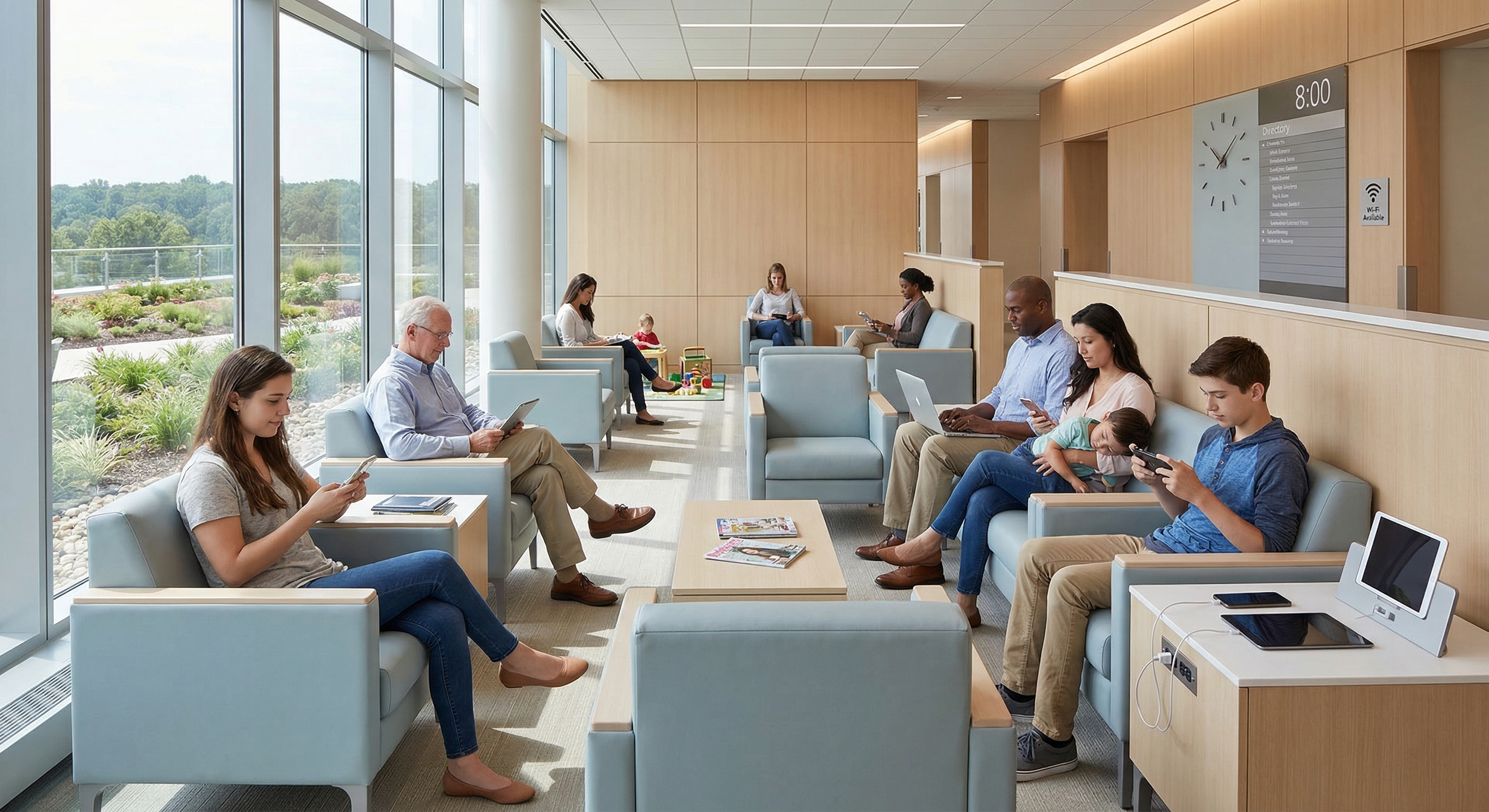
Patients and visitors expect reliable connectivity throughout healthcare facilities.
DAS enables:
Consistent cellular service for communication with family and care teams
Access to digital health tools and patient engagement platforms
Improved satisfaction across inpatient and outpatient experiences
As digital engagement becomes standard, connectivity plays a direct role in patient perception and overall experience.
Explore Healthcare Connectivity Solutions
See how CTS supports hospitals and medical campuses with purpose-built connectivity solutions, including in-building DAS, private wireless networks, public safety DAS, and managed wireless infrastructure.
DAS Supports Long-Term Campus Scalability
Healthcare campuses are continuously evolving through expansion, renovation, and technology adoption.
DAS infrastructure supports:
Seamless coverage across new buildings and facility expansions
Integration with emerging technologies such as IoT and remote monitoring
Long-term scalability without requiring complete system redesign
This positions DAS as a long-term investment aligned with organizational growth.
Moving from Reactive Fixes to Strategic Infrastructure
Many healthcare organizations address connectivity issues reactively, often after performance gaps begin to impact operations.
A proactive DAS strategy allows organizations to:
Identify and eliminate coverage gaps before they affect care delivery
Align connectivity infrastructure with clinical workflows
Reduce operational risk tied to unreliable communication systems
In-building DAS is becoming a standard component of healthcare campus design, not an optional enhancement.
Healthcare DAS Frequently Asked Questions
-
In-building DAS, or Distributed Antenna System, is wireless infrastructure that distributes cellular signal throughout hospitals, medical office buildings, and healthcare campuses. It helps improve coverage in areas where building materials, facility size, interference, or underground spaces can weaken cellular performance.
-
Healthcare campuses often include large buildings, dense construction materials, basements, radiology areas, operating rooms, stairwells, and multi-building environments where cellular signal can be inconsistent. DAS helps reduce dead zones and supports more reliable communication for staff, patients, visitors, and emergency response teams.
-
DAS supports clinical communication by improving indoor cellular coverage for mobile devices, clinical applications, care-team coordination, and emergency communication workflows. Reliable coverage helps reduce delays caused by dropped calls, weak signal areas, or fragmented communication channels.
-
Yes. Wi-Fi supports local network access, while DAS is designed to improve cellular coverage inside a building or campus. Healthcare facilities often need both because clinicians, patients, visitors, connected systems, and emergency services may rely on different types of wireless connectivity.
-
Yes. A properly designed DAS can support multiple wireless carriers and frequency bands. This helps provide more consistent service across the healthcare campus for staff, patients, visitors, contractors, and emergency personnel using different mobile networks.
-
Coverage gaps are often found in basements, stairwells, elevators, radiology areas, operating rooms, emergency departments, parking structures, older building wings, and areas with dense construction materials. Large campuses may also experience inconsistent coverage between connected buildings or newly expanded facilities.
-
A hospital should consider DAS when it experiences weak cellular signal, dropped calls, unreliable mobile app access, poor coverage in critical areas, or inconsistent connectivity across buildings. DAS should also be evaluated during new construction, renovations, campus expansions, and major technology upgrades.
-
DAS provides a scalable infrastructure layer that can be expanded as healthcare campuses grow, renovate, or adopt new technologies. A well-designed system can support future buildings, increased mobile device usage, carrier upgrades, and evolving connectivity demands without requiring a complete redesign.
Establishing a Stronger Foundation for Healthcare Connectivity
Healthcare delivery depends on reliable, consistent communication across every part of the facility.
DAS provides:
Predictable, high-quality cellular coverage across complex environments
Infrastructure aligned with clinical, operational, and patient needs
A scalable foundation for future growth and innovation
As healthcare systems continue to modernize, in-building DAS is playing a central role in shaping how connectivity supports care delivery across the campus.
Related Resources
Healthcare Connectivity Solutions
Explore healthcare connectivity solutions designed to improve in-building wireless coverage, clinical communication, and network performance across medical environments.
Healthcare Connectivity Strategy Guide
Learn why healthcare connectivity is becoming an executive-level priority tied to clinical performance, operational efficiency, patient experience, and long-term infrastructure planning.
Learn how DAS technology delivers reliable cellular connectivity inside large hospitals and complex healthcare facilities.
Healthcare Private 5G Connectivity Guide
Learn how Private 5G technology delivers robust, reliable clinical connectivity inside large hospitals and complex healthcare facilities.
Why Cellular Coverage in Hospitals Is Failing
Learn why hospitals often struggle with weak indoor cellular signal and how building materials affect wireless coverage.
How Hospitals Are Solving Cellular Coverage Problems with DAS and Private Networks
Explore the technologies hospitals are deploying to deliver reliable connectivity across healthcare campuses.
Planning a Healthcare DAS Deployment?
CTS works with healthcare organizations to assess connectivity environments, identify performance gaps, and design infrastructure aligned with clinical operations.
Connect with our team to evaluate your current network and plan your next phase of healthcare connectivity.
CTS designs and deploys healthcare DAS systems for hospitals and medical campuses across the United States.