
MANUFACTURING

Wireless Network Solutions for Manufacturing Facilities
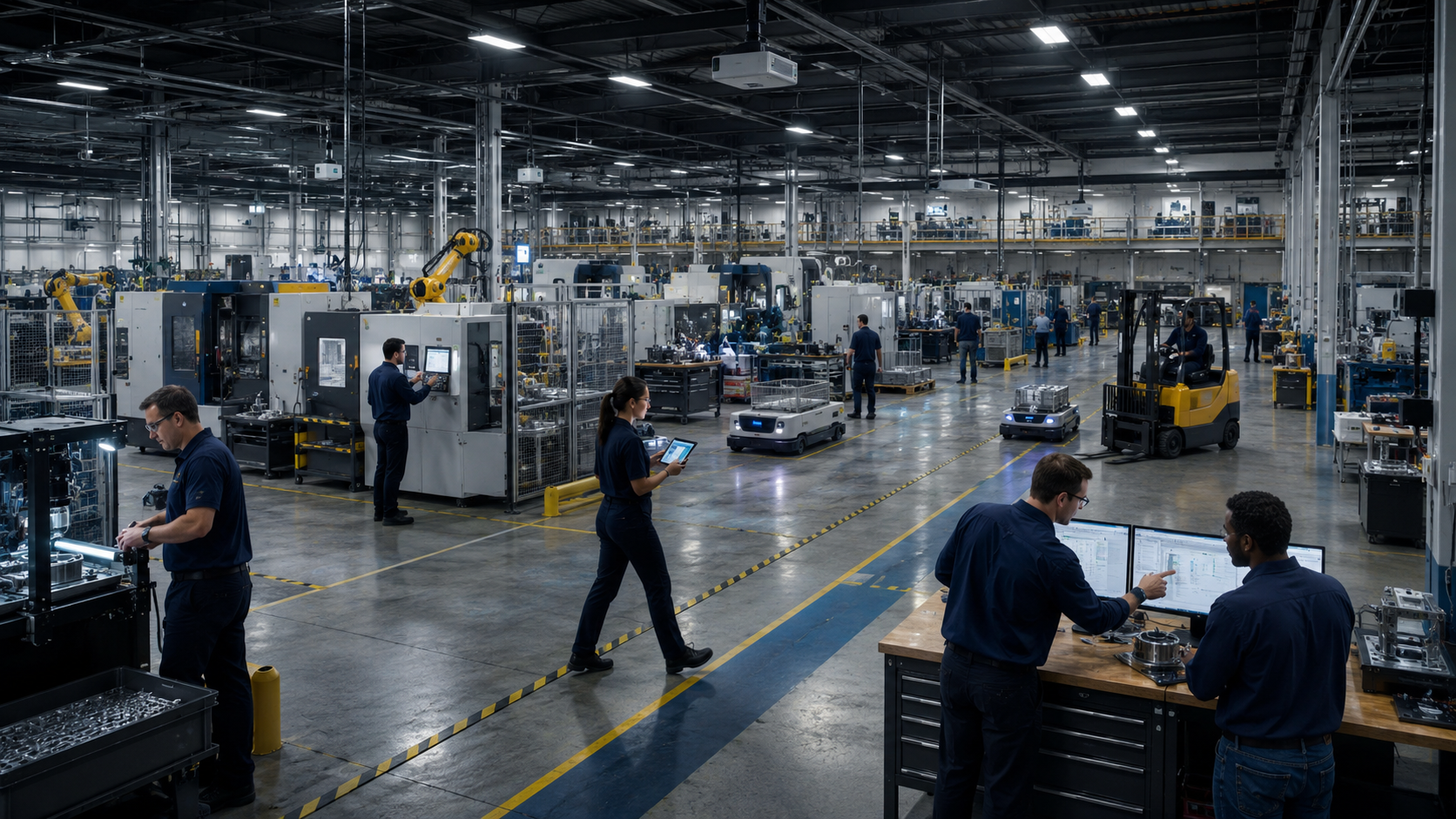
Modern manufacturing facilities run on wireless connectivity. From autonomous mobile robots and IoT sensor arrays on the production floor to first responders who need reliable communication across the entire campus, your facility networks are now as critical as any piece of capital equipment.
CTS designs, deploys, and manages the in-building and campus wireless infrastructure that keeps manufacturing operations reliable, secure, and ready for what comes next, including Industry 4.0 automation, daily workforce connectivity, and long-term facility growth.
20,000+ Wireless Deployments | Carrier-Trusted Partner | Multi-Technology, Single Partner | 24/7 Managed Operations

Proven in Complex Environments
CTS has deployed wireless infrastructure in semiconductor fabrication facilities, automotive plants, and industrial campuses where precision, security, and uptime matter.

Full-Stack Wireless Expertise
Private 5G, DAS, Public Safety DAS, Wi-Fi, and Optical LAN are engineered together for the high-density, security-sensitive demands of manufacturing environments.

SOC 2 Type 2 Certified Security
CTS private networks are built with enterprise-grade security, SIM-based authentication, and 24/7 threat monitoring to help protect operational and information technology systems.

Always-On Operations
CTS Monitoring, Maintenance, Repair, and Dispatch keeps manufacturing wireless infrastructure performing around the clock, with tiered SLAs built for facilities that never stop running.
Why Wireless Infrastructure Is Now Core to Manufacturing Operations
Manufacturing facilities are changing fast. The same plant floor that once relied on fixed ethernet connections and legacy industrial networks is now expected to support autonomous mobile robots, connected IoT sensors, video-based quality inspection systems, real-time asset tracking, and mobile worker tools at the same time. Wireless infrastructure is no longer a facility utility. It is becoming a strategic layer for production, safety, automation, and operational visibility.
Many manufacturers are still operating wireless systems that were designed for a different era, or no unified wireless strategy at all. Wi-Fi alone often cannot support the mobility, latency, and handoff requirements of AGVs and robotics. Legacy cabling makes plant reconfiguration slow and expensive. Public safety radio signals can fail inside large steel and concrete structures. When a critical network goes down in a 24/7 facility, every idle minute has a cost. CTS helps manufacturers plan, deploy, and manage the right mix of wireless technologies for the way their facilities actually operate.
Private Cellular Networks, Private 5G / LTE: The Operational Foundation
Private 5G and LTE networks give manufacturers dedicated, secure wireless infrastructure that is separate from public carrier traffic. Operations teams gain control over bandwidth allocation, device prioritization, latency performance, and security policy. For applications that involve continuous motion, such as AMRs, AGVs, connected tools, mobile worker devices, and sensor-rich production systems, private cellular provides a level of mobility and reliability that traditional wireless networks often cannot match.
CTS deployed private 5G for a top global semiconductor manufacturer at its new fabrication plant, delivering secure, ultra-low latency connectivity that outperformed Wi-Fi for the demands of advanced chipmaking. CTS private networks support industrial IoT, robotics, real-time video inspection, asset tracking, predictive maintenance, and secure OT connectivity. With SIM-based device authentication, network isolation, SOC 2 Type 2 certified security practices, and 24/7 monitoring, CTS helps manufacturers build private wireless networks that can support production without adding unnecessary risk.
DAS: Cellular Coverage Across Your Entire Campus
Even when a facility uses private 5G for operational systems, employees, contractors, visitors, and carrier-dependent applications still need reliable public cellular coverage. Large manufacturing buildings often block outdoor cellular signals because of reinforced concrete, metal-clad walls, high-bay structures, below-grade areas, and expansive multi-building layouts. The result is poor coverage in the places where teams need to communicate, coordinate, and respond.
A Distributed Antenna System distributes multi-carrier 5G and LTE coverage throughout the facility using strategically placed antennas connected to carrier infrastructure. CTS designs neutral host DAS solutions that support all Tier 1 carriers on shared infrastructure, reducing coordination complexity while improving coverage for the entire workforce. For manufacturing campuses with multiple buildings, outdoor logistics areas, yards, and parking zones, CTS can extend coverage across the broader property with the right mix of DAS, outdoor nodes, and carrier coordination.
For manufacturing facilities operating an existing DAS, aging equipment, changing carrier requirements, signal-source transitions, incomplete documentation, and evolving production and workforce connectivity needs can introduce lifecycle and supportability risk even while the system remains operational.

Public Safety DAS, ERRCS: First Responder Coverage Throughout the Facility
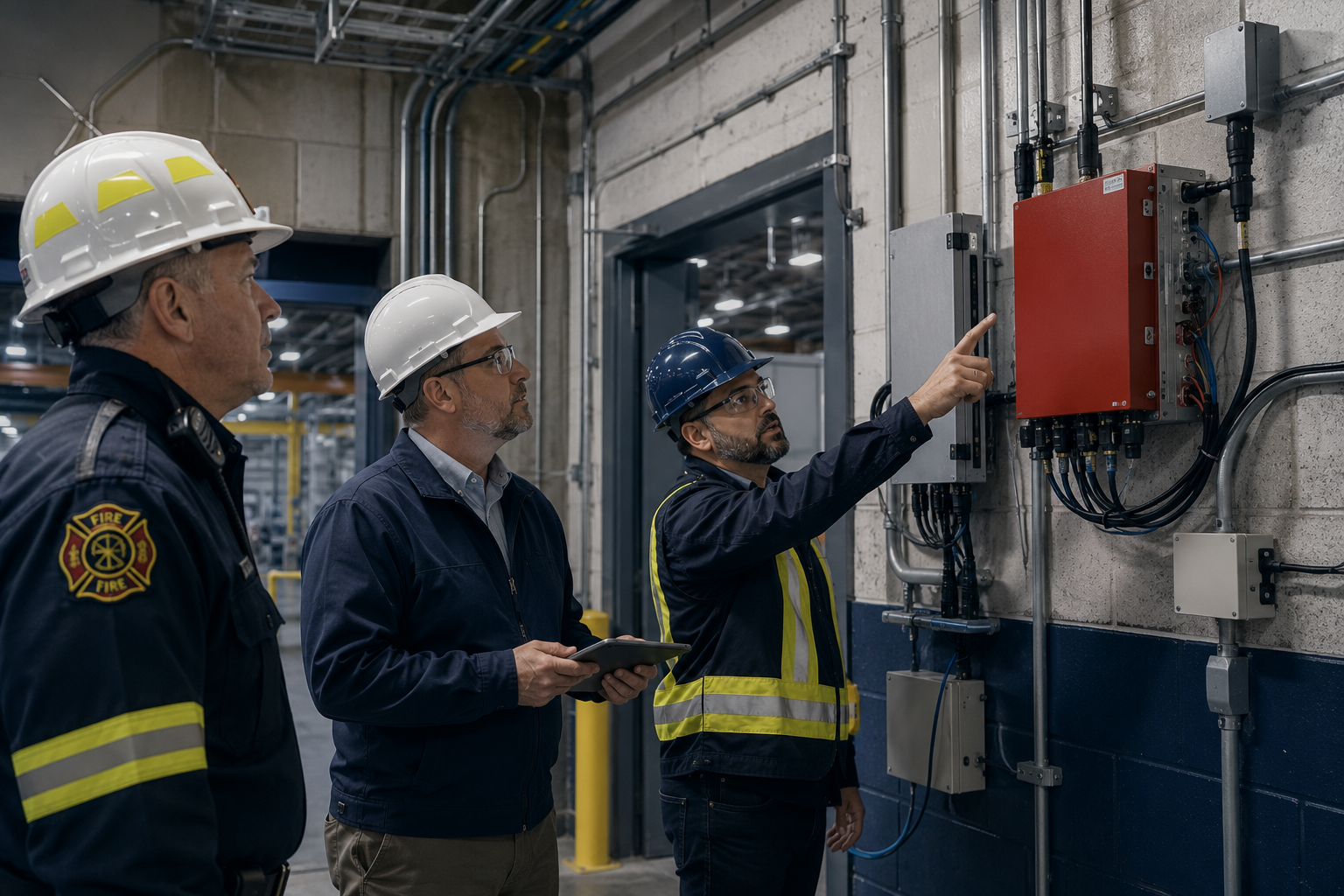
Manufacturing and industrial facilities often present difficult public safety radio environments. Steel, concrete, below-grade areas, multi-story structures, dense machinery, and large footprints can prevent first responder signals from reaching critical areas of the building. These are common building conditions that can increase the likelihood of needing a Public Safety DAS. In an emergency, unreliable radio communication creates risk for responders, employees, and facility operations.
CTS designs and maintains code-compliant Public Safety DAS and Emergency Responder Radio Coverage Systems for manufacturing facilities. Our teams coordinate with local Authorities Having Jurisdiction to meet required signal strength, coverage, testing, and documentation standards. CTS managed services can also support ongoing monitoring and maintenance, helping manufacturers keep these life-safety systems compliant after renovations, equipment changes, or facility expansions.
Wi-Fi: Workforce Connectivity and IT Applications
Private 5G supports the mission-critical operational layer. Enterprise Wi-Fi supports the broader IT and workforce layer, including laptops, tablets, handheld scanners, visitor access, conference rooms, break areas, administrative spaces, and applications that do not require the mobility or latency characteristics of private cellular.
CTS designs and deploys high-density Wi-Fi networks for manufacturing environments, including facilities with metal shelving, machinery, large open production areas, and changing floor layouts. Wi-Fi can operate alongside private 5G, DAS, and Public Safety DAS as part of a coordinated wireless strategy. The goal is clear segmentation, predictable performance, and a network design that gives each application the right connectivity path.

Optical LAN: The Converged Wired Foundation
Every wireless system depends on the wired infrastructure behind it. Antennas, access points, switches, controllers, cameras, sensors, and building systems all need a reliable network foundation. Traditional copper LAN architecture can create challenges in manufacturing environments, including crowded cable pathways, excess power consumption, large network closet requirements, and added complexity during expansions or facility changes.
CTS Optical LAN replaces traditional copper-heavy designs with a fiber-based, software-defined architecture that is simpler to manage and easier to scale. For new construction, major renovations, and smart factory modernization, Optical LAN can reduce the number of network closets, simplify infrastructure planning, and provide centralized management for connected systems across the facility.

Solving Critical Wireless Challenges in Manufacturing
Connecting Robots, AGVs, and Autonomous Systems
Autonomous mobile robots and automated guided vehicles are becoming essential to modern manufacturing operations, but they depend on consistent wireless performance as they move across large, obstacle-filled plant floors. A dropped connection during a robotic task can interrupt a production sequence or create a safety issue.
CTS private 5G networks support the mobility, latency, and seamless handoff requirements of AMRs, AGVs, and other autonomous systems. Networks can be designed for indoor production areas, storage yards, logistics zones, and multi-building campuses so connected systems stay online as they move.
Supporting Predictive Maintenance and IoT Sensor Density
Predictive maintenance depends on continuous data from vibration sensors, temperature sensors, acoustic sensors, machine controls, cameras, and process monitoring systems. When these devices compete for bandwidth or rely on inconsistent coverage, manufacturers lose the visibility needed to identify failures before they affect production.
CTS designs private cellular and supporting network infrastructure for high device density, prioritized traffic, and continuous data flow. This gives manufacturers a stronger foundation for predictive maintenance, quality control, asset tracking, and operational analytics.
Securing OT and IT Networks
Modern manufacturing plants combine operational technology, such as machine controls, PLCs, SCADA, and process systems, with information technology, including ERP, MES, workforce applications, and business systems. As these environments converge, the risk surface grows.
CTS private networks support secure manufacturing connectivity through SIM-based authentication, network isolation, policy control, and 24/7 monitoring. SOC 2 Type 2 certified practices provide documented security governance for manufacturers that need to protect production systems, sensitive data, and connected devices.
Enabling Plant Reconfiguration Without Rewiring
Production layouts change. Manufacturers add new lines, reconfigure equipment, update processes, and expand capacity. Fixed ethernet wiring can slow those changes and add cost every time the floor plan shifts.
Wireless-first infrastructure gives manufacturing teams more flexibility. CTS private cellular and Wi-Fi solutions allow facilities to support connected equipment, mobile tools, sensors, and production systems without pulling cable for every operational change. That flexibility helps manufacturers respond faster to demand, equipment updates, and process improvements.
Managing Always-On Operations Without an In-House Wireless Team
Manufacturing networks operate around the clock. Network issues do not wait for business hours, and most IT or operations teams do not have the in-house wireless expertise, monitoring tools, or field service capacity to manage a complex multi-technology environment alone.
CTS MMRD provides 24/7 NOC monitoring, preventive maintenance, remote diagnostics, repair coordination, and field dispatch across wireless infrastructure. Tiered SLA options help manufacturers align support levels with operational criticality, from standard maintenance needs to facilities that require faster response for production-impacting events.
Maintaining First Responder Radio Coverage
Industrial facilities can be difficult environments for first responder communication. Thick construction materials, high-bay spaces, dense equipment, below-grade areas, and large campuses all affect radio signal performance. Public safety DAS compliance is not a one-time checkbox, especially in facilities that renovate, expand, or move equipment over time.
CTS designs Public Safety DAS systems for the compliance and RF challenges of industrial environments. CTS MMRD can provide ongoing maintenance and operational support so systems remain ready for inspections, re-testing, and emergency response needs.
REAL-WORLD RESULTS
How CTS Helps Manufacturers Build the Networks That Power Industry 4.0
Private 5G for a Global Semiconductor Manufacturer
A top global semiconductor manufacturer selected CTS to deploy a private 5G network for a new fabrication plant, one of the most connectivity-demanding manufacturing environments in any industry. Semiconductor fabrication requires secure, low-latency, interference-resistant wireless connectivity to support precision automation, process monitoring, and controlled facility operations.
CTS delivered a private 5G deployment that outperformed Wi-Fi alternatives on critical performance requirements and gave the facility a secure, scalable wireless foundation for advanced manufacturing.

Key Outcomes
Ultra-low latency private 5G network supporting precision manufacturing automationSIM-authenticated architecture protecting sensitive fabrication IP and process dataScalable infrastructure designed to grow with facility capacity and future use cases
Supporting Manufacturing Operations Across the United States
CTS has deployed wireless infrastructure in manufacturing and industrial environments across major U.S. production regions. This experience includes semiconductor fabrication facilities, automotive plants, logistics campuses, and pharmaceutical manufacturing sites.
Our work spans the full range of industrial environments, from high-precision clean room facilities and metal-dense plant floors to multi-building campuses and below-grade industrial spaces where standard wireless approaches fail.

Electronics and Semiconductor Manufacturing
CTS supports high-precision environments where low latency, security, and interference control are critical to production.
Automotive and Industrial Manufacturing
Wireless infrastructure can support connected tools, mobile assets, worker communication, production systems, and campus-wide cellular coverage.

Logistics, Distribution, and Warehousing
Large facilities require reliable connectivity for scanners, automation systems, yard operations, inventory visibility, and workforce communication.

Food and Beverage / Pharmaceutical
CTS helps facilities plan secure, reliable wireless infrastructure for regulated production environments, connected equipment, and operational monitoring.
Why Manufacturers Choose CTS

Purpose-Built for Industrial Environments
CTS engineers wireless networks for the RF conditions found in manufacturing, including metal structures, high-bay spaces, dense machinery, outdoor campus areas, and complex floor layouts.
Full Technology Stack, Single Partner
Private 5G, DAS, Public Safety DAS, Wi-Fi, and Optical LAN / SD-LAN can be designed, deployed, and managed together, reducing the coordination burden of multi-vendor wireless environments.
SOC 2 Certified Security
CTS private networks are built with documented security practices, SIM authentication, network isolation, and 24/7 monitoring to support OT and IT governance requirements.

MMRD: Always-On Managed Operations
CTS MMRD provides 24/7 NOC monitoring, preventive maintenance, repair, and field dispatch with tiered SLA commitments aligned to continuous manufacturing operations.

Lifecycle Partnership from Assessment Through Operations
CTS supports manufacturing facilities from wireless assessment and RF modeling through design, deployment, commissioning, managed services, and long-term lifecycle planning.
Vendor and Carrier Neutral
CTS designs for facility performance and business requirements, not vendor preference. DAS solutions can support all Tier 1 carriers on shared infrastructure.
Connectivity Planning Across the Facility Lifecycle
Manufacturing wireless requirements evolve as facilities are built, expanded, reconfigured, and operated. CTS supports every phase with planning, engineering, deployment, and managed services that align wireless infrastructure with production needs.

Plan
Assess facility RF environments, coverage gaps, automation roadmaps, OT and IT security requirements, public safety compliance obligations, and long-term capacity needs before infrastructure decisions are made.

Design
Engineer an integrated wireless architecture that may include Private 5G, DAS, Public Safety DAS, Wi-Fi, and Optical LAN, tailored to facility layout, production workflows, security requirements, and future automation plans.

Deploy
Coordinate installation, carrier requirements, AHJ documentation, commissioning, and project timelines so networks are ready to support production operations on schedule.
Manage
Maintain continuous performance through CTS MMRD, including 24/7 NOC monitoring, preventive maintenance, repair, and field dispatch across wireless technologies.
DAS Lifecycle Risk
Is Your Existing Manufacturing DAS Still Supportable?
Manufacturing DAS infrastructure can remain operational even as equipment ages, carrier requirements change, signal-source strategies evolve and facility connectivity requirements increase. In 24/7 production environments, those changes can create lifecycle and supportability risk long before a system stops working. A DAS Lifecycle Risk Review helps facility, IT and operations teams understand current supportability, identify potential risk and determine the appropriate next step for an existing system.
Manufacturing Connectivity Resources
Explore resources that help manufacturing teams evaluate wireless connectivity strategies for production operations, automation, worker communication, managed services, and future-ready network infrastructure.
-
Connectivity Options for Manufacturing Digital Transformation
Compare wireless network options for modern manufacturing environments, including private cellular, Wi-Fi, DAS, and supporting infrastructure.
-

Private Cellular Networks for Manufacturing: Use Cases and Deployment Guide
Learn how private 5G and LTE networks support automation, robotics, industrial IoT, connected workers, and secure operational connectivity.
-
How One Manufacturer Improved Operations with Private 5G
See how private cellular can support manufacturing performance when Wi-Fi cannot meet the mobility, latency, or security requirements of critical applications.
-

Private Cellular Networks for Manufacturers: Benefits and Implementation
Review the planning, design, deployment, and operational considerations involved in private cellular network adoption.
Latest Insights
Explore guidance on in-building cellular performance, DAS lifecycle planning and wireless infrastructure for manufacturing and industrial environments.
Manufacturing Wireless Connectivity FAQs
-
A private 5G network is a dedicated cellular network deployed for exclusive use by a facility operator. In manufacturing, private 5G is often used for robotics, AGVs, industrial IoT, connected worker tools, and time-sensitive automation because it provides stronger mobility, lower and more consistent latency, SIM-based authentication, and dedicated capacity that is not shared with guest or employee devices.
-
Yes. In many facilities, they should. Private 5G is best suited for mission-critical operational use cases such as robotics, AGVs, industrial IoT, and mobile automation. Wi-Fi supports the broader IT layer, including laptops, tablets, scanners, administrative areas, and visitor access. CTS designs segmented environments where both technologies serve the applications best suited to them.
-
Many large manufacturing facilities must meet NFPA, IFC, and local AHJ requirements for Emergency Responder Radio Coverage Systems. Requirements depend on building size, occupancy, construction materials, and local jurisdiction. Because steel, concrete, below-grade areas, and large footprints often block first responder radio signals, many industrial facilities require a purpose-designed Public Safety DAS.
-
Private 5G can support autonomous mobile robots, automated guided vehicles, industrial IoT sensors, predictive maintenance, video-based quality inspection, real-time asset tracking, connected worker tools, indoor and outdoor location services, and secure OT connectivity. It is especially valuable for applications that require mobility, low latency, strong security, and predictable performance.
-
CTS MMRD, which stands for Monitoring, Maintenance, Repair, and Dispatch, provides continuous NOC monitoring, automated alert response, preventive maintenance, remote diagnostics, and field technician dispatch when onsite support is needed. Tiered SLA options allow manufacturers to align response commitments with operational requirements and uptime expectations.
-
CTS private cellular networks are commonly deployed using CBRS spectrum, which supports dedicated private LTE and private 5G networks in the 3.5 GHz band. CBRS provides a practical path for industrial facilities that need secure, high-performance wireless connectivity without purchasing traditional dedicated spectrum licenses.
-
Yes. CTS designs wireless architectures for multi-building industrial campuses, outdoor storage areas, logistics yards, parking facilities, and indoor production spaces that need coordinated coverage. Planning may include 3D RF modeling, private cellular, DAS, Wi-Fi, outdoor nodes, and supporting wired infrastructure depending on facility requirements.
-
CTS MMRD services can support qualified third-party wireless infrastructure after an initial inspection and operational assessment. This helps manufacturing facilities consolidate monitoring, maintenance, repair, and field dispatch under a single managed services partner, even when existing systems were deployed by another provider.
Ready to Build the Wireless Foundation Your Facility Needs?
Whether you are planning a new facility, upgrading legacy infrastructure, integrating private 5G for the first time, or looking for a managed operations partner for existing wireless systems, CTS can support your manufacturing wireless strategy from assessment through long-term operations.
CTS brings the technology portfolio, industrial deployment experience, carrier relationships, security practices, and 24/7 managed services needed to help manufacturing facilities improve coverage, support automation, maintain compliance, and keep operations connected.