
MANAGED WIRELESS INFRASTRUCTURE
Network-as-a-Service for Enterprise Wireless Infrastructure

CTS designs, deploys, and manages critical wireless infrastructure through a predictable service model. From Neutral Host DAS for in-building cellular coverage to private cellular and managed Wi-Fi, CTS takes responsibility for the network from initial assessment and deployment through monitoring, support, and lifecycle management.
End-to-End Delivery • Predictable Service Model
24/7 Managed Operations • Lifecycle Management
QUICK ANSWER
WHAT IS NETWORK AS A SERVICE
Network-as-a-Service, or NaaS, is a managed delivery and operating model for enterprise network infrastructure. Instead of treating wireless connectivity as a one-time capital project that the organization must operate and maintain itself, CTS can design, deploy, manage, support, and evolve the network as an ongoing service.
NaaS is not a specific network technology. Depending on the facility and business requirements, the model can be applied to Neutral Host DAS, private cellular, managed Wi-Fi, and other qualified network infrastructure.
For many enterprises and property owners, the value is greater than financing alone. Network-as-a-Service creates one accountable partner for network performance, reduces the burden of coordinating multiple technology and service providers, provides a more predictable operating model, and incorporates ongoing support and lifecycle planning from the beginning.
One Partner. One Service Model. Full Network Lifecycle.

End-to-End Delivery
CTS manages the network from assessment and engineering through installation, commissioning, and ongoing operations.

Predictable Operating Model
Structure critical connectivity as a recurring service where appropriate, helping organizations align network investment with operating and capital priorities.

Operational Accountability
24/7 monitoring, maintenance, troubleshooting, repair, and defined service restoration processes give organizations a clear point of accountability after deployment.

Lifecycle Management
CTS helps manage network performance, technology changes, carrier requirements, and future upgrades so connectivity is treated as an operational infrastructure lifecycle—not a one-time project.
Why Organizations Are Rethinking How Wireless Infrastructure Is Owned and Operated
Enterprise wireless has become critical to how people work, communicate, and move through a facility. But delivering reliable connectivity increasingly requires coordination across network design, construction, technology platforms, service providers, carriers, monitoring, maintenance, and future upgrades.
For many organizations, the challenge is no longer simply building the network. It is managing the complexity that comes with operating it over time.
Reduce Operational Complexity
Wireless infrastructure can involve multiple technologies, vendors, contractors, and carrier stakeholders. A managed service model gives organizations one partner to coordinate the network from planning and deployment through ongoing operations.
Establish Clear Accountability
Traditional infrastructure projects often leave ownership and support responsibilities fragmented after deployment. Network-as-a-Service creates a clearer operating model, with CTS accountable for monitoring, maintenance, troubleshooting, restoration, and ongoing network performance.
Plan for the Technology Lifecycle
Wireless infrastructure continues to evolve after installation. CTS helps organizations manage changing technology requirements, network performance, carrier considerations, system upgrades, and long-term lifecycle planning as part of the service relationship.
Create Greater Financial Flexibility
Where appropriate, Network-as-a-Service can also reduce the need for a large upfront capital investment and shift infrastructure costs toward a more predictable recurring operating model. Commercial structures vary by project, but the financial model can provide additional flexibility alongside the operational benefits.

Neutral Host DAS: A Turnkey NaaS Solution for In-Building Cellular
For organizations that need reliable indoor cellular coverage, Neutral Host DAS is one of the most powerful applications of the Network-as-a-Service model.
CTS provides the complete managed solution—from initial assessment and system design through carrier coordination, signal source, DAS infrastructure, deployment, monitoring, support, and lifecycle management. Rather than requiring the property owner or enterprise to manage a complex network of vendors, technologies, and carrier relationships, CTS serves as the single accountable partner for the in-building cellular environment.

Complete Turnkey Delivery
CTS manages the full solution, including system design, signal source, DAS infrastructure, installation, integration, testing, commissioning, and ongoing operations.

Multi-Carrier Connectivity
A shared Neutral Host platform is designed to support participating wireless carriers through a common in-building infrastructure, helping deliver a consistent cellular experience throughout the facility.

Carrier Coordination
CTS manages the technical and operational coordination required to bring participating carriers onto the system, reducing the burden on property owners and enterprise teams.

Ongoing Network Accountability
The service continues after deployment with 24/7 monitoring, maintenance, troubleshooting, restoration support, performance management, and lifecycle planning.
One Partner Across the Network Lifecycle
From initial design through ongoing operations and support, CTS manages every stage of the network lifecycle through one accountable service model.
Design
Assess requirements, benchmark coverage, evaluate architectures, engineer the solution, and develop the service and signal-source strategy.
Explore DesignBuild
Install, integrate, test, commission, and document the network, including carrier implementation and signal-source integration where applicable.
Explore BuildRun
Monitor network health and performance 24/7, optimize operations, and manage the infrastructure throughout the service term.
Explore RunSupport
Troubleshoot issues, coordinate remote and onsite service, manage repairs and spares, and restore network performance against defined service requirements.
Explore SupportWhy Organizations Choose a Managed Wireless Model
Network-as-a-Service gives organizations a way to simplify how critical wireless infrastructure is delivered, operated, and maintained over time. Instead of managing a collection of vendors, technologies, and support relationships internally, enterprises can rely on one accountable partner and a service model built around long-term network performance.
Reduce Operational Burden
Simplify the coordination required across network design, deployment, technology partners, carriers where applicable, monitoring, maintenance, and ongoing support. CTS manages the moving parts so internal teams can stay focused on their core operations.
Create Clear Accountability
Establish one partner responsible for the network beyond initial deployment. CTS provides ongoing monitoring, management, troubleshooting, service restoration, and lifecycle support through a clearly defined operating model.

Maintain Technology Readiness
Wireless requirements continue to evolve after a network goes live. CTS helps manage performance, changing technology needs, system upgrades, and lifecycle planning so infrastructure can evolve with the facility and the people who depend on it.
Preserve Financial Flexibility
Where appropriate, Network-as-a-Service can reduce large upfront capital requirements and create a more predictable recurring cost structure. This gives organizations additional flexibility in how they fund critical connectivity while retaining the operational benefits of a fully managed service.
Other Networks Delivered as a Service
Network-as-a-Service is a delivery and operating model, not a single network architecture. Beyond Neutral Host DAS, CTS can apply a managed-service approach to other enterprise connectivity environments based on the network requirements, operating model, and commercial structure.

Private Cellular Networks
Managed private LTE and 5G infrastructure for operational mobility, automation, secure connectivity, and enterprise applications.

Managed Wi-Fi
Enterprise Wi-Fi delivered with ongoing monitoring, management, optimization, and support for employee, guest, and operational connectivity.

Other Managed Infrastructure
CTS can structure ongoing operations, maintenance, and lifecycle support around other qualified wireless and network infrastructure based on project requirements.
Built for Environments Where Connectivity Is Operationally Critical
Network-as-a-Service is especially valuable in facilities where wireless connectivity affects the tenant, customer, employee, or operational experience—and where managing complex network infrastructure internally creates an unnecessary burden.
Commercial Real Estate
Deliver reliable in-building connectivity while simplifying the operational and lifecycle responsibilities placed on property and facilities teams.
Explore Commercial Real EstateHealthcare
Support mobile communications and connected workflows in demanding clinical and operational environments.
Explore HealthcareHigher Education & Campuses
Manage connectivity across complex, multi-building environments with diverse user and operational requirements.
Explore EducationManufacturing & Logistics
Support connected operations, mobile workforces, automation, and increasingly data-driven industrial facilities.
Explore ManufacturingHospitality & Large Venues
Deliver reliable connectivity for guests, employees, operations, and high-density environments.
Explore HospitalityBuilt to Take Responsibility for the Network—Not Just Deliver the Project
Network-as-a-Service only works when the provider has the engineering depth, deployment capability, operational infrastructure, and long-term support resources to remain accountable after the network goes live.
Full-Lifecycle Accountability
CTS does not hand off responsibility when construction is complete. Design, deployment, monitoring, optimization, maintenance, support, and lifecycle planning can remain within one managed service relationship.
Carrier & Wireless Infrastructure Expertise
Neutral Host NaaS requires more than managed IT services. CTS combines RF engineering, carrier coordination, signal-source strategy, and in-building wireless expertise to manage carrier-grade indoor connectivity.
Operations Built for Ongoing Performance
24/7 network monitoring, preventive maintenance, troubleshooting, field service, repair coordination, and lifecycle management support network performance throughout the service term.
Resources and Insights
Explore how CTS approaches turnkey in-building cellular, managed wireless operations, and the long-term responsibilities that come with treating connectivity as an ongoing service.
-
Data Sheet
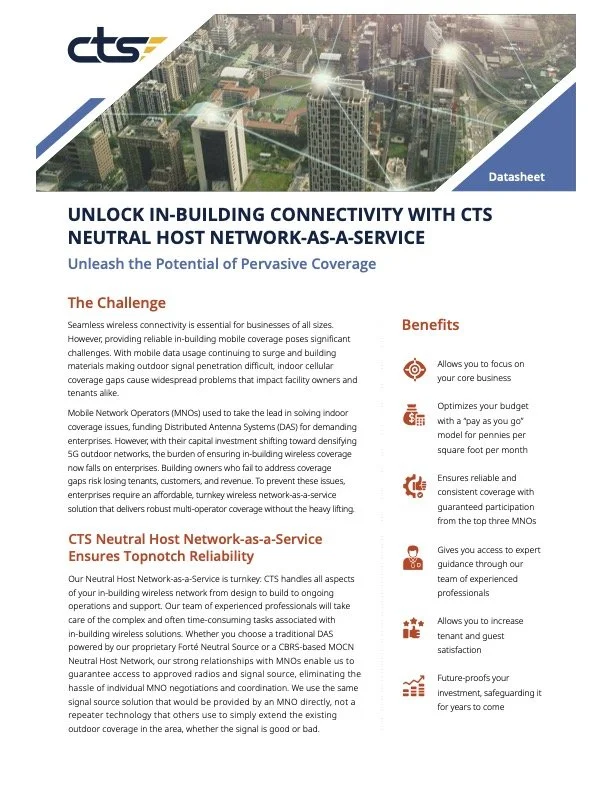
See how CTS delivers turnkey in-building cellular through a managed service model that brings network delivery, carrier coordination, operations, support, and lifecycle management into one program.
-

Guide
Explore how Neutral Host as-a-Service works, the architectures that can support shared indoor mobile coverage, and the factors enterprises should evaluate when choosing the right delivery model.
-
Insight
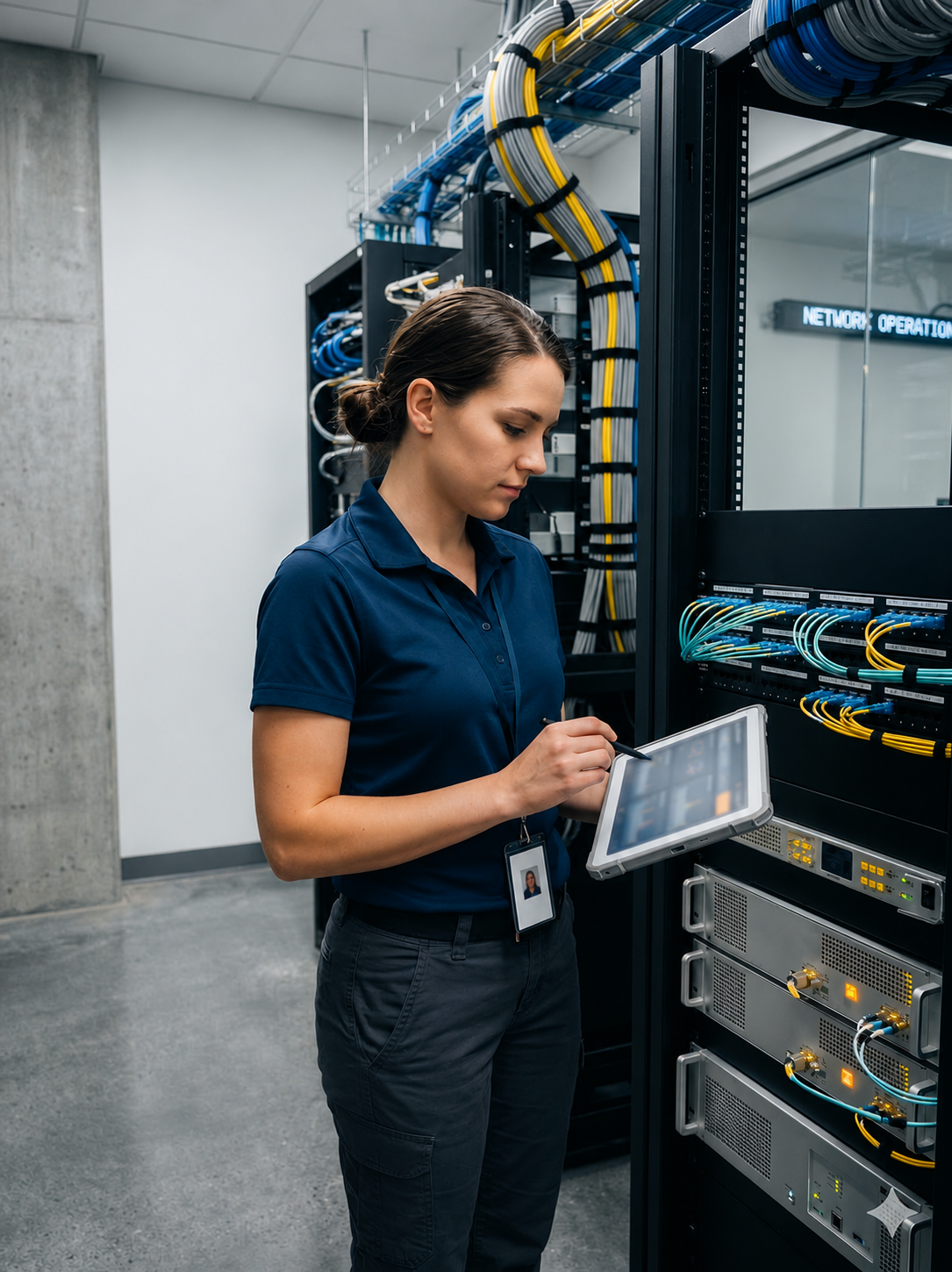
Learn how commercial real estate owners can replace fragmented, break-fix wireless support with a consistent operating model for monitoring, maintenance, repair, dispatch, and lifecycle planning.
Network as a Service Frequently Asked Questions
-
Network-as-a-Service, or NaaS, is a delivery and operating model in which CTS designs, deploys, manages, supports, and helps evolve critical network infrastructure as an ongoing service. Rather than treating connectivity as a one-time infrastructure project, organizations gain a long-term partner responsible for network performance, operations, support, and lifecycle management.
-
The specific scope depends on the network and facility requirements, but CTS can provide assessment, engineering, network design, equipment, deployment, integration, monitoring, maintenance, troubleshooting, repair, lifecycle planning, and ongoing support through a managed service relationship.
For Neutral Host NaaS, CTS can provide the complete turnkey solution, including the signal source, DAS infrastructure, carrier coordination, deployment, monitoring, support, and lifecycle management.
-
No. Network-as-a-Service is the broader managed-service model. Neutral Host as-a-Service is one application of that model, focused specifically on delivering shared in-building cellular coverage for participating mobile carriers.
CTS can also apply a managed-service approach to private cellular, Wi-Fi, and other qualified network infrastructure based on the connectivity objective and project requirements.
-
Yes. Neutral Host NaaS can be designed to support multiple participating wireless carriers through a shared in-building cellular platform. CTS manages the carrier coordination, signal-source strategy, network deployment, and ongoing operations required for the solution.
Carrier participation and implementation requirements vary by project and location.
-
Yes. CTS Neutral Host NaaS is designed as a turnkey managed offering that can include the carrier signal source along with the DAS infrastructure, engineering, carrier coordination, deployment, monitoring, maintenance, and lifecycle support.
This allows the property owner or enterprise to work with CTS as one accountable partner rather than separately sourcing and managing the network infrastructure and signal-source components.
-
Potentially. NaaS does not have to begin with a new network deployment. CTS can evaluate existing infrastructure, network condition, performance requirements, technology lifecycle, and operational needs to determine whether an existing system can transition into an ongoing managed-service model.
-
CTS can provide 24/7 monitoring, network management, preventive maintenance, troubleshooting, remote and onsite support, repair coordination, spares management, performance optimization, service restoration, and lifecycle planning throughout the service term.
The goal is to maintain clear operational accountability after deployment instead of leaving the customer to manage the network as a completed capital project.
Talk with CTS about your coverage objectives, existing infrastructure, operational requirements, carrier needs, and long-term support model. We’ll help determine whether Network-as-a-Service—and which network architecture—is the right fit for your facility.
Build the Right Service Model for Your Facility
CTS can help assess Neutral Host DAS, private cellular, managed Wi-Fi, and other qualified managed infrastructure options based on your technical, operational, and commercial requirements.