
IN-BUILDING CELLULAR DAS & SMALL CELL SOLUTIONS
Carrier-Grade DAS and Small Cell Networks, Designed, Deployed, and Managed by CTS

Reliable indoor cellular coverage starts with an honest assessment of the building, not a predetermined technology. CTS designs and deploys Distributed Antenna Systems for enterprise buildings where multi-carrier, multi-zone cellular infrastructure is required, and evaluates small cell architectures for the specific circumstances where they are the better fit. Vendor-agnostic. Architecture-neutral. 5G-ready. Fully managed.
20,000+ Deployments • All Three Major Carriers
Fully Managed DAS & Small Cell Networks
QUICK ANSWER
WHAT ARE DAS AND SMALL CELL SOLUTIONS?
A Distributed Antenna System, or DAS, is a network of antennas connected to a central signal source that distributes cellular signal throughout a building, campus, or venue. DAS does not create carrier signal on its own. It distributes signal from a source such as an off-air repeater, a carrier-provided radio, or a managed service like CTS Forté Neutral Source.
A small cell is a compact, self-contained cellular radio that acts as its own signal source. Small cells can serve as a standalone in-building coverage architecture for the right building environments, or as a signal source that feeds a DAS. CTS deploys both, with DAS as the primary solution for most enterprise buildings, and recommends the right architecture based on each facility’s coverage goals, carrier requirements, building complexity, and operational needs.
For a deeper explanation of DAS components, architectures, signal sources, and design considerations, read our Distributed Antenna Systems Guide.

20,000+ Wireless Deployments
More in-building wireless networks designed, deployed, and managed than any other neutral-host provider in the U.S., with DAS at the core of most enterprise deployments.

All Three Major Carriers
AT&T, Verizon, and T-Mobile. CTS manages carrier coordination, approvals, and ongoing compliance across all three operators on every project.

Vendor and Architecture Neutral
CTS evaluates every in-building wireless option before recommending one. You get the right solution for the building, not the one that is easiest to sell.

Fully Managed, 24/7
CTS’s Network Operations Center monitors your network around the clock with proactive maintenance, carrier coordination, and lifecycle management from deployment through upgrade cycles.
Why In-Building Cellular Is a Building Owner’s Problem to Solve
Seventy to eighty percent of mobile data usage happens indoors. But most buildings were not designed with cellular coverage as a structural consideration. Modern construction materials such as steel, concrete, energy-efficient Low-E glass, and masonry attenuate outdoor macro signals before they reach the interior floors, stairwells, parking structures, and conference rooms where occupants actually work. That is why cellular signal fails indoors in buildings that otherwise appear well connected from the outside.
The result is predictable: dropped calls, dead zones, and degraded data performance in high-density areas. These are not carrier problems alone. They are building infrastructure problems, and the building owner is accountable for solving them.
Enterprise tenants now treat cellular connectivity as a baseline requirement alongside power, HVAC, and fiber. Healthcare facilities depend on reliable cellular for clinical staff, patient communication, and connected medical devices. Warehouses and industrial facilities require it for mobile workforce tools, IoT sensors, asset tracking, and safety communications.
Common triggers include:
Tenant complaints about cellular dead zones during lease negotiations or post-occupancy
A carrier has declined to fund or directly provide a signal source for the building’s DAS
A new construction or major renovation with a connectivity requirement tied to occupancy
An existing DAS that is aging, no longer carrier-supported, or may not meet current carrier and 5G requirements
A warehouse or industrial facility where outdoor macro signals do not penetrate

Distributed Antenna Systems, The In-Building Cellular Standard for Enterprise Buildings
For most enterprise buildings, a Distributed Antenna System is the right answer. DAS brings cellular signal closer to users by distributing it from a central headend through a network of antennas placed throughout the building: every floor, elevator lobby, parking structure, interior corridor, and enclosed space that an outdoor macro signal cannot reliably reach.
DAS supports all three major carriers on shared infrastructure, scales as occupancy and device density grow, and gives building owners a managed cellular platform designed for long-term operation. It is the architecture CTS designs and deploys most frequently, and for good reason.
How DAS Works
DAS has four main layers: the signal source, the headend and central equipment, the distribution network, and the indoor antennas placed throughout coverage zones.
Signal Source
The signal source is the carrier radio that feeds the system.
Headend
The headend receives, processes, and manages that signal before distribution.
Distribution
The distribution network uses fiber, coax, and remote units to move signal through the facility.
Antenna
The antennas then deliver that carrier signal into the areas where users need service.
The key point: DAS does not generate carrier signal on its own. It distributes signal from a source. Signal source strategy is therefore one of the most consequential decisions in any DAS project. It determines the quality, capacity, and reliability ceiling of the entire system.
A well-designed DAS can support multi-carrier coverage across complex spaces, including high-rise office towers, healthcare campuses, universities, logistics centers, transportation facilities, mixed-use developments, and other enterprise environments where outdoor macro coverage cannot meet user expectations.
Signal Source Options
Three main signal source paths exist for a DAS: off-air signal sources, carrier-provided signal sources, and managed signal sources that use small-cell infrastructure as the carrier radio feeding the DAS.
A DAS can only distribute the signal it receives, so signal source strategy sets the ceiling for coverage quality, capacity, reliability, and long-term carrier support. That is why signal source matters in every enterprise DAS design.
Off-Air Signal Sources
Off-air signal sources use repeaters, bi-directional amplifiers, and donor antennas to capture available outdoor macro signal and distribute it through the DAS. This can be appropriate for buildings where outdoor carrier signal is strong and reliable and where coverage needs are relatively straightforward.
Off-air sources do not add dedicated capacity to the carrier network. They depend on the quality of the outdoor signal available at the donor location. As occupancy, device density, or usage grows, performance can degrade. That makes off-air signal sources less reliable for larger, denser, or mission-critical buildings where capacity and consistency matter as much as coverage.
Carrier-Provided Signal Sources
A carrier-provided signal source is a fiber-fed base station or headend equipment provided directly by AT&T, Verizon, or T-Mobile. This path can deliver high signal quality and dedicated capacity because the source is connected directly into the carrier network.
Carrier-provided sources are most available in the largest buildings, venues, or environments where indoor performance directly affects the carrier’s broader network KPIs. However, enterprises cannot assume a carrier will fund or provide a dedicated indoor source, even when a building has clear coverage problems. Many carriers have redirected capital toward macro network priorities, and carrier-direct timelines can extend 12 to 24 months per carrier, with no guaranteed outcome.
Managed Signal Sources Using Small-Cell Infrastructure
A managed signal source uses small-cell infrastructure as the carrier radio feeding the DAS. In this model, the small cell is not a standalone coverage architecture. It is the signal input the DAS headend receives and distributes through the antenna network.
CTS Forté Neutral Source is CTS’s managed version of this approach: a carrier-approved, fiber-fed signal source for AT&T, Verizon, and T-Mobile, deployed and operated by CTS on a monthly subscription. Forté is recommended when carrier-direct timelines are unworkable, carrier funding is unavailable, or the building owner needs predictable access to a managed signal source for an enterprise DAS.
Active, Passive, and Hybrid DAS Architecture
DAS architecture describes how signal is distributed from the headend to antennas throughout the facility. The right architecture follows from the building’s requirements, not a vendor preference. For a deeper breakdown, see this active vs. passive DAS comparison.
Active DAS uses fiber and powered remote electronics. It is better suited for larger, more complex, or higher-capacity environments where scale, long cable runs, multiple floors, or future growth are priorities. Active DAS requires careful planning around power, equipment locations, fiber pathways, remote units, and headend design.
Passive DAS uses coaxial cabling, splitters, couplers, and antennas. It can be cost-effective for simpler coverage needs where the physical layout and signal requirements are more straightforward. Passive DAS is less suited to large or high-density environments where capacity, distance, and system control are as important as basic coverage.
Hybrid DAS combines elements of both. A hybrid design may use fiber for larger zones or remote areas, then passive components closer to the antennas. This approach can balance performance, cost, and pathway availability in mixed building environments.
DAS and 5G
5G performance indoors requires more than a 5G-capable device. It requires a signal source and DAS infrastructure engineered for the frequency bands carriers are deploying, including C-Band for AT&T and Verizon and Band 41 for T-Mobile.
CTS designs DAS for 5G from the outset, so system design, signal source strategy, headend planning, distribution architecture, and antenna layout are evaluated against current carrier spectrum and performance requirements.
For building owners, this reduces the risk of avoidable redesign, re-cabling, or major infrastructure changes as carrier requirements continue to evolve.
Small Cell Networks, A Focused Alternative for the Right Buildings
For most enterprise buildings, DAS is the primary in-building cellular architecture, and the one CTS deploys most frequently. Small cells are a legitimate alternative in specific circumstances, not a general substitute.
A key distinction: a standalone small cell connects directly to the carrier’s core network via fiber backhaul. It is the signal source, not a distributor of someone else’s signal. There is no DAS headend, no separate signal source to procure, and no dependence on outdoor macro signal quality.
When the coverage challenge is focused and the building does not require a large distributed antenna network, this directness can be an advantage. CTS evaluates both architectures for every project and recommends small cell when it genuinely serves the building better.
How Small Cells Work
A small cell connects directly to the carrier’s core network via fiber backhaul. It creates its own radio coverage zone and delivers cellular signal to devices within that zone without requiring a central DAS headend, a separate signal source, or a distributed antenna network.
Because the small cell is connected to the carrier core, performance is not dependent on outdoor macro conditions. That matters in buildings where construction materials, layout, and interior density limits indoor cellular signal. Small cell can be attractive for focused coverage areas where the building has a clear coverage need, the deployment area is less complex, and the project does not require a full distributed antenna layer.
Small cells can serve single-carrier deployments, which may fit a tenant space, a smaller building, or an environment with a clear primary carrier. For multi-carrier requirements, MORAN-style shared architectures allow multiple operators to share a single small-cell infrastructure while keeping their network elements separate. That means small cells should not be treated as categorically single-carrier. Multi-carrier small cell coverage is possible in the right context.
Small Cells as Signal Sources for DAS
Small cells also appear in a different context in DAS projects: as the carrier radio source that feeds the DAS headend.
In this configuration, the small cell is not a standalone coverage system. It does not directly serve the building as the primary distribution layer. Instead, it provides the signal input that the DAS then distributes through its antenna network.
CTS Forté Neutral Source is a managed version of this model. Forté uses small-cell infrastructure as the carrier radio feeding a DAS, giving building owners a managed, carrier-approved signal source path when carrier-direct participation is unavailable, too slow, or commercially impractical.
Building owners evaluating in-building wireless options do not need to navigate this distinction alone. CTS’s architecture assessment identifies whether the project needs a DAS with an off-air source, a DAS with carrier-provided sources, a DAS with a managed signal source such as Forté, or a standalone small cell architecture.
DAS vs. Standalone Small Cell, When Each Architecture Is the Right Fit
| Criteria | DAS | Standalone Small Cell |
|---|---|---|
| CTS deployment frequency | Primary, majority of enterprise deployments | Situational, specific circumstances |
| Signal source | Separate source: off-air, carrier-provided, or managed through Forté | Built in: the small cell is its own signal source |
| Coverage distribution | Headend plus antenna network throughout the building | Each unit covers a defined zone |
| Multi-carrier support | Yes, all carriers on shared infrastructure | Yes, through MORAN-style architecture where appropriate |
| Carrier coordination | Carrier approvals and coordination managed by CTS across all active operators | Carrier backhaul connection per unit, with simpler coordination for single-carrier deployments |
| Scalability | High, extend the antenna network as building needs grow | Moderate, add units per zone and carrier requirement |
| Best building types | Complex, multi-zone, multi-carrier, high-density environments | Simpler environments with focused coverage needs |
| Architecture philosophy | RF distribution from a central headend | Distributed self-contained radio units |
| CTS managed? | Yes | Yes |
DAS
Standalone Small Cell
DAS is the primary architecture for most enterprise in-building cellular deployments. Small cell is a legitimate alternative for specific circumstances. CTS evaluates both for every project.
When Small Cell Makes Sense
A standalone small cell architecture is worth evaluating in specific circumstances:
The building has a focused coverage problem in a defined area rather than a multi-zone, multi-floor challenge requiring a full distributed antenna network
The deployment is single-carrier, such as a tenant space, smaller building, or environment with a clear primary carrier and no broader multi-carrier requirement
Multi-carrier coverage is needed but can be addressed through a MORAN-style shared architecture
The deployment model benefits from a more IT-aligned digital radio architecture, with direct carrier core connection, no central DAS headend, and no separate signal source to procure
The project timeline or budget favors lower infrastructure complexity
For most enterprise buildings, particularly those requiring multi-carrier coverage across a complex, multi-zone environment with a large distributed antenna network, DAS remains the right solution. CTS evaluates both options and will recommend small cell where it genuinely fits, and DAS where the building demands it. For help evaluating the partner behind that recommendation, see how to choose a DAS provider.
CTS Evaluates Every Option Before Recommending One
Most in-building wireless providers arrive with the answer already chosen: a specific OEM, a preferred DAS model, or a standalone small-cell platform, regardless of whether it matches the building’s requirements.
CTS’s position is different. No architecture is recommended before the building, the users, the carriers, and the operating requirements are understood.
CTS can evaluate and compare:
Active, passive, and hybrid DAS, the primary solution for most enterprise buildings
Standalone small-cell architectures, including MORAN-style shared multi-carrier models, for specific circumstances
Managed signal sources for DAS, including Forté Neutral Source, for buildings where carrier-direct participation is unavailable or too slow
Off-air signal sources where outdoor macro signal quality and building complexity support the approach
MOCN as a limited option that can use a CBRS private cellular network in specific contexts, with the caveat that it is 4G/LTE only today and carrier support remains limited to a single carrier
Wi-Fi calling as an emerging option in some enterprise environments, particularly when paired with Passpoint or OpenRoaming-style auto-authentication to carrier Wi-Fi networks, with current support from two of the three major carriers
The goal is to align the architecture with the facility’s coverage goals, carrier requirements, user density, construction conditions, budget, and long-term operating model. That is what architecture-neutral design means in practice.
For buyers comparing wireless infrastructure partners, this is also what to look for in a DAS provider: a team that can evaluate DAS, small cells, signal sources, and managed options before making a recommendation.How CTS Designs, Builds, Runs, and Supports DAS Networks
CTS provides end-to-end DAS and small cell services, from RF assessment and engineering through deployment, 24/7 network operations, and ongoing maintenance. One partner across the wireless infrastructure lifecycle.
01 Design
Assess RF conditions, coverage and capacity requirements, carrier needs, and building constraints to engineer the right DAS or small cell architecture.
Explore Design Services02 Build
Install, integrate, test, and commission DAS and small cell infrastructure, coordinating carrier approvals and activation around project schedules.
Explore Build Services03 Run
Monitor network health, alarms, and performance through CTS's 24/7 Network Operations Center, with proactive incident management and carrier coordination.
Explore Run Services04 Support
Provide preventive maintenance, troubleshooting, field repairs, optimization, and lifecycle upgrades as building needs and carrier technologies evolve.
Explore Support ServicesIN-BUILDING CELLULAR BY INDUSTRY
In-Building Cellular for Complex Enterprise Environments
DAS and small cell requirements vary by building type, construction, user density, carrier requirements, and operational needs. CTS designs and deploys in-building cellular solutions across commercial real estate, data centers, education, healthcare, hospitality, logistics, manufacturing, stadiums and venues, and transportation environments.

Commercial Real Estate
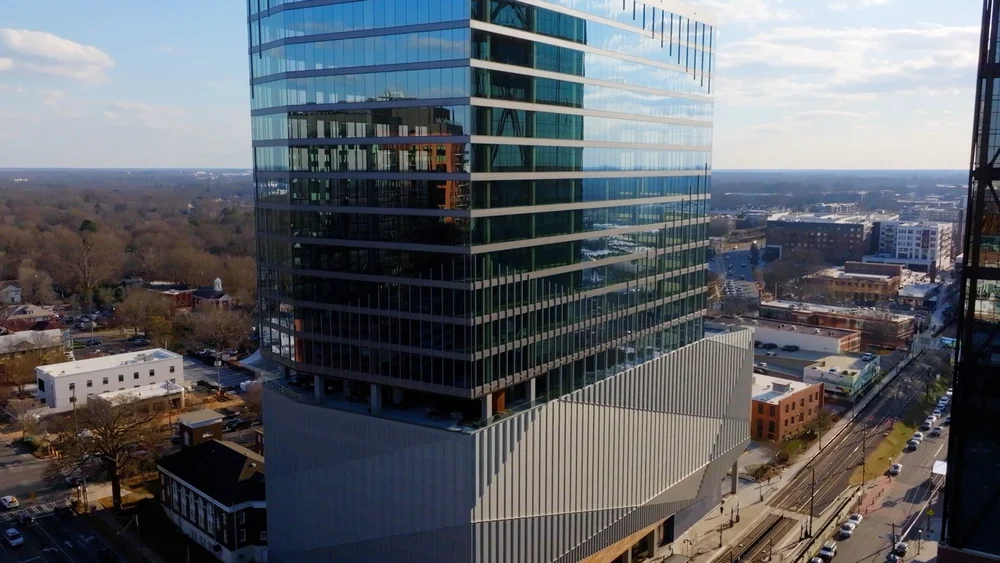
Class A and Class B office buildings can lose leasing competitiveness when cellular coverage is inconsistent. Concrete, steel, and Low-E glass can block outdoor signals.
Explore Commercial Real Estate
Data Centers
Dense construction, secure rooms, restricted access, and uptime requirements demand reliable multi-carrier coverage across critical operational spaces.
Explore Data Centers
Education
Multi-building campuses, residence halls, academic facilities, athletics, and parking structures require coordinated cellular coverage planning.
Explore Education
Healthcare
Hospitals and medical campuses combine large footprints, shielded areas, basements, and critical workflows that depend on reliable cellular coverage.
Explore Healthcare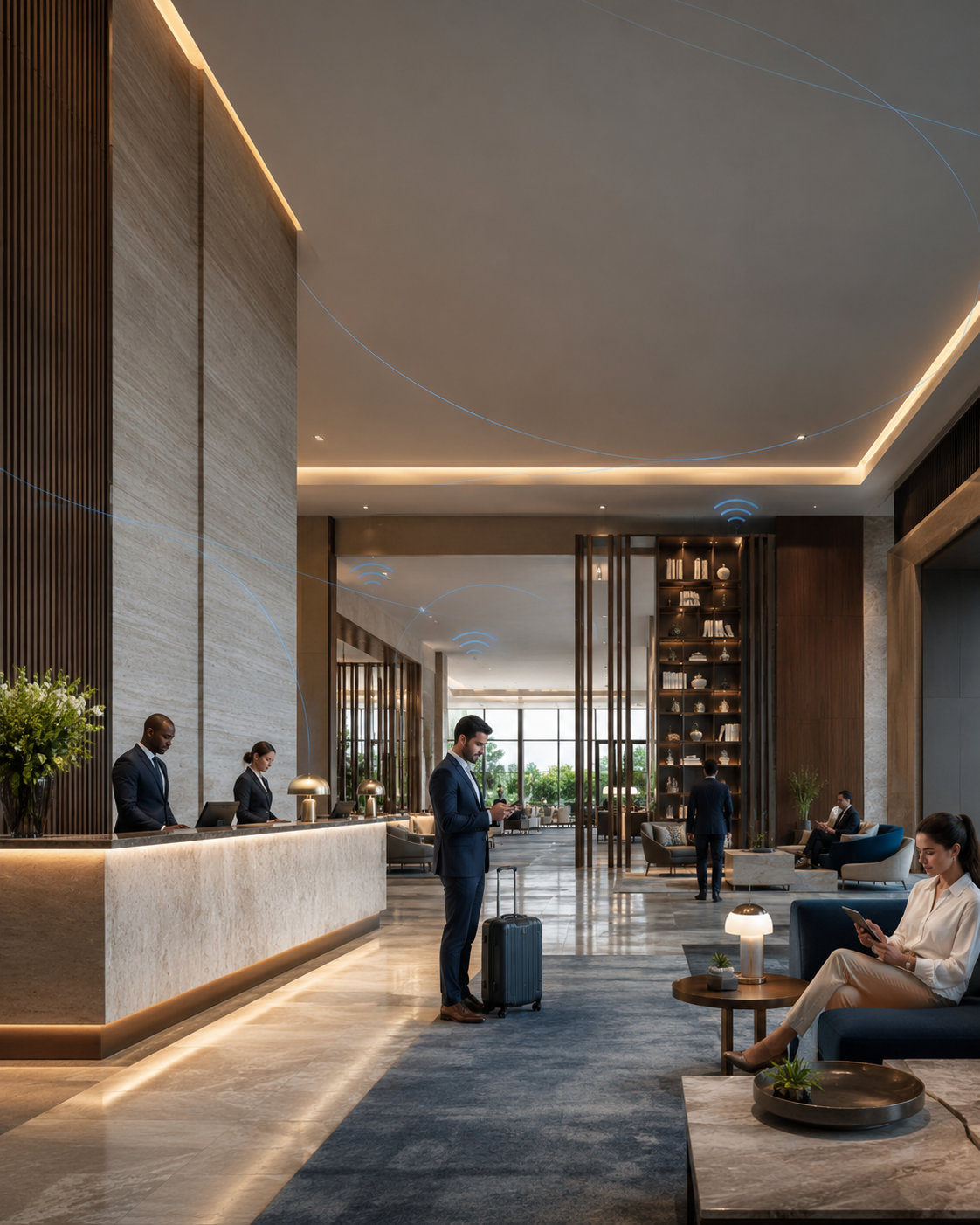
Hospitality
Guest towers, meeting spaces, ballrooms, service corridors, back-of-house areas, and garages require consistent cellular coverage for guests and operating teams.
Explore Hospitality
Logistics
Large warehouses, loading areas, yards, and high-rack environments create difficult RF conditions for workers, connected devices, and mobile operational workflows.
Explore Logistics
Manufacturing
Concrete, steel, machinery, production areas, and large industrial footprints can weaken cellular signal across operational spaces.
Explore Manufacturing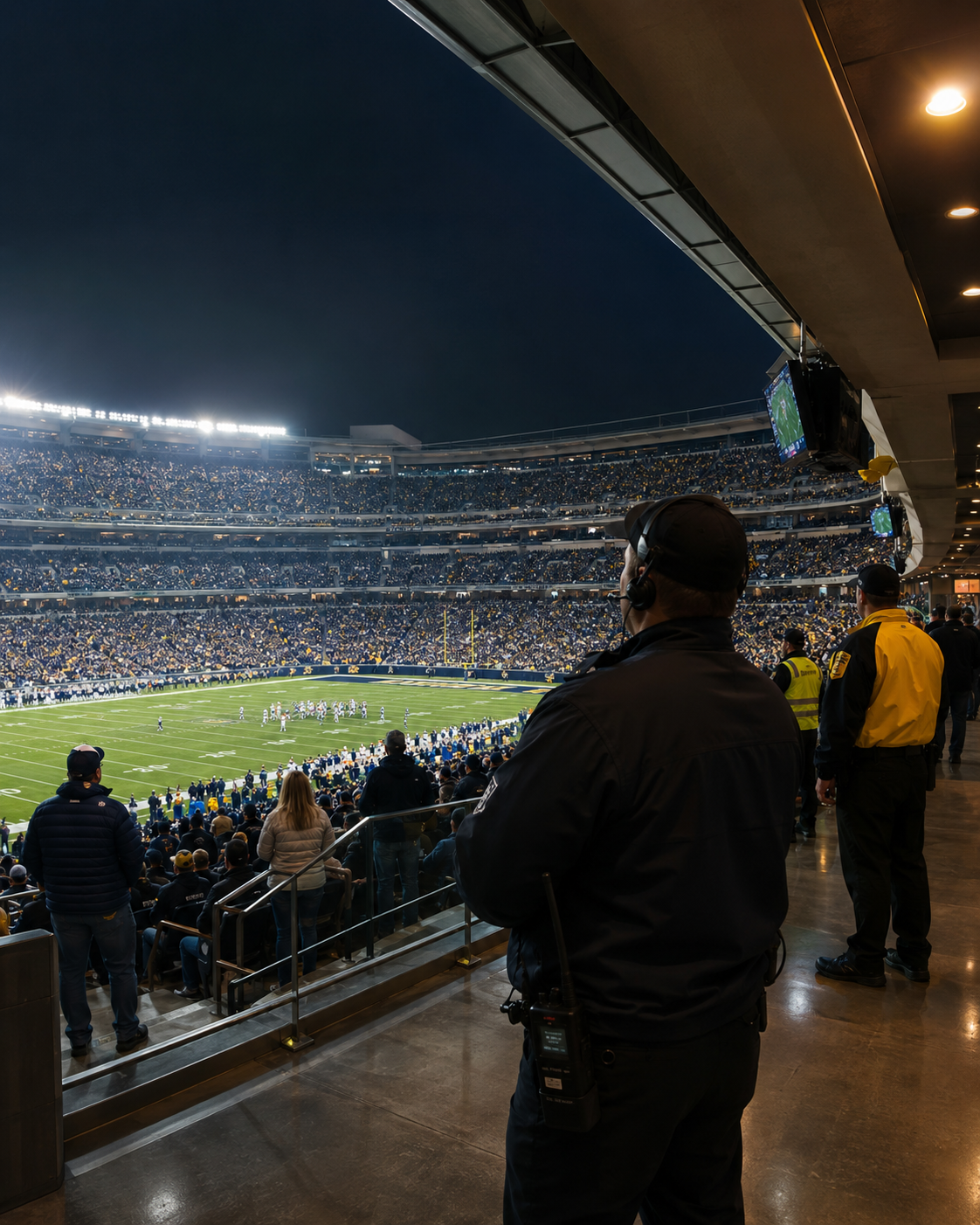
Stadiums & Venues
Seating bowls, concourses, suites, back-of-house areas, and event-day density create coverage and capacity challenges at venue scale.
Explore Stadiums & Venues
Transportation
Airports, ports, terminals, garages, and operational areas require reliable cellular coverage across large, complex, high-traffic facilities.
Explore TransportationProven DAS Deployments Across Complex Environments
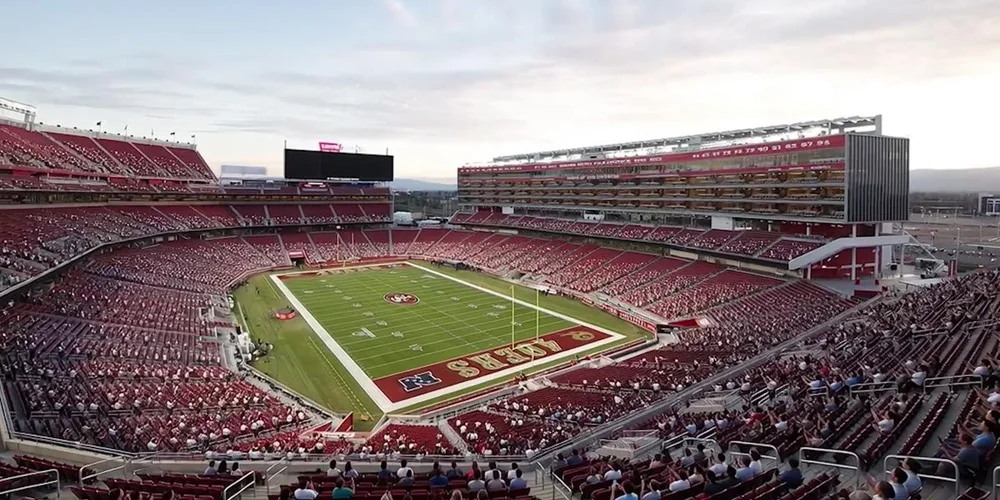
Managed In-Building Wireless, CTS Runs It So You Don’t Have To
Deploying a DAS or small cell network is the beginning, not the end. In-building wireless infrastructure requires continuous monitoring, proactive maintenance, carrier compliance management, and periodic upgrades as carriers evolve their network equipment and frequency bands.
Most enterprise IT teams are not resourced to operate a carrier-grade wireless network, and should not have to be. CTS’s Managed Infrastructure Services handle every operational aspect of the in-building wireless network from day one.
CTS’s 24/7 Network Operations Center monitors DAS and small cell network performance continuously, detecting faults, managing carrier alarms, and dispatching field teams before performance degradation reaches occupants. SLA-backed response tiers ensure critical issues are addressed on a defined timeline.
CTS manages carrier relationships, OEM coordination, software updates, and lifecycle planning so the network stays current without requiring ongoing internal resources.
What’s included:
24/7 NOC monitoring with SLA-backed response tiers
Carrier relationship management and compliance across AT&T, Verizon, and T-Mobile
Proactive maintenance and fault resolution
Software and firmware updates
Capacity planning and performance reporting
Lifecycle upgrade planning for 5G and future network evolution
Network-as-a-Service, Carrier-Grade Coverage Without the Capital Commitment
For many enterprise buildings, the capital cost of a full DAS deployment is the barrier that pushes the project off the priority list indefinitely. CTS’s Network-as-a-Service model converts the in-building wireless investment into a predictable monthly operating expense.
CTS designs, deploys, and manages the network. The building owner gets the coverage, 5G capability, and managed operations without the upfront capital outlay or internal resource burden.
NaaS includes:
Design, engineering, and carrier coordination
Full deployment, including DAS headend, antenna network, and signal source infrastructure
24/7 NOC monitoring and managed operations throughout the service term
Lifecycle upgrades, with CTS managing technology evolution so the building owner does not face a future reinvestment cycle
A single monthly cost covering the full in-building wireless program
Why Enterprises Choose CTS for In-Building Wireless
Vendor and Architecture Neutral, Not Just OEM Agnostic
CTS is not only free to select any equipment manufacturer. CTS is also architecture neutral, able to honestly compare DAS, standalone small cells, managed signal sources, CBRS neutral host, and other in-building wireless options before recommending anything.
Most providers arrive with a preferred answer. CTS starts with the building.
DAS Expertise at Scale
DAS is the in-building cellular standard for complex enterprise buildings, and it is where CTS has the deepest experience.
With more than 20,000 wireless deployments across hospitals, Class A office towers, college campuses, industrial facilities, and transit environments, CTS brings proven engineering judgment to every new project.

One Partner, Full Lifecycle
CTS is not a deployment-and-exit firm. The managed services model means CTS remains operationally accountable for the network’s performance throughout its lifecycle.
The same team, relationships, and accountability carry from design through deployment, management, upgrades, and year-ten planning.
For a broader evaluation framework, see how to evaluate a DAS provider.Carrier Relationships That Compress Timelines
CTS’s long-standing operational relationships with AT&T, Verizon, and T-Mobile help streamline the carrier approval process that stalls many in-building wireless projects.
When carrier-direct signal sources are the right approach, CTS navigates the process. When they are not, Forté Neutral Source provides a carrier-approved alternative on a predictable schedule. Either way, CTS owns the carrier relationship.

SOC 2 Type 2 Certified Operations
CTS operates under SOC 2 Type 2 certification, providing third-party validated assurance that CTS meets enterprise-grade security and operational standards.
For enterprise IT leadership evaluating network infrastructure partners, this is meaningful accountability.
Vendor-Agnostic Across All Major In-Building Wireless OEMs
CTS partners with every leading DAS and small cell manufacturer, recommending and deploying the solution that best fits each building’s requirements.
No preferred vendor. No proprietary lock-in. The design decision is driven by the building’s needs.







Resources
-

Neutral Host Network-as-a-Service Data Sheet
See how CTS delivers carrier-grade in-building cellular through a monthly service model that includes design, deployment, carrier coordination, managed operations, and lifecycle upgrades.
-
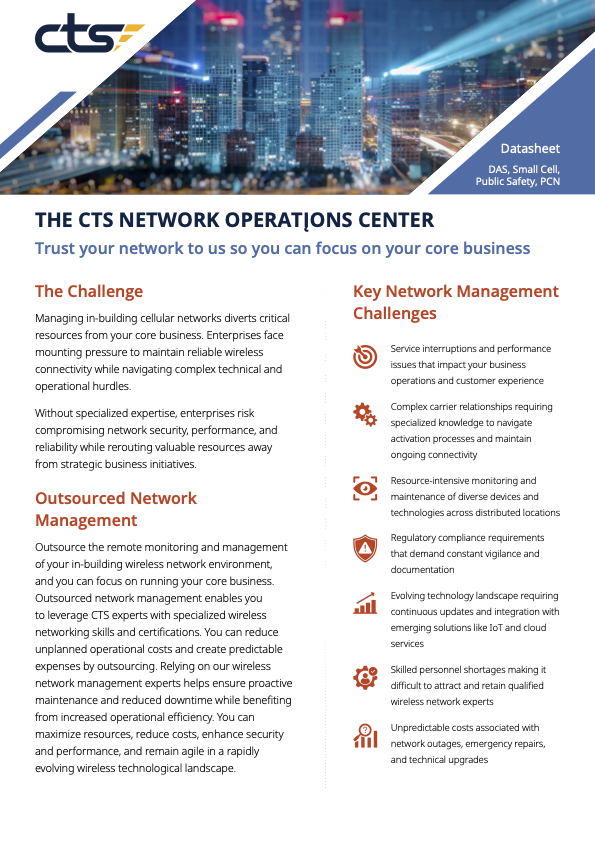
CTS NOC Managed Services Data Sheet
Learn how CTS monitors and manages in-building wireless networks after deployment, including 24/7 NOC visibility, SLA-backed support, proactive maintenance, carrier coordination, and lifecycle management.
-
The Future of In-Building Cellular Starts with Signal Source Innovation
Understand why signal source strategy determines DAS performance, carrier participation, deployment timelines, and long-term network outcomes for enterprise buildings.
DAS Lifecycle Risk
Your DAS May Still Be Working. Is It Still Supportable?
Aging equipment, changing carrier requirements, signal-source transitions, incomplete documentation and evolving 5G requirements can introduce risk long before an in-building cellular system stops working. Evaluate your existing DAS and understand what the right next step may be.
Latest Articles
Why Cellular Signal Fails Indoors
Learn why modern building materials, floor plans, and network conditions weaken outdoor macro signal before it reaches interior spaces.
Read the ArticleThe Future of In-Building Cellular Starts with Signal Source Innovation
Explore how changing carrier funding models and managed signal source options are reshaping enterprise DAS deployment.
Read the ArticleHow to Choose a DAS Provider
Learn what enterprise IT and facilities teams should evaluate when selecting a partner for DAS design, deployment, carrier coordination, and managed operations.
Read the ArticleWhat Limits Indoor Cellular Signal
Learn how network capacity, user density, carrier participation, and signal-source quality can limit indoor cellular performance even when coverage is present.
Read the ArticleActive vs. Passive DAS: How to Choose
Compare active, passive, and hybrid DAS architectures and learn how building complexity, capacity needs, and cabling pathways shape the right design.
Read the ArticleNeutral Host as a Service
Learn how a managed service model can deliver carrier-grade in-building cellular without the upfront capital commitment of a traditional DAS project.
Read the ArticleDAS Signal Source Importance
Understand why a DAS can only perform as well as the signal source feeding it, and how source strategy affects capacity, reliability, and carrier support.
Read the ArticleDAS Design and Architecture for Enterprise Buildings
See the major engineering considerations behind enterprise DAS design, including headend planning, antenna placement, distribution, and carrier coordination.
Read the ArticleDAS and Small Cell Solutions Frequently Asked Questions
-
A Distributed Antenna System (DAS) is an in‑building wireless network platform made up of active electronics and passive infrastructure that distributes cellular RF signals from a signal source (e.g. a base station or repeater) throughout a facility. It takes the signal from that central signal source and pushes it across many antennas to deliver consistent coverage in hard‑to‑reach areas. CTS designs DAS solutions that give enterprises carrier‑grade indoor coverage across large or complex buildings.
-
Small cells are compact cellular radios connected to a carrier network through fiber backhaul. They can provide coverage directly as a standalone in-building architecture or serve as the signal source feeding a DAS. Depending on the architecture and carrier participation, small cells may support a single carrier or multiple carriers through a shared MORAN configuration. CTS evaluates the building, carrier requirements, coverage areas, and operating model to determine the appropriate use.
-
A building should consider DAS or small cells based on its size, layout, carrier requirements, and performance goals rather than a simple “large vs small” rule. DAS often fits multi‑carrier, highly complex environments, while small‑cell systems can be attractive where a single MNO or specific capacity pattern is the main driver. CTS helps evaluate your building, carrier mix, and commercial options to recommend whether a DAS or a small‑cell solution better meets your in‑building wireless objectives.
-
Yes. Small cells can serve as the carrier radio source feeding a DAS. In that configuration, the small cell supplies the carrier signal, while the DAS distributes it through antennas across the building. Small cells can also operate as a standalone coverage architecture without a DAS. The appropriate model depends on the building’s size, coverage zones, capacity requirements, and carrier strategy.
-
A neutral-host DAS can distribute signals from multiple carriers over shared in-building infrastructure, although each carrier must participate through an approved signal source. Small-cell systems can be single-carrier or support multiple carriers through a MORAN-style shared architecture where available. CTS coordinates with the participating carriers and selects an architecture that supports the building’s current and anticipated carrier requirements.
-
Most in‑building DAS or small‑cell systems for standard enterprise buildings take weeks to design and a few months to deploy, while complex venues like airports or stadiums can take several months to design and up to about a year to complete. In practice, projects only extend beyond a year for new buildings when overall building construction schedules push wireless work to the end. CTS plans DAS and small‑cell projects around your construction milestones so in‑building wireless is ready when you need to open and operate the facility.
-
Cost is driven by building size and layout, how well outdoor macro signals penetrate the structure, and requirements for sectors, carriers, and frequency bands. Conduit availability, construction conditions (especially on greenfield projects), and any aesthetic or stealthing requirements also impact materials and labor. CTS factors in these technical and construction details to create a DAS or small‑cell design and commercial model that fits your performance and budget objectives.
-
Yes. CTS provides 24x7 monitoring, incident response, and lifecycle management for in‑building wireless systems, including DAS and small‑cell networks. Our Network Operations Center and managed services ensure performance stays aligned with carrier SLAs and your internal KPIs, handling alarms, upgrades, and capacity adjustments over time. CTS acts as your long‑term in‑building wireless partner, keeping DAS and small‑cell infrastructure performing reliably as technologies and demands evolve.
Reliable In-Building Cellular Starts with the Right Assessment
For most enterprise buildings, the answer is DAS: the architecture built for multi-carrier, multi-zone, managed in-building cellular at scale. For some buildings, a small cell solution is the right fit.
CTS evaluates both, recommends honestly, and manages the result. Vendor-agnostic. Architecture-neutral. 5G-ready. Fully managed. 20,000+ deployments.