
Top Connectivity Priorities for Healthcare Networks in 2026
Healthcare networks are under increasing pressure to deliver always-on connectivity across complex, multi-site environments. Performance gaps directly impact clinical care, staff coordination, and patient experience.
Leading organizations are focusing on three priorities: security, resilience, and infrastructure designed specifically for healthcare use cases.
Healthcare connectivity must be designed for security, resilience, and scale from the outset. Organizations that invest in purpose-built infrastructure reduce operational risk, improve clinical coordination, and support long-term growth across distributed environments.
Compliance and Security Must Be Built Into the Network
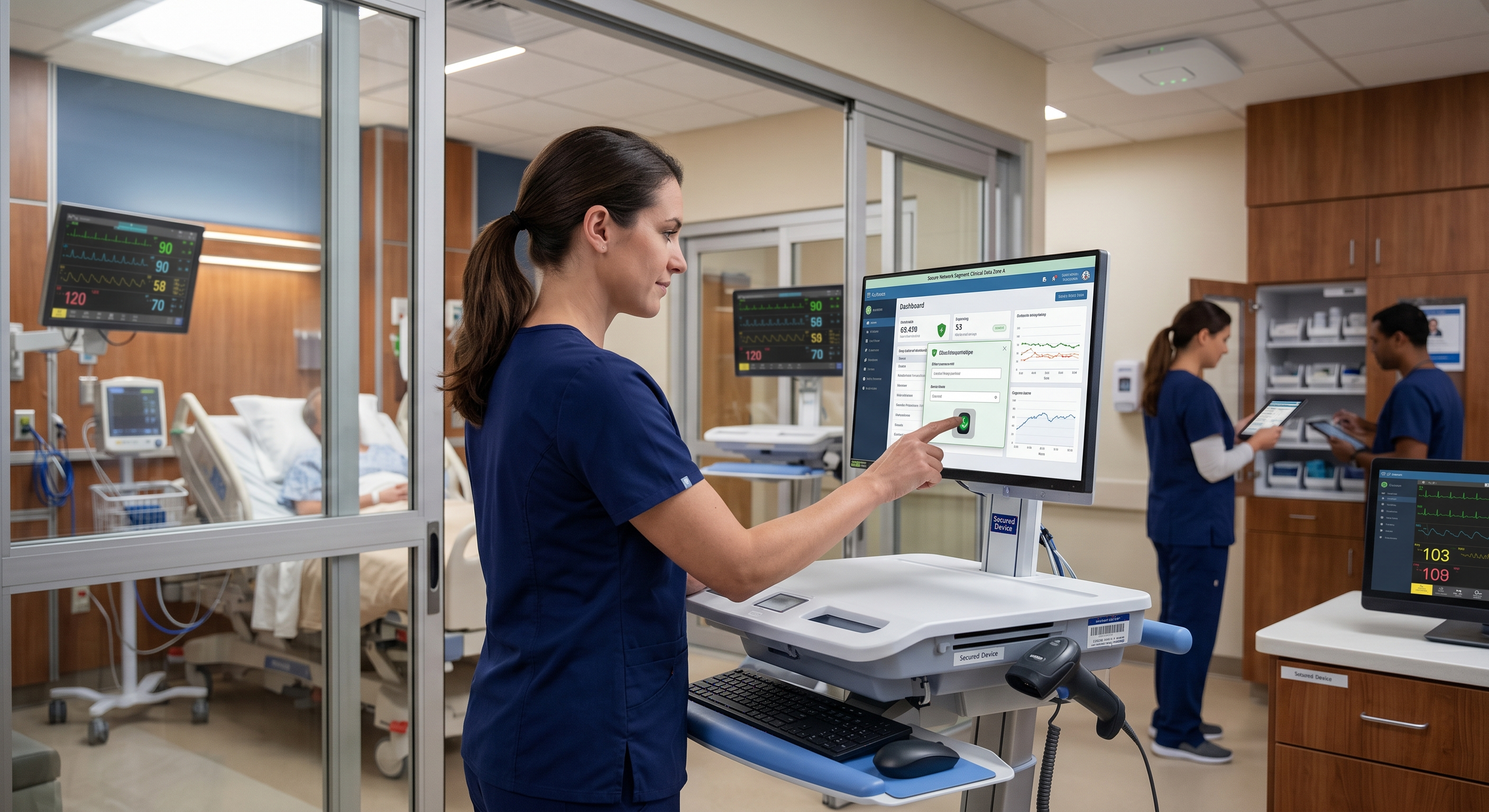
Healthcare connectivity must begin with security. Systems should align with HIPAA requirements from the outset, not as a secondary layer.
Key components include:
Zero-trust access models to control user and device connectivity
Network segmentation to isolate critical systems and reduce risk
Continuous monitoring through a security operations model for real-time visibility
Security is now embedded within network architecture. Organizations that take this approach reduce exposure and improve response times to emerging threats.
Resilience at Scale Supports Clinical Operations
Hospitals and clinics operate in environments where downtime disrupts care delivery.
Connectivity must support:
Real-time clinical coordination across departments
Mobile workflows for care teams operating throughout facilities
Emergency response systems requiring uninterrupted communication
Consistent patient experience across locations
Networks designed for scale maintain consistent performance across buildings, campuses, and distributed sites, reducing operational friction.
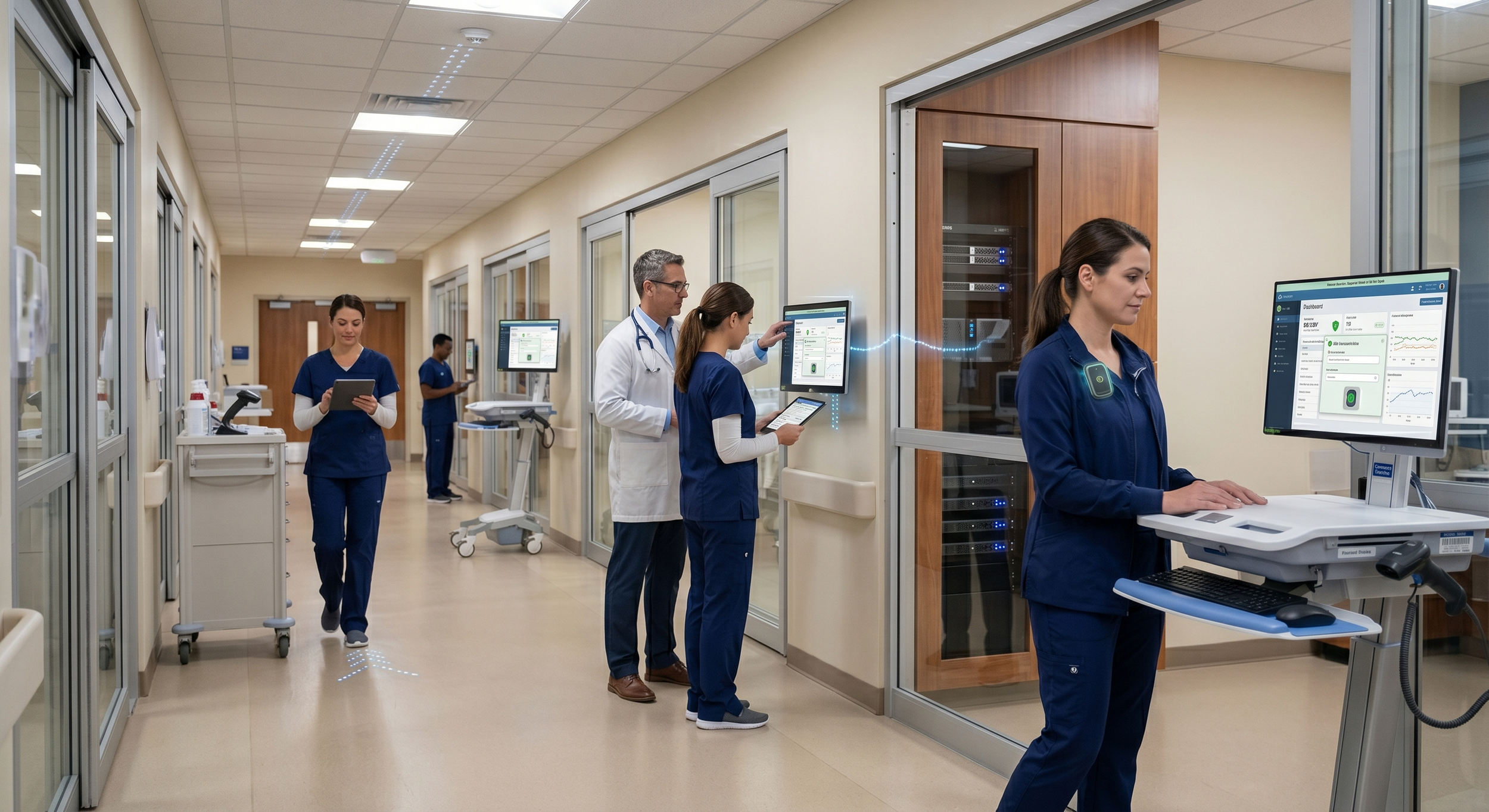
In-Building Wireless Is a Critical Infrastructure Layer
Reliable indoor cellular coverage remains a persistent challenge in healthcare environments.
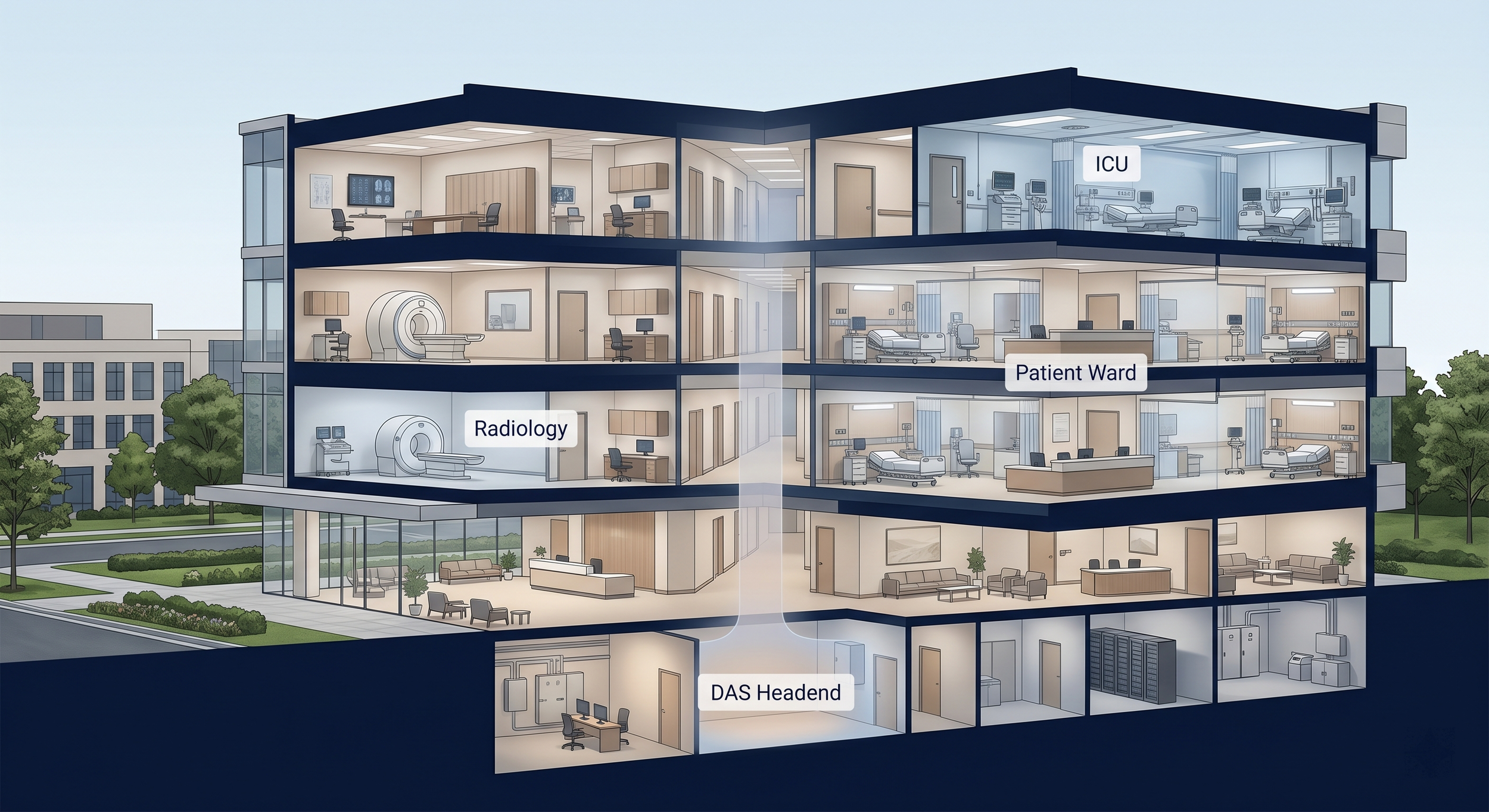
Distributed Antenna Systems (DAS) address this by improving signal strength and consistency in areas where traditional wireless struggles, including:
Basements and mechanical rooms
Radiology and imaging areas
Large hospital campuses with dense construction materials
DAS strengthens both clinical communication and patient connectivity as digital engagement continues to expand.
Strategic Network Design Enables Long-Term Growth
Healthcare organizations are shifting from short-term fixes to infrastructure investments that support long-term scalability.
This includes:
In-building wireless systems
Cellular infrastructure aligned with clinical workflows
Network environments designed to support IoT, remote care, and emerging technologies
At CTS, technical network design is aligned with the operational realities of healthcare environments, ensuring infrastructure supports how care is delivered across facilities.
The Outcome Is Operational, Not Just Technical
Effective connectivity delivers measurable operational impact.
It enables:
Safer, more coordinated patient care
Faster communication between clinical teams
Infrastructure that adapts as healthcare delivery evolves
Connectivity is becoming a core component of healthcare strategy, directly tied to outcomes, efficiency, and long-term scalability.
Healthcare Network Connectivity Frequently Asked Questions
-
Healthcare organizations are prioritizing security, resilience, and scalability. Networks must protect sensitive data, maintain uptime across clinical environments, and support growth across multiple facilities. These priorities ensure connectivity aligns with both compliance requirements and operational demands.
-
Downtime disrupts clinical workflows, delays communication between care teams, and can impact patient outcomes. Hospitals and clinics rely on continuous connectivity for real-time data access, monitoring systems, and emergency response. Even short interruptions can create operational and clinical risk.
-
Healthcare networks enable real-time coordination by connecting clinical systems, mobile devices, and communication platforms across departments. Reliable connectivity ensures care teams can access patient data, communicate instantly, and make timely decisions regardless of location within a facility.
-
In-building wireless ensures consistent cellular and data coverage in areas where traditional signals are unreliable, such as basements, imaging rooms, and dense hospital structures. Solutions like Distributed Antenna Systems (DAS) improve connectivity for both clinical staff and patients throughout the facility.
-
Scalable healthcare networks are designed to maintain consistent performance across buildings, campuses, and distributed sites. This includes standardizing infrastructure, aligning network architecture with clinical workflows, and ensuring systems can support additional facilities, users, and connected devices over time.
-
Designing for long-term growth allows healthcare organizations to support evolving technologies such as IoT, remote care, and digital patient engagement. It reduces the need for frequent redesigns and ensures infrastructure can adapt as care delivery models and operational requirements change.
Plan Your Next Phase of Healthcare Connectivity
Healthcare connectivity decisions increasingly shape clinical performance and organizational growth.
Key considerations include:
Identifying coverage gaps that impact care delivery and workflows
Aligning network architecture with current compliance and security standards
Ensuring infrastructure can scale across additional sites and facilities
Evaluating whether in-building wireless systems meet current demand
CTS works with healthcare organizations to assess existing environments, identify performance and risk gaps, and design infrastructure aligned with clinical and operational needs.
For organizations planning upgrades, new construction, or system-wide improvements, early-stage planning creates the strongest foundation for long-term success.
Related Resources
Healthcare Connectivity Solutions
Explore in-building wireless solutions designed to improve cellular coverage across healthcare environments.
Learn how DAS technology delivers reliable cellular connectivity inside large hospitals and complex healthcare facilities.
Understand how public safety distributed antenna systems support first responder communications inside buildings.
Why Cellular Coverage in Hospitals Is Failing
Learn why hospitals often struggle with weak indoor cellular signal and how building materials affect wireless coverage.
How Hospitals Are Solving Cellular Coverage Problems with DAS and Private Networks
Explore the technologies hospitals are deploying to deliver reliable connectivity across healthcare campuses.
Planning a Healthcare DAS Deployment?
CTS works with healthcare organizations to assess connectivity environments, identify performance gaps, and design infrastructure aligned with clinical operations.
Connect with our team to evaluate your current network and plan your next phase of healthcare connectivity.
CTS designs and deploys healthcare DAS systems for hospitals and medical campuses across the United States.