

DATA CENTERS
Data Center Wireless Connectivity Solutions
Data centers depend on reliable wireless connectivity for the people, workflows, and systems behind uptime. CTS designs, deploys, and manages wireless infrastructure for colocation facilities, hyperscale environments, enterprise data centers, edge facilities, and mission-critical technical campuses.
From construction-phase communication to long-term operations, CTS helps data center teams deliver dependable mobile coverage across complex, secure, fiber-rich environments where wireless performance cannot be left to chance.

Fiber-Fed DAS Architecture
CTS designs DAS solutions for fiber-rich data center environments that still require engineered RF coverage across large, complex facilities.

Signal Source Strategy
We help evaluate repeaters, donor signal, carrier coordination, and long-term signal source options for reliable cellular performance.

Mobile-First Operations
Our wireless solutions support teams that depend on smartphones, tablets, and connected workflows instead of desk phones.

Construction-to-Operations Support
CTS supports wireless connectivity needs from active buildout and commissioning through long-term facility operations.
Wireless Connectivity for Fiber-Rich, Mission-Critical Data Centers
Data centers are built with dense infrastructure, secure layouts, and extensive fiber networks, but that does not guarantee reliable cellular, Wi-Fi, or public safety coverage throughout the facility. White space, mechanical rooms, loading areas, electrical rooms, long corridors, restricted zones, and exterior work areas can all create wireless performance gaps.
For data center operators, those gaps affect more than convenience. Mobile connectivity supports construction coordination, vendor access, facility operations, incident response, monitoring workflows, and daily communication for teams that may not rely on desk phones. Whether supporting a new hyperscale facility, an enterprise data center, a colocation environment, or an edge deployment, wireless coverage must be planned around real operational workflows, not just square footage.
Wireless Solutions for Data Center Environments
No single wireless technology can support every connectivity requirement inside a data center. Operations teams, construction crews, vendors, security personnel, emergency responders, connected systems, and facility stakeholders each depend on different types of wireless access.
CTS designs integrated wireless infrastructure that aligns DAS, signal source strategy, public safety DAS, private wireless, and Wi-Fi around the facility’s layout, construction phase, carrier requirements, operational workflows, and long-term performance needs. Each technology serves a specific role. Together, they create a complete wireless layer for complex, secure, fiber-rich data center environments.
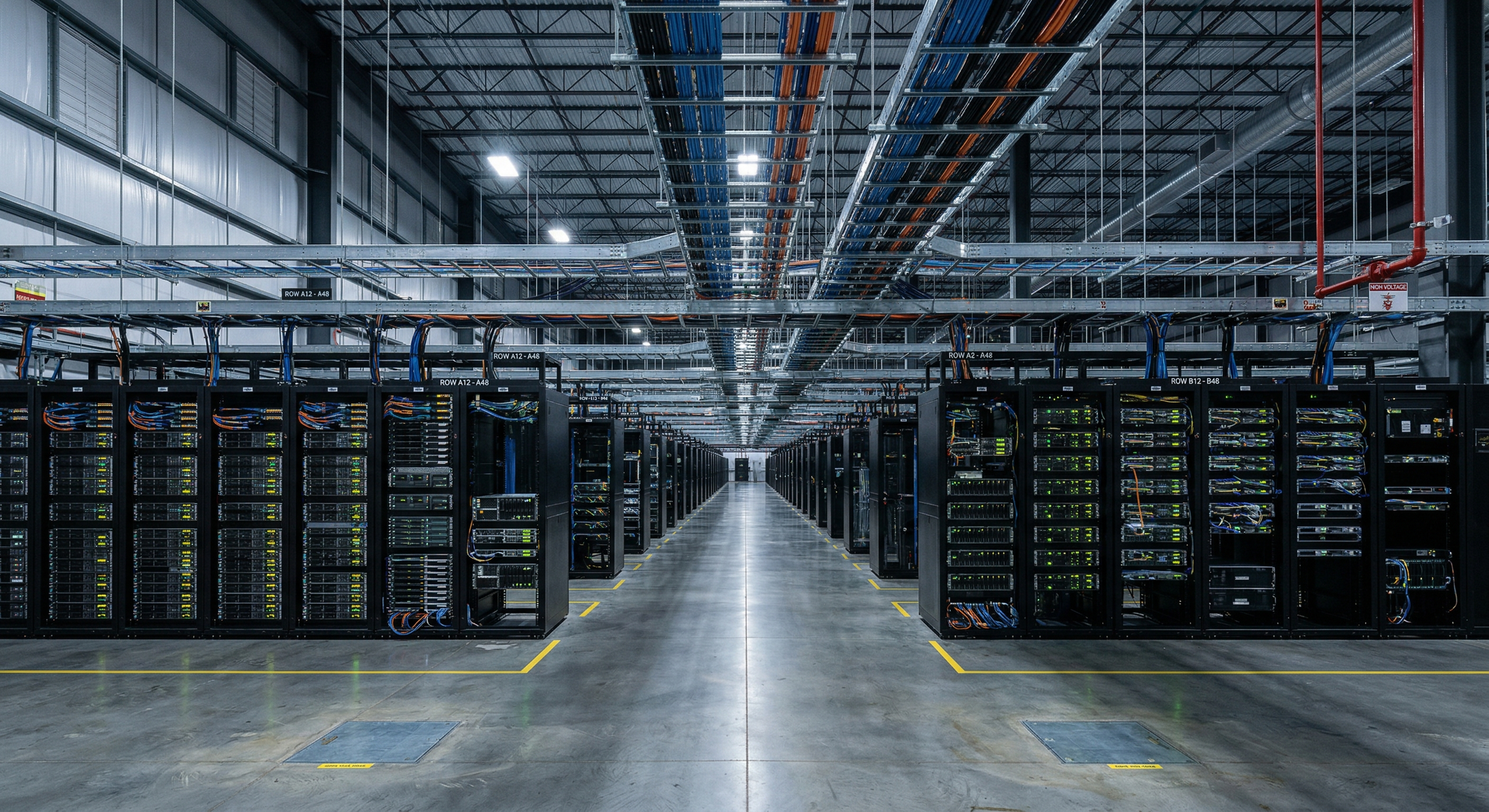
Fiber-Fed DAS Architecture
Data centers are already fiber-rich environments, but they still need purpose-built wireless systems to distribute reliable cellular coverage where people work. CTS designs fiber-fed DAS architectures that use the facility’s infrastructure context to deliver consistent in-building cellular coverage across large, complex, and hard-to-reach areas.
A well-designed DAS helps support mobile voice, data, upload and download performance, vendor communication, field coordination, and operational workflows without relying on Wi-Fi alone. CTS evaluates facility size, carrier requirements, user density, construction timelines, signal source options, and long-term operating needs to design the right DAS approach.
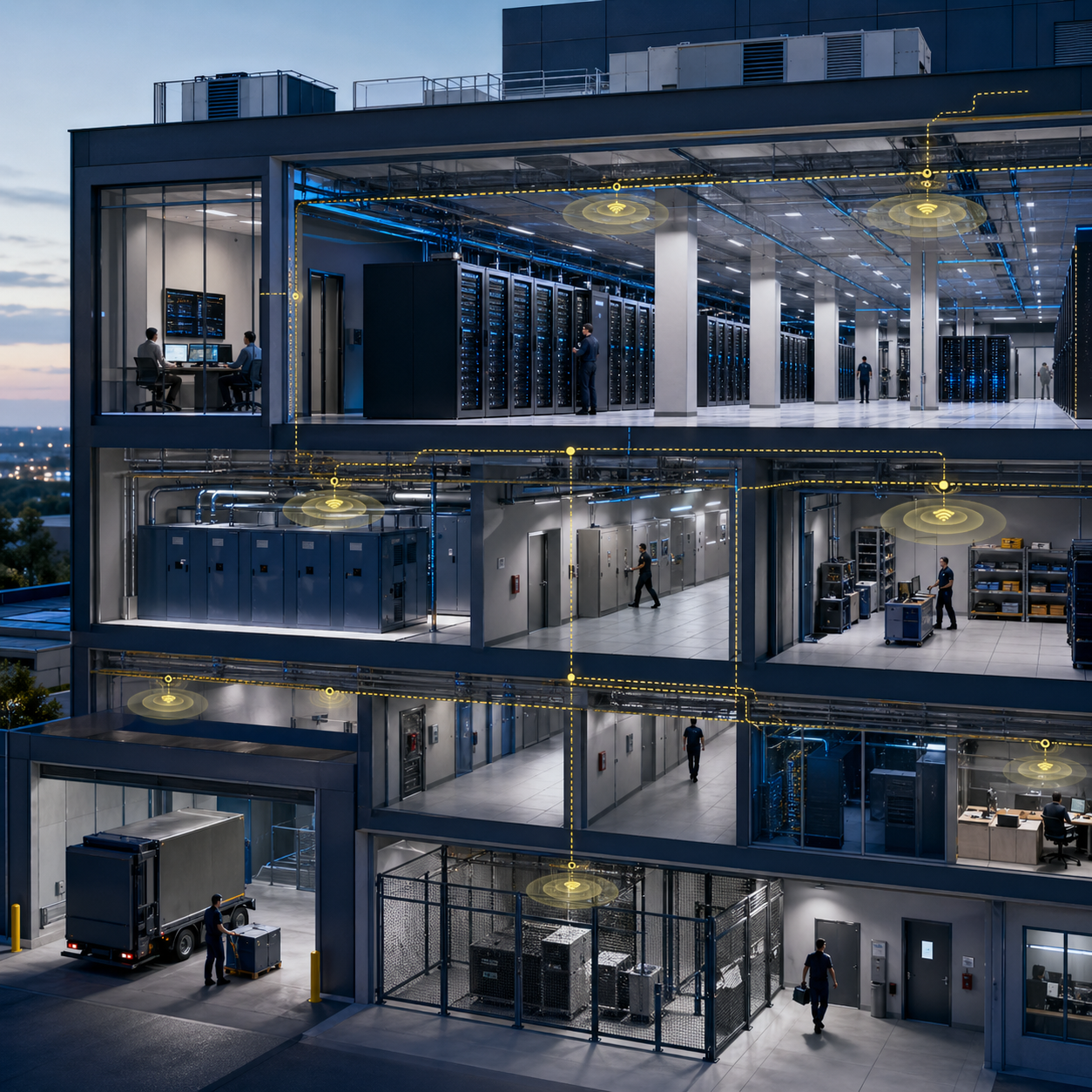
Signal Source Strategy for Data Center DAS
The performance of a DAS depends on the quality, reliability, and scalability of its signal source. In data center environments, signal source planning is especially important because facilities may need short-term coverage during construction, long-term carrier-grade performance for operations, and flexibility as future phases or use cases evolve.
CTS helps data center teams evaluate signal source options such as repeaters, donor signal, operator-supplied base stations, and managed signal source services. The goal is to match the signal source strategy to the facility’s scale, schedule, carrier requirements, budget, and operational expectations.
For some facilities, repeaters may provide an effective initial coverage path. For others, a more robust carrier-connected or managed signal source strategy may be the right long-term approach. CTS helps owners, operators, and project teams understand the tradeoffs before making infrastructure decisions.
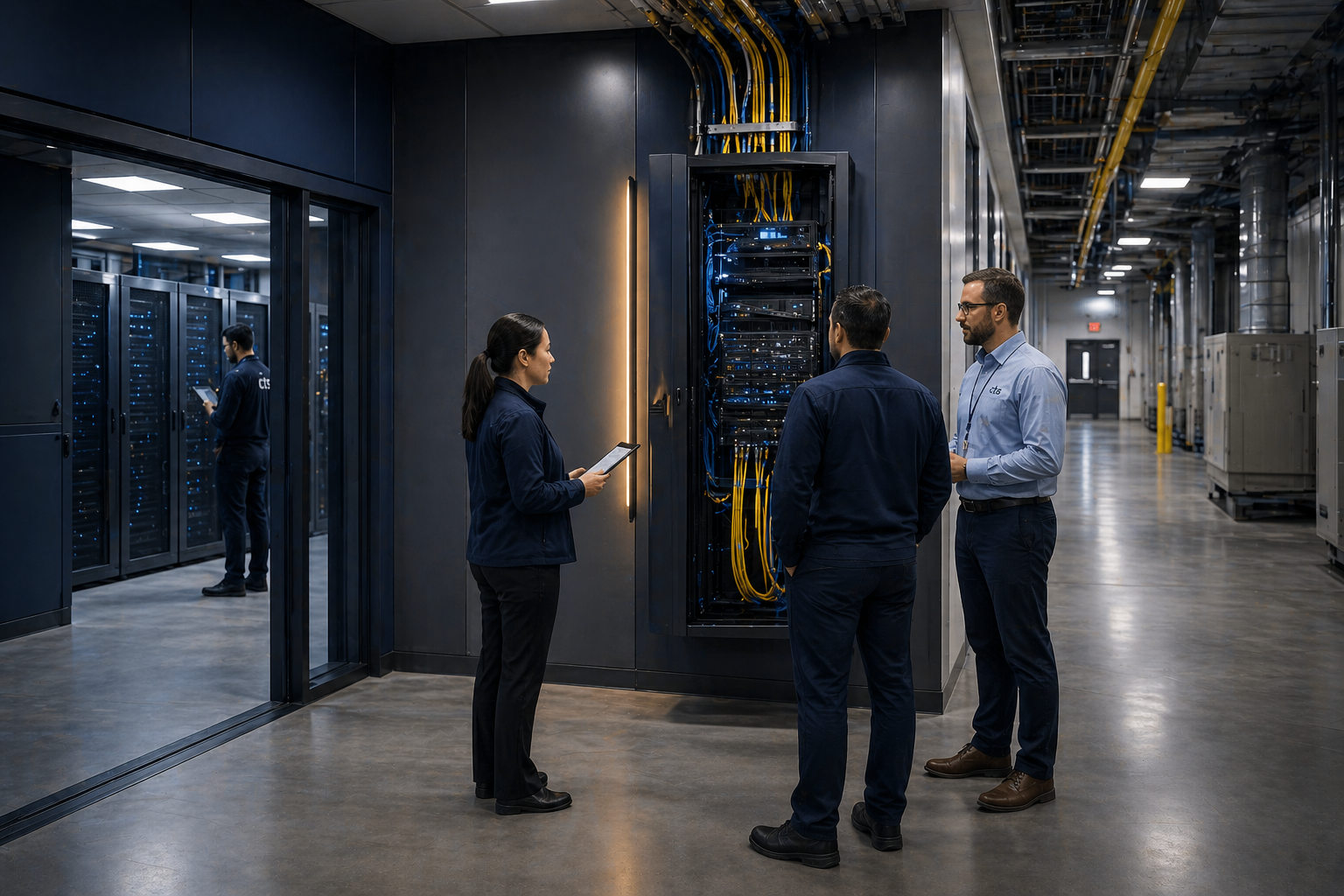
Public Safety DAS for Emergency Responder Communications
Data centers include secure spaces, dense construction, technical rooms, equipment areas, and large floorplates where emergency responder communication must be planned intentionally. These building conditions can increase the likelihood of needing a Public Safety DAS. Public Safety DAS supports reliable first responder radio coverage inside buildings and helps facilities meet applicable code and AHJ requirements.
CTS designs and deploys public safety DAS solutions that support emergency communication across the areas where responders may need access, including stairwells, corridors, mechanical rooms, loading areas, and operational spaces.
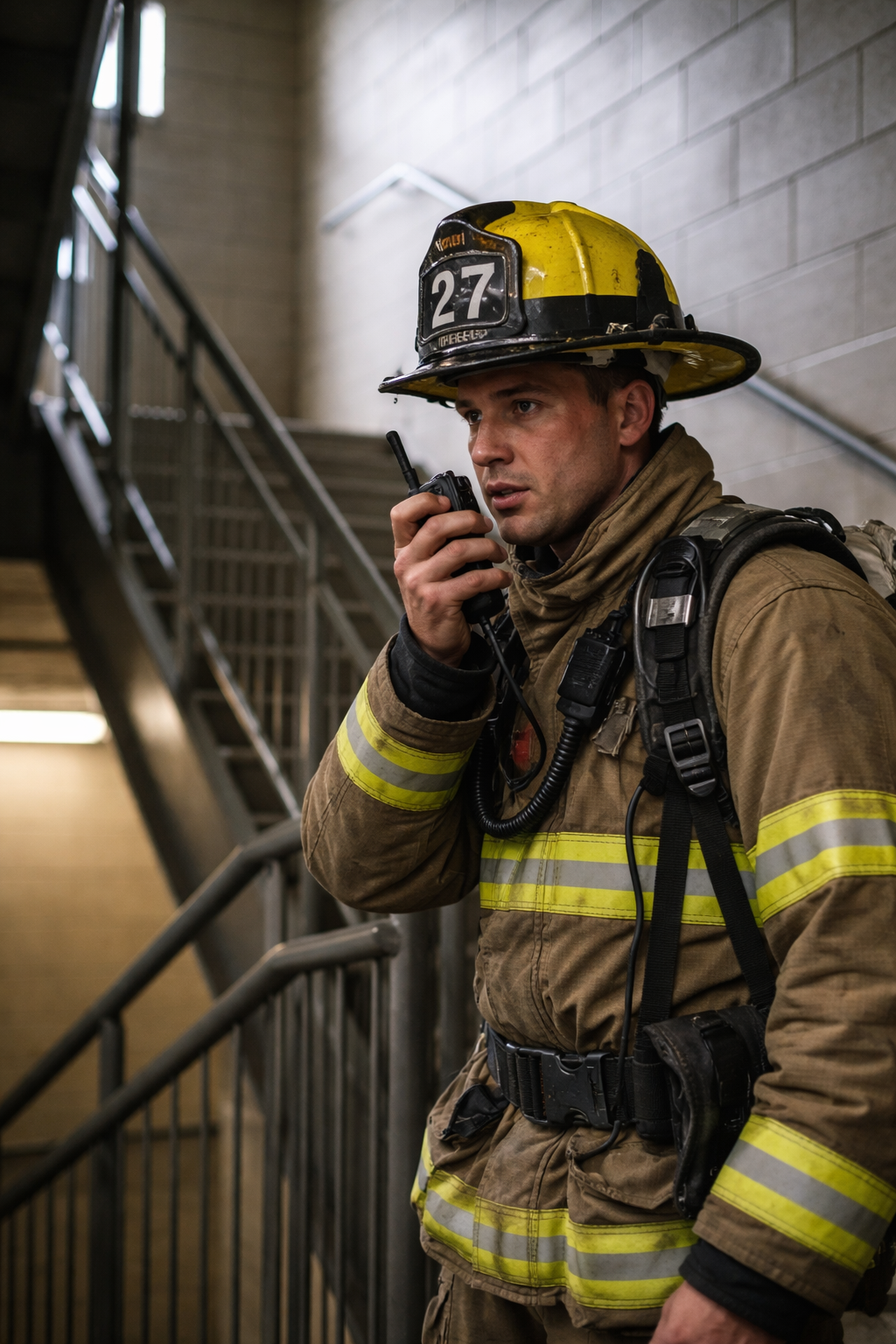
Private Wireless for Operational Systems
Private LTE and private 5G networks can support secure, high-performance wireless connectivity for operational systems that require more control, reliability, or mobility than traditional Wi-Fi can provide. In data center environments, private wireless may support future use cases such as sensors, automation, robotics, connected tools, monitoring systems, and secure operational workflows.
CTS helps data center teams evaluate where private wireless fits within the broader network architecture and how it should work alongside DAS, Wi-Fi, and public safety systems.
Wi-Fi for Data Centers
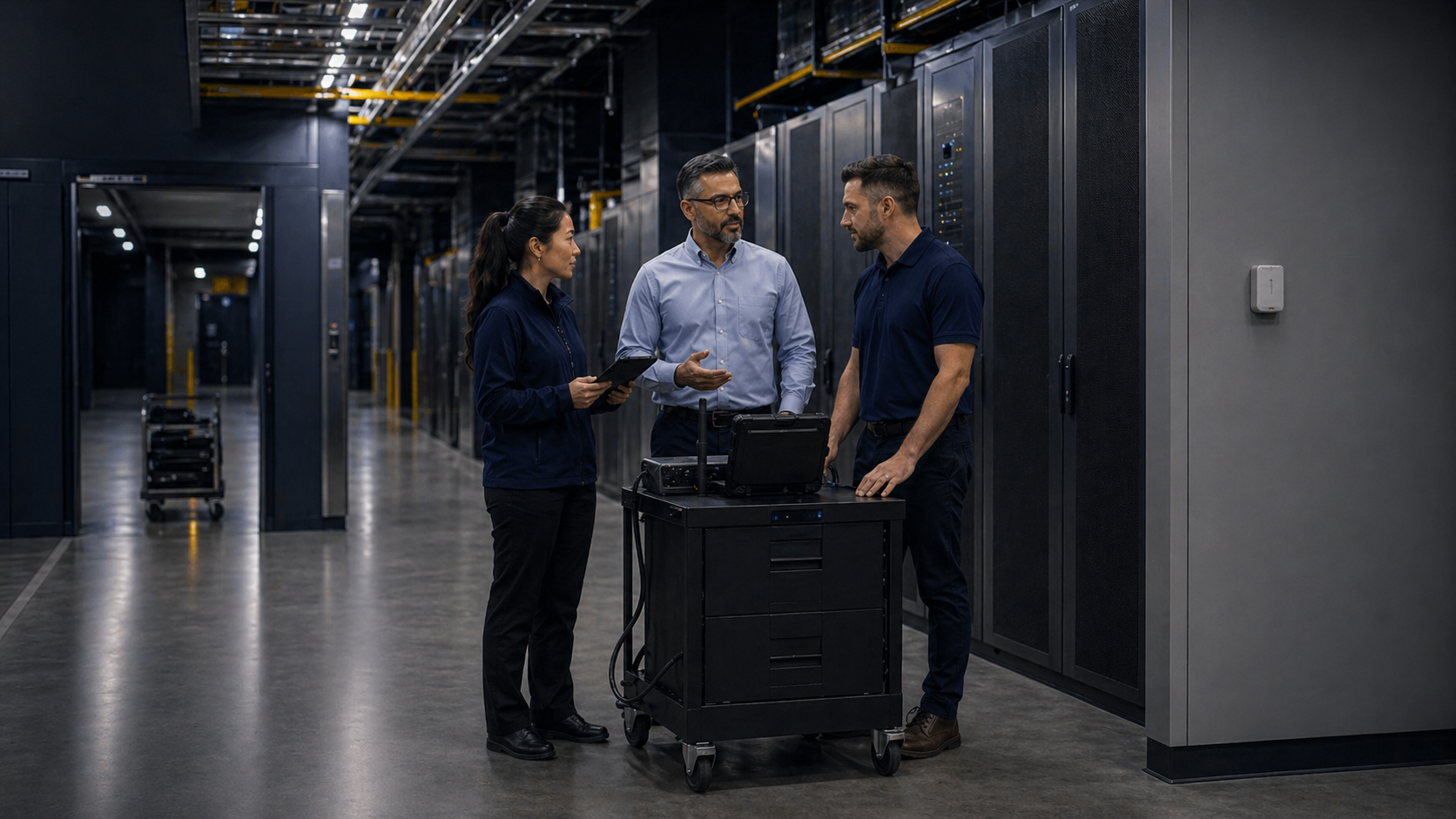
Wi-Fi remains essential for laptops, facility applications, internal systems, and many operational workflows. But in a data center environment, Wi-Fi should not be expected to support every mobile communication requirement by itself.
CTS helps data center teams define the right role for Wi-Fi within a balanced wireless architecture. By aligning Wi-Fi, DAS, cellular coverage, private wireless, and signal source strategy, data centers can better support mobile communication without overloading the Wi-Fi network or relying on Wi-Fi calling for use cases better served by cellular.
Where Connectivity Impacts Data Center Operations
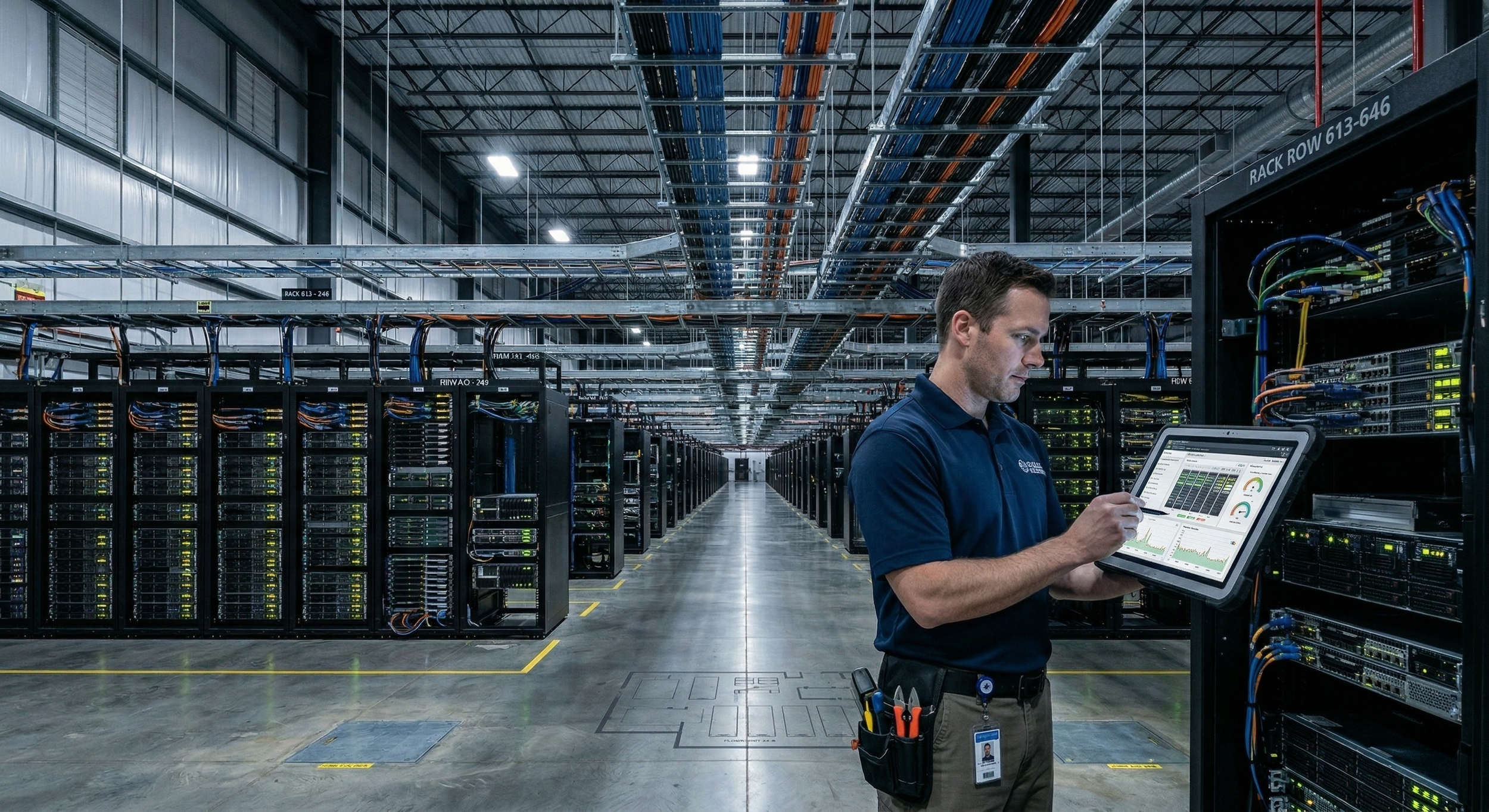
Reliable wireless coverage supports the people and systems that keep data centers moving from construction through live operations.
Mobile Staff Communication
Operations teams, engineers, security personnel, facilities teams, and vendors need dependable mobile connectivity across large, secure, and technically complex environments.
Construction and Commissioning Workflows
Large data center buildouts can involve thousands of workers who need mobile communication before the facility reaches steady-state operation.

Secure and Remote Facility Areas
Coverage must extend beyond office areas into mechanical rooms, electrical rooms, loading docks, corridors, exterior zones, and restricted spaces.

Vendor and Technician Support
Third-party technicians need reliable connectivity to troubleshoot issues, coordinate work, access documentation, and escalate support requests.

Emergency Response Readiness
First responders need reliable radio communication throughout the building during emergency events.

Monitoring and Management Access
Facility teams need mobile access to alerts, dashboards, tickets, documentation, and operational systems without relying only on fixed workstations.
Solving Critical Data Center Connectivity Challenges
Data center wireless planning requires a different approach than traditional commercial building connectivity. CTS helps solve the wireless challenges created by scale, density, security, and mission-critical operations.
Data Centers Are Fiber-Rich, But Not Always Wireless-Ready
Fiber infrastructure supports the facility’s network backbone, but it does not automatically solve cellular coverage, RF distribution, mobile communication, public safety radio coverage, or wireless access in hard-to-reach areas.
Wi-Fi Calling Is Not Always Enough
Wi-Fi may support laptops and some applications, but it may not be the best solution for every mobile voice, upload/download, vendor support, or field communication workflow. Cellular coverage helps keep critical mobile communication from competing with other Wi-Fi traffic.
Signal Source Decisions Affect Long-Term Performance
Repeaters, donor signal, carrier-connected sources, and managed signal source services each have different implications for coverage, capacity, approval timelines, scalability, and long-term operations.
Large Facilities Create Unique Coverage Demands
A large data center may have hundreds of steady-state employees but thousands of construction workers during buildout. Wireless planning must account for the facility’s operational model, not just square footage.
Construction Teams Need Connectivity Before Day One
Wireless coverage may be needed before final commissioning, tenant activation, or full operational handoff. CTS can support temporary, phased, and permanent coverage strategies.
Wireless Must Support Secure, Mission-Critical Operations
Connectivity must be reliable without compromising security requirements, operational controls, access policies, or uptime expectations.
REAL WORLD RESULTS
Wireless Coverage Delivered for a Large-Scale Data Center Facility
CTS designed and deployed a three-carrier DAS for a large-scale data center facility where mobile connectivity was essential for construction coordination, field communication, and long-term operational readiness. The facility presented a different wireless profile than a traditional commercial building: nearly half a million square feet of technical space, a large construction workforce during buildout, and a lower steady-state user population after commissioning.
The project required reliable mobile coverage across a complex, fiber-rich environment where desk phones were not the primary communication method. Teams needed dependable cellular access for mobile workflows, field coordination, vendor support, and operational communication. Wi-Fi calling alone was not sufficient for every use case, and the customer wanted to avoid placing all mobile voice and field communication demand on the Wi-Fi network.
CTS also provided signal source consultation to help the customer move beyond a repeater-based approach and plan for a more scalable, carrier-coordinated DAS architecture. By supporting carrier coordination for signal sources, CTS helped align the wireless design with the facility’s size, user density, operational requirements, and long-term performance needs.
Key Outcomes
Designed and deployed a three-carrier DAS for a large-scale, fiber-rich data center facility.
Provided signal source consultation to support a scalable in-building cellular architecture.
Helped the customer move beyond a repeater-only approach for long-term wireless performance.
Supported carrier coordination for signal source planning across all three major carriers.
Enabled mobile-first workflows for teams using smartphones, tablets, and connected tools.
Reduced reliance on Wi-Fi calling for field communication and operational coordination.
Why Data Center Operators Choose CTS
CTS delivers engineered wireless infrastructure for the performance, reliability, and operational demands of modern data centers.

Data Center-Specific Wireless Design
CTS designs wireless systems around dense construction, secure layouts, technical spaces, fiber-rich infrastructure, and operational workflows.

Fiber-Fed DAS Expertise
CTS understands how to design DAS architectures for data centers that already have robust fiber infrastructure but still need reliable RF coverage.

Balanced Wireless Architecture
CTS defines the right role for DAS, public safety DAS, private wireless, and Wi-Fi instead of forcing one technology to solve every use case.
Signal Source Planning
CTS helps evaluate repeaters, donor signal, carrier coordination, managed signal source services, and long-term signal source strategies.
Lifecycle Management and Optimization
CTS supports wireless infrastructure from assessment and design through deployment, monitoring, maintenance, and performance optimization.
Construction-to-Operations Support
CTS can support temporary, phased, and permanent connectivity needs as facilities move from construction to commissioning to live operations.
Wireless infrastructure should be planned, deployed, managed, and supported across the full data center lifecycle. CTS helps data center teams move from early wireless strategy through deployment, optimization, and ongoing operational support.
Connectivity Planning Across the Data Center Lifecycle

Design
Plan DAS, public safety DAS, private wireless, Wi-Fi, and signal source strategies around facility design, carrier requirements, public safety needs, and operational workflows.
Build
Deploy temporary, phased, and permanent wireless infrastructure for construction, commissioning, and live data center operations.
Run
Monitor and optimize wireless performance as facilities move from buildout to steady-state operations, expansion, and modernization.
Support
Maintain reliable connectivity with troubleshooting, lifecycle support, carrier coordination, system updates, and performance optimization.
Wireless Infrastructure Resources for Data Center Teams
-
Signal Source Solutions for In-Building Connectivity
Learn how repeaters, donor signal, carrier coordination, and managed signal source options affect DAS performance, deployment timelines, and long-term cellular coverage strategy.
-

Reliable Wireless Connectivity Is Imperative in Commercial Real Estate
Explore how DAS, Wi-Fi, CBRS-based neutral host, and private 4G/5G networks help eliminate dead zones and support future-ready connectivity in complex facilities.
-

Insights
Browse articles and resources on DAS, Wi-Fi, private wireless, public safety DAS, signal source planning, and wireless infrastructure for complex environments.
Latest Data Center Insights
In‑Building Cellular & DAS Solutions for Data Centers →
See how engineered DAS and in‑building cellular networks eliminate dead zones in data centers and support construction, operations, and vendor workflows.
Connectivity Challenges Inside Fortified Data Center Facilities →
Explore why hardened, shielded, and underground data center environments are so difficult for wireless connectivity and what it takes to solve those gaps safely.
Designing Carrier‑Grade Wireless Infrastructure for Mission‑Critical Data Centers →
Learn how data center teams plan carrier‑grade wireless architectures that combine DAS, private cellular, Wi‑Fi, and 24x7 monitoring into one resilient system.
Data Center Wireless Connectivity FAQs
-
Data centers often have extensive fiber infrastructure, but fiber alone does not provide cellular RF coverage throughout the facility. A DAS distributes cellular signal across antennas placed throughout the building, helping deliver reliable mobile coverage in white space, mechanical rooms, loading areas, restricted zones, exterior areas, and other hard-to-reach spaces.
-
A fiber-fed DAS architecture uses fiber infrastructure to transport cellular signal across a facility before distributing it through antennas that provide wireless coverage. In data centers, this approach is especially relevant because facilities may already have robust fiber pathways but still need engineered RF coverage for operations teams, vendors, contractors, and mobile workflows.
-
Wi-Fi calling may support some communication needs, but it is not always sufficient for data center operations. Teams may need reliable cellular service for mobile voice, uploads and downloads, vendor coordination, field communication, and operational workflows. Cellular coverage can also help reduce the burden on the Wi-Fi network by keeping mobile voice and field communication on the cellular layer.
-
Signal source options may include repeaters, donor signal, carrier-connected sources, small cells, or managed signal source services. The right option depends on the facility size, available signal, carrier requirements, deployment timeline, coverage goals, capacity needs, and long-term operating model.
-
Repeaters can be an effective option for immediate or targeted coverage needs when donor signal is available and the environment is a good fit. However, they may not be the best long-term strategy for every data center. CTS helps evaluate whether a repeater-based solution, carrier-connected source, managed signal source service, or other DAS architecture is the right approach.
-
Many data centers require reliable emergency responder radio coverage in areas where building materials, size, layout, or restricted spaces can interfere with radio signals. Public Safety DAS helps support first responder communication throughout the facility and may be required by local codes or the Authority Having Jurisdiction.
-
Private LTE and private 5G can support secure, high-performance wireless connectivity for operational systems, connected devices, sensors, automation, robotics, monitoring tools, and other use cases that may require more control, reliability, or mobility than traditional Wi-Fi can provide.
-
Wireless connectivity should be planned early in the design and construction process. Early planning helps align DAS, public safety DAS, Wi-Fi, private wireless, signal source strategy, construction-phase needs, and long-term operations before commissioning, activation, or facility handoff.
Plan Reliable Wireless Connectivity for Your Data Center
Reliable wireless infrastructure is essential for data center construction, commissioning, and long-term operations. Whether you are developing a new facility, expanding an existing data center, improving in-building cellular coverage, supporting mobile-first workflows, or evaluating signal source options, CTS can help design and deploy a wireless strategy built for your environment.