
LOGISTICS & DISTRIBUTION
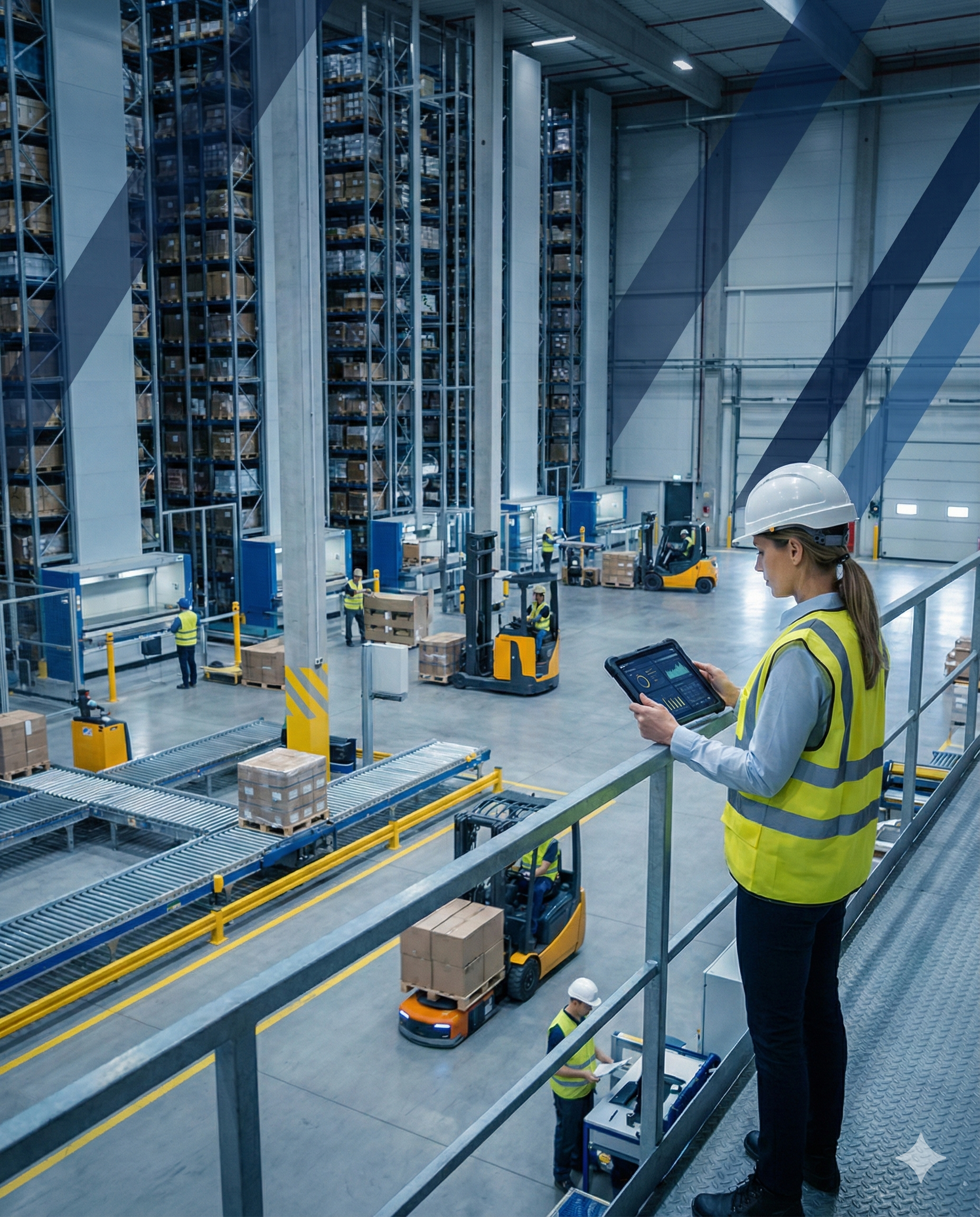
Industrial Wireless Network Solutions for Logistics Facilities
CTS designs and manages high-performance wireless networks for warehouses, distribution centers, and transportation hubs. From warehouse-wide Wi-Fi and in-building cellular DAS to private LTE and CBRS deployments, we deliver secure, low-latency connectivity that helps keep inventory systems, handheld scanners, IoT devices, and operations moving.
20,000+ wireless deployments | Warehouse & distribution expertise | Indoor + outdoor coverage | Wi-Fi, private cellular, DAS & managed services

Engineered for Complex Logistics Environments
Wireless design tailored to high-bay racking, large floorplates, outdoor yards, automation, and high-mobility operations.

Multi-Technology Wireless Expertise
CTS integrates Wi-Fi, private cellular, DAS, Public Safety DAS, and supporting infrastructure into a unified strategy.

24x7 Managed Operations
Proactive monitoring, performance optimization, maintenance, repair coordination, and field support for always-on logistics environments.

Scalable Across Multi-Site Portfolios
Repeatable wireless design and deployment for regional and national warehouse, distribution, and logistics networks.
QUICK ANSWER
WHAT WIRELESS CONNECTIVITY DO WAREHOUSES AND LOGISTICS FACILITIES NEED?
Modern warehouses and logistics facilities often require a combination of wireless technologies rather than a single network. Wi-Fi supports enterprise applications, scanners, tablets, and mobile workstations; private cellular can support automation, IoT, cameras, and outdoor operations; DAS provides reliable public cellular coverage; and Public Safety DAS supports first responder communications and code compliance.
CTS evaluates the facility, workflows, devices, mobility requirements, RF environment, and future growth to determine the right combination of wireless infrastructure for each operation.
WAREHOUSE WI-FI
Reliable Wi‑Fi for High-Mobility Warehouse Operations
Warehouses and distribution centers depend on Wi-Fi to support handheld scanners, tablets, mobile workstations, warehouse management systems, and other connected devices across large, constantly changing environments. CTS designs and manages warehouse Wi-Fi networks around the RF conditions, mobility requirements, device density, and operational workflows unique to logistics facilities.
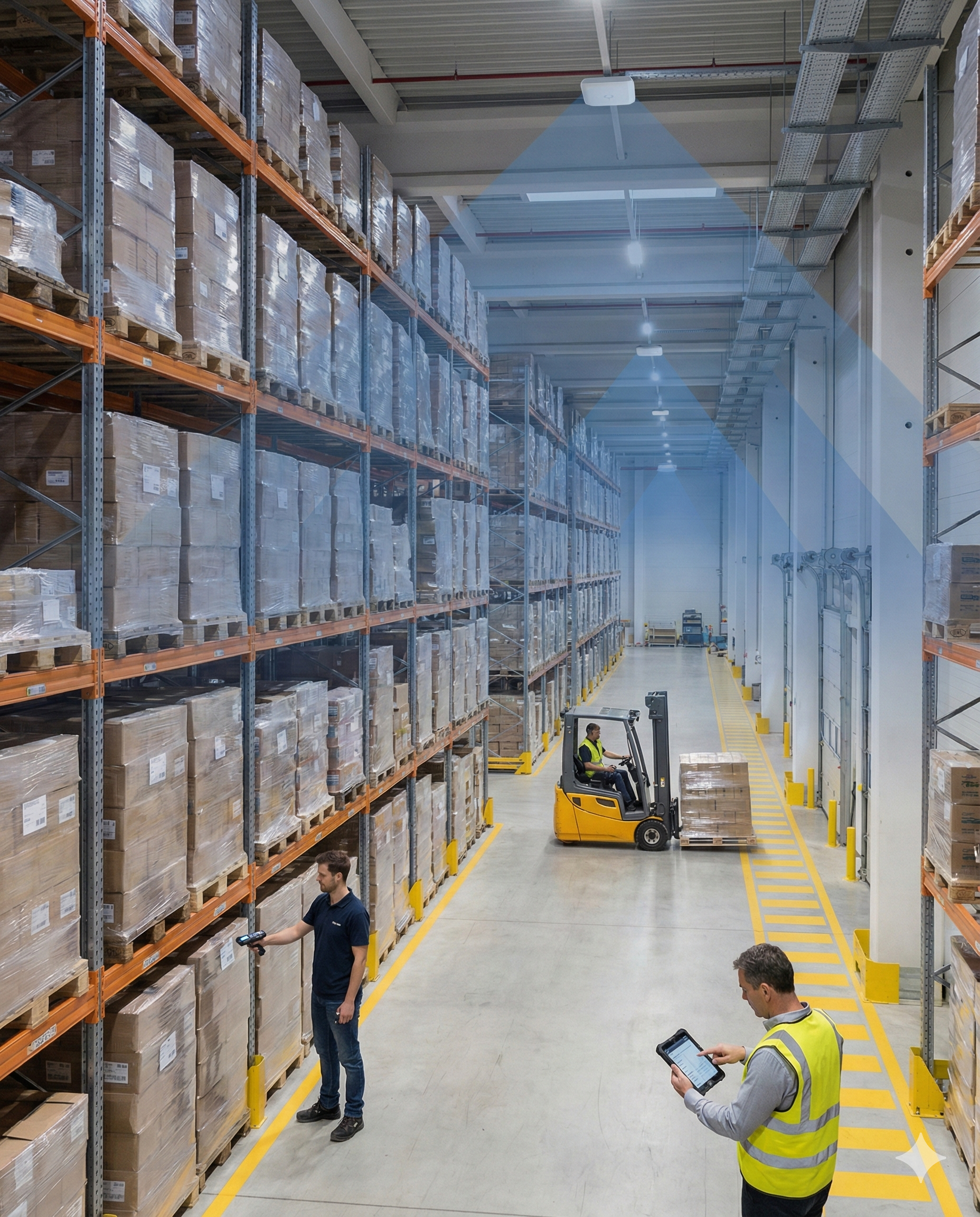
Engineered for High-Bay and Metal-Dense Environments
Tall ceilings, metal racking, palletized inventory, moving equipment, and changing storage conditions can cause signal reflection, absorption, and interference that challenge conventional enterprise Wi-Fi designs. CTS uses site surveys, predictive RF modeling, and optimized access point placement to engineer reliable coverage across high-bay storage areas, distribution floors, and other challenging warehouse environments.
Seamless Roaming for Mobile Workers and Devices
Logistics operations depend on continuous connectivity as workers and equipment move throughout the facility. Handheld scanners, tablets, voice devices, and vehicle-mounted systems must transition between access points without dropped sessions or disruptive latency. CTS designs for appropriate access point density, channel planning, and fast roaming to maintain consistent connectivity across operational zones.
PRIVATE CELLULAR
Private Cellular Networks for Logistics Automation and Yard Operations
Private cellular networks provide controlled, wide-area connectivity for logistics applications that require reliable mobility across warehouses, loading areas, outdoor yards, and other operational zones. CTS designs private LTE and private 5G networks, including CBRS-based solutions, around facility coverage requirements, connected devices, operational workflows, security requirements, and future automation needs.
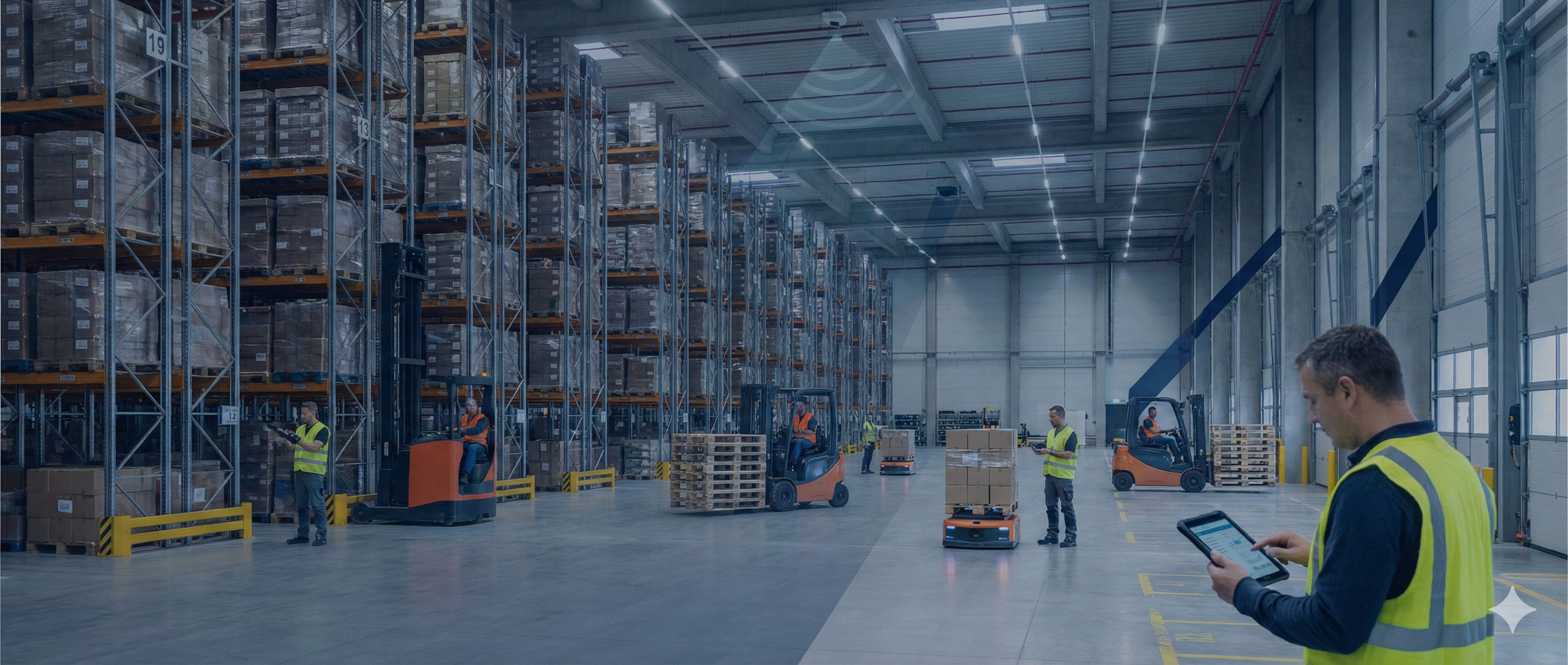
Private LTE for Reliable Wide-Area Mobility
Private LTE provides stable connectivity across large indoor and outdoor logistics environments and is well suited for applications that require consistent mobility and network control. It can support vehicle-mounted systems, handheld devices, cameras, IoT equipment, and other operational technologies as they move between warehouse floors, loading areas, and yard environments.
Private 5G for Advanced Automation
Private 5G can support more demanding logistics applications that require higher capacity, lower latency, or greater device density. For facilities deploying autonomous mobile robots, machine vision, advanced IoT systems, and other data-intensive automation, private 5G provides a scalable wireless platform that can evolve as operational and performance requirements grow.
CELLULAR DAS
In-Building Cellular Coverage and DAS for Logistics Facilities
Large warehouses and distribution facilities can be difficult environments for reliable public cellular service. Metal construction, high-bay racking, deep interior spaces, and large floorplates can weaken outdoor carrier signals and create inconsistent coverage for employees, drivers, supervisors, vendors, and other mobile users. CTS designs in-building cellular systems that extend reliable carrier coverage throughout logistics facilities and other operational areas.
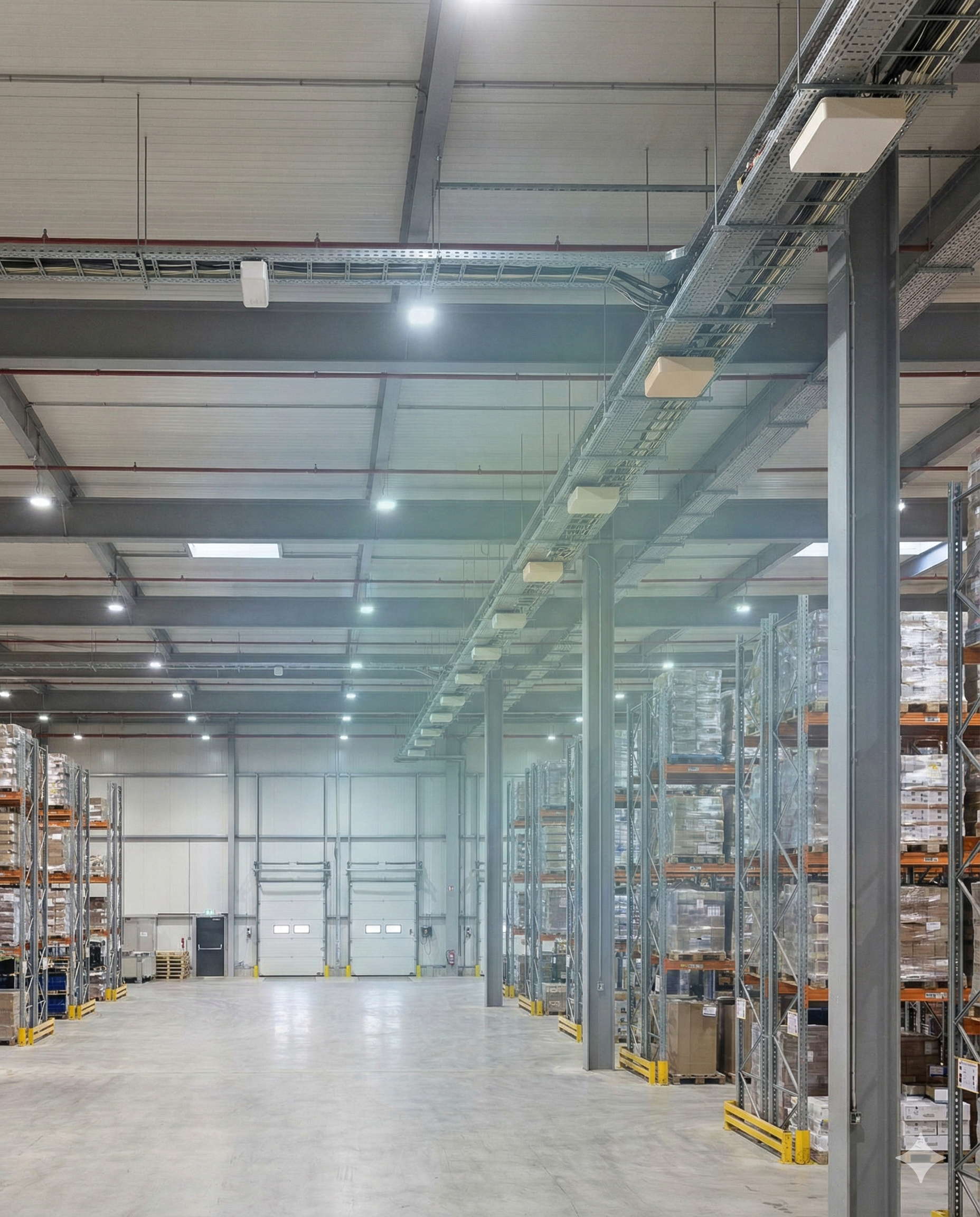
Overcoming Cellular Signal Loss in Large Metal Structures
Warehouse construction and inventory conditions can significantly affect radio frequency performance. CTS evaluates existing carrier signal conditions, building materials, facility layout, and coverage requirements to identify weak areas and design an in-building cellular solution around the specific RF environment.
Multi-Carrier DAS for Logistics Operations
A Distributed Antenna System can provide reliable in-building coverage from multiple wireless carriers across large logistics facilities. CTS engineers DAS solutions to support cellular connectivity across warehouse floors, offices, loading areas, interior corridors, and other operational spaces where dependable public cellular service is important to day-to-day communication and mobility.
For logistics facilities operating an existing DAS, aging equipment, changing carrier requirements, signal-source transitions, and evolving coverage needs can introduce lifecycle and supportability risk even while the system remains operational.
PUBLIC SAFETY DAS
Public Safety DAS for Logistics and Distribution Facilities
Large warehouses, distribution centers, and logistics facilities can create difficult radio-frequency conditions for first responder communications. Metal construction, deep interior spaces, stairwells, service areas, loading zones, and other hard-to-reach areas can weaken public safety radio signals and create coverage gaps. Understanding whether your facility may need a Public Safety DAS is an important part of evaluating code compliance and first responder coverage requirements.
CTS designs and deploys Public Safety DAS and Emergency Responder Radio Communication Systems (ERRCS) to help logistics facilities meet applicable coverage requirements and support reliable first responder communications throughout the building. Our team supports RF testing, system design, installation, commissioning, and coordination with the Authority Having Jurisdiction (AHJ).
From RF Testing Through AHJ Coordination
Evaluate existing public safety radio coverage and identify potential gaps.
Engineer the DAS or ERRCS around facility conditions and applicable requirements.
Install, test, and commission the system for reliable first responder communications.
Support testing, documentation, and coordination with the Authority Having Jurisdiction.
Solving Critical Wireless Challenges in Logistics Operations
Modern logistics facilities depend on uninterrupted connectivity to coordinate warehouse operations, transportation, automation, inventory, and real-time supply chain activity. Coverage gaps, inconsistent performance, and disconnected operational zones can slow workflows, reduce visibility, and increase operational risk.
Enabling Real-Time Visibility Across Complex Supply Chains
Logistics operations depend on continuous data exchange among warehouse management systems, transportation platforms, handheld devices, scanners, and IoT sensors. Reliable connectivity helps maintain accurate inventory visibility, faster information flow, and better coordination across warehouse, dock, yard, and transportation activities.
Supporting Automation with Reliable, Low-Latency Connectivity
Autonomous mobile robots, conveyor systems, machine vision, connected equipment, and other automation technologies place increasing demands on warehouse networks. Wireless infrastructure designed for predictable performance, capacity, and mobility helps logistics operators scale automation while reducing connectivity-related disruptions and bottlenecks.
Delivering Seamless Indoor and Outdoor Coverage
Logistics operations often extend from warehouse floors and offices to loading docks, yards, staging areas, and other outdoor operational zones. Consistent connectivity across these environments helps workers, devices, and operational systems stay connected as activity moves between indoor and outdoor areas.
Supporting 24x7 Operational Continuity
Many logistics and distribution operations run around the clock, making wireless reliability critical to throughput, workforce productivity, safety, and delivery performance. Proactive monitoring, optimization, troubleshooting, and ongoing support help identify issues earlier and reduce the risk of connectivity problems disrupting operations.
Connectivity Planning Across the Logistics Facility Lifecycle
Wireless requirements in logistics environments evolve as facilities expand, automation increases, device counts grow, and operational workflows change. CTS helps logistics operators plan, design, deploy, and manage wireless infrastructure that supports today’s operations while providing flexibility for future growth.
CTS supports warehouse Wi-Fi, private cellular, cellular DAS, and Public Safety DAS from initial assessment through deployment and ongoing support.

Plan
Assess RF conditions, operational workflows, device requirements, indoor and outdoor coverage needs, safety requirements, and future growth before infrastructure decisions are made.

Design
Engineer the right mix of Wi-Fi, private cellular, cellular DAS, and Public Safety DAS around facility layout, mobility, security, capacity, and operational requirements.

Deploy
Coordinate installation, commissioning, testing, carrier requirements, cutovers, and project sequencing while minimizing disruption to active logistics operations.

Manage
Provide 24x7 monitoring, preventive maintenance, optimization, troubleshooting, repair coordination, field support, and lifecycle planning to help maintain reliable wireless performance over time.
Logistics Wireless Resources
Explore CTS resources covering enterprise wireless solutions, private cellular for logistics environments, and managed operations for ongoing network performance and support.
-
CTS Wireless Solutions Overview
Learn how CTS plans, designs, deploys, and manages wireless infrastructure across cellular DAS, private cellular, Wi-Fi, Public Safety DAS, and managed services.
-
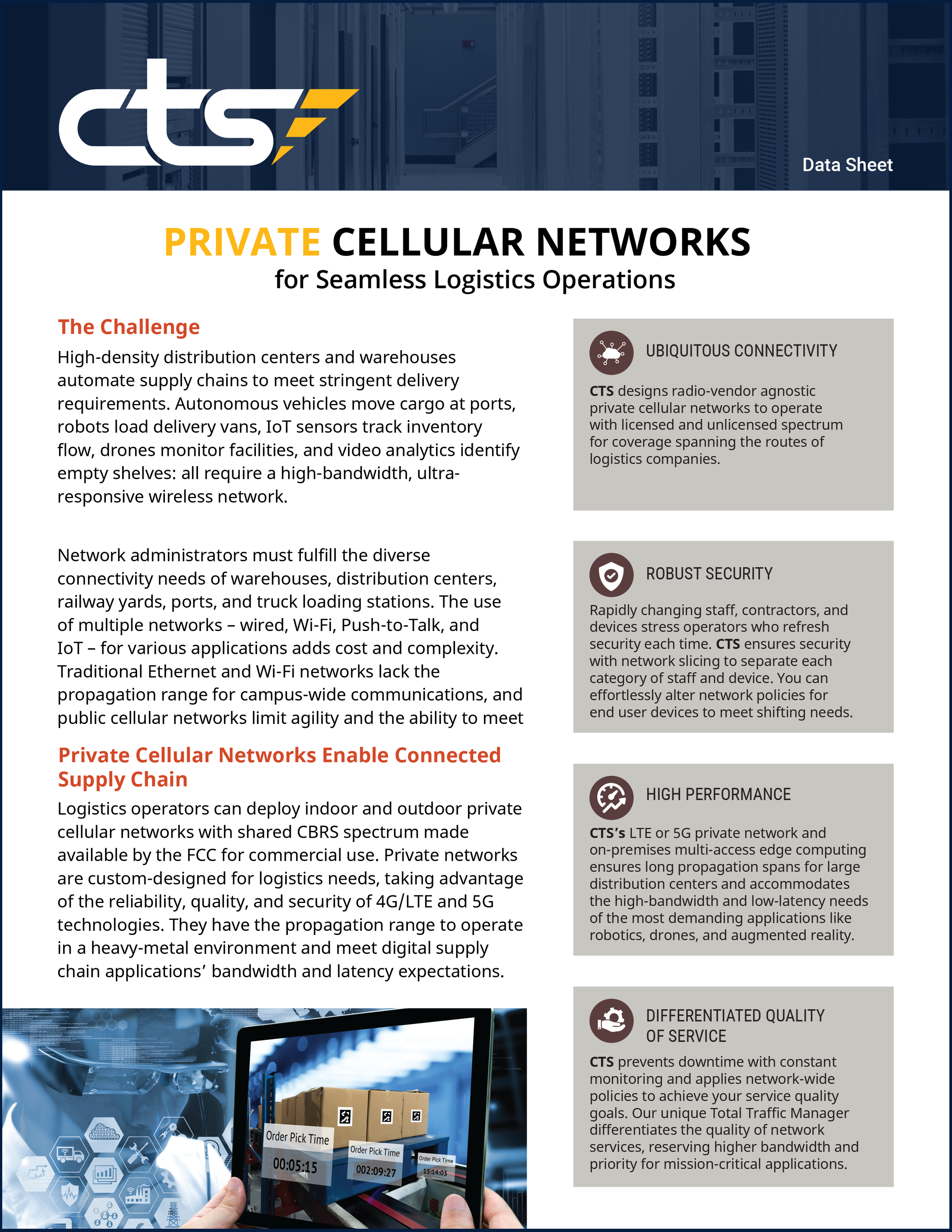
Private Cellular Networks for Logistics
See how private LTE and private 5G can support automation, mobility, IoT, cameras, and indoor and outdoor connectivity across logistics and distribution environments.
-
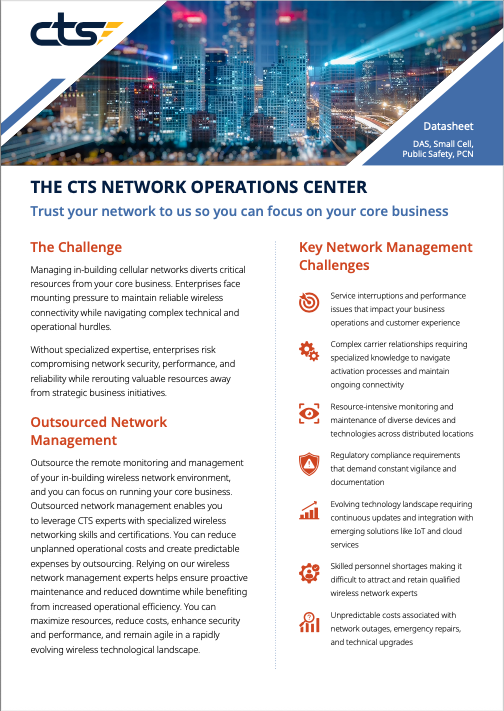
Managed Wireless Operations & Support
Explore how CTS provides 24x7 monitoring, diagnostics, optimization, maintenance coordination, and ongoing support for critical wireless infrastructure.
Latest Insights
Explore guidance on choosing the right wireless network, improving in-building cellular performance, planning for Public Safety DAS requirements and managing wireless infrastructure through its lifecycle.
Warehouse and Logistics Wireless Networks Frequently Asked Questions
-
Wi-Fi and private cellular serve different requirements in logistics environments. Wi-Fi is often well suited for scanners, tablets, mobile workstations, and other high-density indoor devices, while private LTE or private 5G can provide controlled coverage and mobility for automation, cameras, IoT systems, and outdoor yard operations. Many facilities use both as part of an integrated wireless strategy.
-
Private cellular can be a good fit when logistics operations require reliable mobility across large indoor and outdoor areas, controlled device access, or connectivity for automation and operational technology. Whether private LTE or private 5G is appropriate depends on coverage, capacity, latency, device, security, and application requirements.
-
Metal construction, high-bay racking, concrete, insulated walls, and deep interior spaces can weaken or block outdoor carrier signals inside logistics facilities. RF testing can identify coverage gaps, and an in-building cellular system such as a DAS can provide reliable carrier coverage where the outdoor network does not adequately penetrate the building.
-
Public Safety DAS or ERRCS may be required when a building does not meet the emergency responder radio coverage requirements enforced by the local Authority Having Jurisdiction (AHJ). Requirements vary by jurisdiction and building conditions, so RF testing and early coordination with the AHJ are important for determining whether a system is required.
-
Improving warehouse Wi-Fi begins with understanding how racking, inventory, ceiling height, device locations, and movement affect RF performance. Site surveys, predictive RF modeling, appropriate access point placement, channel planning, and roaming optimization can help reduce dead zones and maintain consistent connectivity across the facility.
-
Maintaining connectivity across warehouse floors, loading docks, staging areas, and outdoor yards may require a combination of Wi-Fi, private cellular, and public cellular coverage. The appropriate architecture depends on device types, mobility patterns, applications, RF conditions, and the coverage required across each operational zone.
Plan Your Logistics Wireless Strategy
Whether you are planning a new facility, modernizing an existing wireless environment, expanding across multiple sites, or addressing performance issues, CTS can help define the right mix of wireless technologies for your operations.