
DAS LIFECYCLE RISK REVIEW

DAS Lifecycle Risk Review for Aging and Carrier-Affected Systems
Received an EOL/EOS notice, facing a carrier signal-source change, or unsure whether your DAS meets current carrier requirements? CTS can help you understand what is changing, what infrastructure may still be usable, and what action may be needed.
The carrier-agnostic, OEM-agnostic DAS Lifecycle Risk Review evaluates signal-source continuity, equipment lifecycle, carrier readiness, documentation, monitoring, maintenance, supportability, and coverage concerns to help identify the appropriate path forward.
You may not need to replace your DAS.
Not ready to schedule? Start with the DAS Risk Scorecard.
Carrier Agnostic • OEM Agnostic • Nationwide DAS Expertise • 24/7 NOC Support • Experience in Mission-Critical Environments
QUICK ANSWER
WHAT IS A DAS LIFECYCLE RISK REVIEW?
A DAS Lifecycle Risk Review is a consultative process that helps organizations understand potential risks related to signal-source continuity, equipment lifecycle, carrier readiness, documentation, monitoring, maintenance, and support responsibilities, and identify the appropriate path forward.
The Review helps clarify:
What has changed and what is known about the existing DAS and signal source.
What information or risks require further attention, including carrier requirements, lifecycle, documentation, support, monitoring, and coverage concerns.
What level of action may be appropriate: Monitor & Maintain, Remediate, Enhance / Upgrade, Lifecycle Plan, or Replace.
If more information is needed, CTS may recommend onsite discovery or additional engineering and technical evaluation. When a new managed carrier signal source is required, Forte may support the recommended path.
The DAS Lifecycle Risk Review is not a free engineering audit, RF walk test, or definitive system-health certification. Formal testing, engineering validation, carrier coordination, or detailed upgrade planning may require a separate paid scope.
A Functioning DAS Can Still Face Lifecycle Risk
A DAS can remain operational while lifecycle or coverage-continuity risk is developing. The DAS infrastructure distributes cellular service throughout the building, but it depends on an active, carrier-approved signal source. Changes to the signal source, carrier requirements, equipment support, documentation, monitoring, or maintenance can create risk even while the system still appears to be working.
The first step is to understand what has changed, what infrastructure may still be usable, and where additional attention may be required.
When to Consider a DAS Lifecycle Risk Review
Consider a review if:
✓ You received an EOL/EOS notice from a carrier or DAS manufacturer.
✓ A carrier is changing or discontinuing the signal source feeding your DAS.
✓ You are unsure who owns, monitors, maintains, or supports the system.
✓ The DAS has not been evaluated against current carrier requirements.
✓ You are experiencing coverage concerns or planning renovations, expansions, or other facility changes.
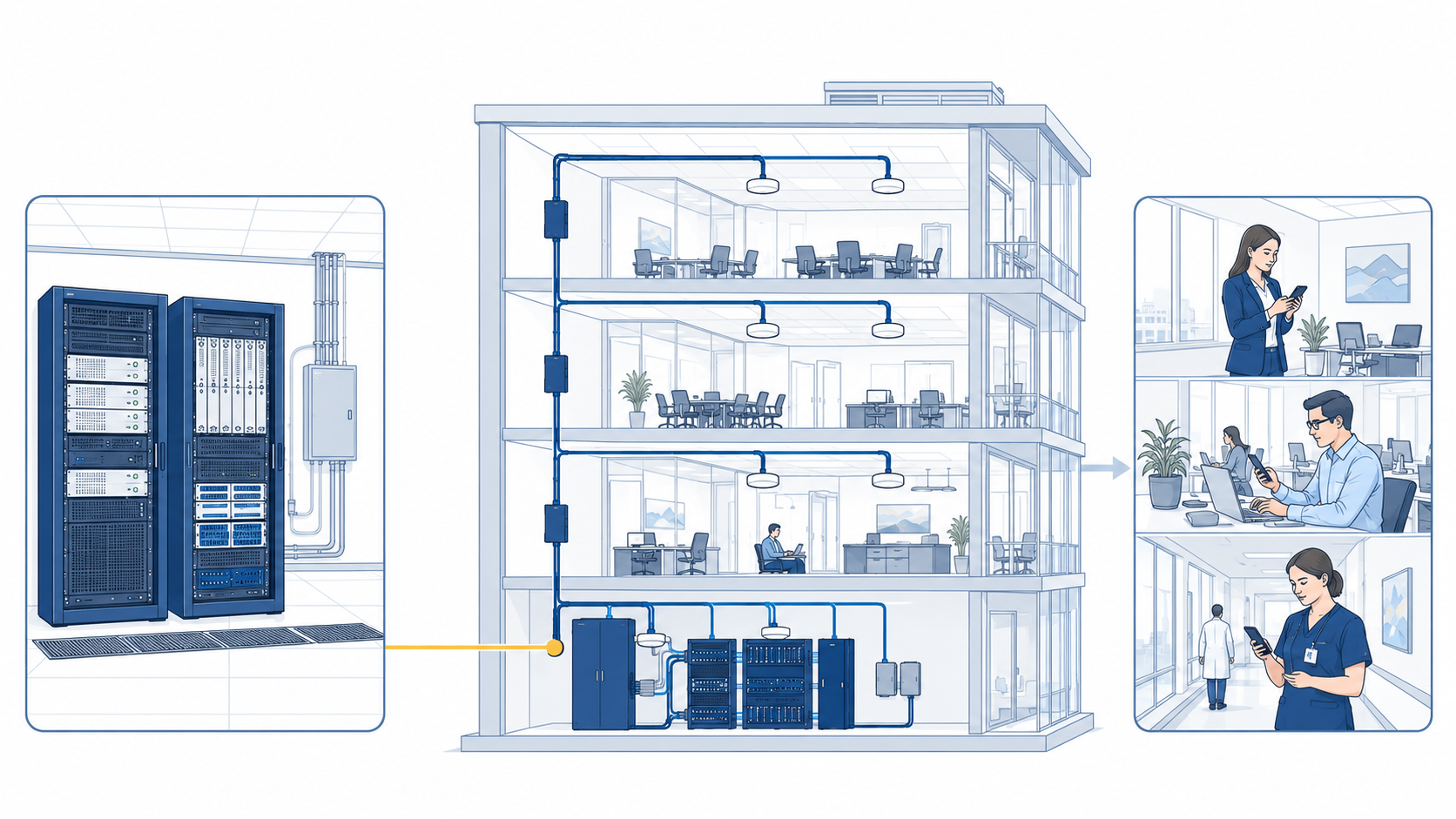
Carrier-Approved Signal Source
DAS Infrastructure
In-Building Cellular Coverage
Changes to the carrier-approved signal source can affect coverage continuity even when the DAS infrastructure itself remains operational.
Where DAS Lifecycle Risk Can Appear
Lifecycle risk can develop across several areas of an existing DAS. The Risk Review considers six key areas:

Coverage and Planning
Coverage concerns, renovations, expansions, tenant changes, or capital plans can expose system limitations.

Signal-Source Continuity
Carrier changes, uncertain ownership, or unclear shutdown timing can put coverage continuity at risk.

Equipment Lifecycle and Supportability
Aging or unsupported components can make parts, software, and service more difficult to obtain.

Current Carrier Readiness
Older systems may not support the bands, technologies, capacity, or technical requirements carriers require today.

Documentation
Incomplete records, credentials, or ownership details can delay support and lifecycle planning.

Monitoring and Maintenance
Limited alarm visibility or reactive-only maintenance can allow smaller issues to become larger problems.
Identifying lifecycle risk does not mean your DAS needs to be replaced.
The goal is to determine the appropriate level of action based on the condition, supportability, performance, and future requirements of the system.
Not Every DAS Requires a Replacement
The DAS Lifecycle Risk Review identifies the appropriate level of action based on the system’s condition, supportability, performance, carrier requirements, and future needs. Depending on the findings, the recommended path may range from ongoing support to full replacement.
Less Extensive Intervention → More Extensive Intervention

Monitor & Maintain
Validate the system, address known issues and establish ongoing support.

Remediate
Correct defined system, component or performance issues.

Enhance / Upgrade
Improve or extend the existing DAS to support current needs or planned changes.

Lifecycle Plan
Develop a phased modernization strategy when the system needs a longer-term path forward.

Replace
Plan and execute full system replacement when lifecycle, supportability or performance risk warrants it.
If more information is needed before a recommendation can be made, CTS may recommend additional engineering or technical evaluation.
When the Signal Source Changes, Forte May Provide a Managed Path Forward
When a carrier discontinues, removes, or stops supporting the signal source feeding a DAS, the building may need a new carrier-approved source to maintain in-building cellular service. The existing DAS may still be usable, but it must first be evaluated against current carrier requirements.
Forte is a CTS-managed signal-source solution that can support one or more customer-required carriers using carrier-approved equipment and coordination. It can provide a managed path for maintaining coverage when the previous carrier-funded or carrier-managed signal-source model is no longer available.
Existing DAS Reuse Must Be Evaluated
The existing DAS may require targeted upgrades or broader modernization before carrier approval and activation can proceed. The DAS Lifecycle Risk Review helps determine whether Forte may support the recommended path and what additional validation, coordination, or system changes may be needed.
Step 1: Risk Review Conversation
CTS discusses the trigger event, current signal-source status, required carriers, known coverage or performance concerns, available documentation, ownership and support history, and business priorities.
The DAS Lifecycle Risk Review creates a practical path from an initial concern to a recommended next step, while recognizing when additional technical information may be required.
How the DAS Lifecycle Risk Review Works
Step 2: Qualified Onsite Discovery
For qualified opportunities, CTS typically conducts onsite discovery to gather additional system information, review key equipment and documentation, and validate identified risk factors.
Step 3: Findings Summary
CTS summarizes what is known, what remains unclear, and the primary lifecycle, signal-source, carrier-readiness, coverage, documentation, or support risks identified during the Review.
Step 4: Recommended Path
CTS identifies the appropriate path forward: Monitor & Maintain, Remediate, Enhance / Upgrade, Lifecycle Plan, or Replace. If more information is needed before a recommendation can be made, CTS may recommend additional engineering or technical evaluation.
The Risk Review identifies probable risks and the likely path forward. Final technical recommendations, carrier approval, coverage validation, or detailed remediation requirements may depend on additional testing and engineering analysis.
DAS RISK SCORECARDThe DAS Risk Scorecard is a self-guided assessment that helps organizations identify visible risks related to signal-source continuity, equipment lifecycle, carrier readiness, documentation, monitoring, maintenance, and coverage planning.
Based on your responses, the Scorecard provides an overall risk result and identifies the areas that may require further attention.
The DAS Risk Scorecard identifies risk indicators. It does not diagnose system health, confirm Forte eligibility, guarantee carrier approval, or recommend a final technical solution.
Not Ready to Schedule? Complete the DAS Risk Scorecard
Understand Where DAS Lifecycle Risk May Be Emerging
Scorecard results range from lower visible risk to conditions that warrant more immediate review. Each result reflects the lifecycle, supportability, carrier-readiness, documentation, maintenance, and coverage-planning indicators identified through your responses.
-
Level 1Low Visible Risk
Continue current monitoring, maintenance, documentation, and lifecycle planning while watching for changes in carrier or facility requirements.
-
Level 2Moderate Risk
Review identified gaps and begin planning appropriate next steps before they become more difficult or costly to address.
-
Level 3Elevated Risk
One or more significant lifecycle or coverage-continuity risk indicators are present. A DAS Lifecycle Risk Review can help clarify the likely path forward.
-
Level 4Urgent Review Recommended
Prioritize follow-up when near-term lifecycle, signal-source, service, or facility conditions could affect coverage continuity or planning.
Certain priority risk indicators can automatically trigger an Urgent Review Recommended result.
Scorecard results identify visible risk indicators. They do not diagnose system health, confirm Forte eligibility, guarantee carrier approval, or recommend a final technical solution.
INDUSTRY CONTEXT
DAS Lifecycle Risk in Healthcare and Commercial Real Estate
Lifecycle risk can affect any facility that depends on reliable in-building cellular service, but the operational and planning implications can vary by environment.

Healthcare & Medical Campuses
Hospitals and medical campuses depend on reliable in-building cellular service for staff, patients, visitors, and connected operations. Carrier signal-source changes, aging equipment, incomplete documentation, or facility renovations can create continuity and supportability risk even while the DAS is still operating.

Commercial Real Estate
Office buildings and commercial real estate portfolios must balance tenant experience, capital planning, carrier requirements, and changing building use. A DAS Lifecycle Risk Review can help identify where existing infrastructure may remain viable, where remediation or upgrades may be needed, and where longer-term lifecycle planning should begin.
Why Organizations Choose CTS
CTS helps organizations understand DAS lifecycle and signal-source risk before committing to a specific course of action.
Our carrier-agnostic, OEM-agnostic approach starts with the carriers the organization needs to support and the requirements of the existing environment. CTS helps determine what infrastructure may remain viable, what gaps may need to be addressed, and when deeper technical validation is required.
Carrier-agnostic strategy
OEM-agnostic technology guidance
Carrier-approved solutions and coordination
Nationwide DAS design, deployment, and support experience
Forte managed signal-source capabilities
24/7 NOC, monitoring, maintenance, and lifecycle support
Capabilities spanning monitoring and maintenance, remediation, upgrades, lifecycle planning, and full replacement when warranted
The customer determines which carriers are required. CTS supports one or multiple carriers through carrier-approved technologies, coordination, and practical lifecycle planning.
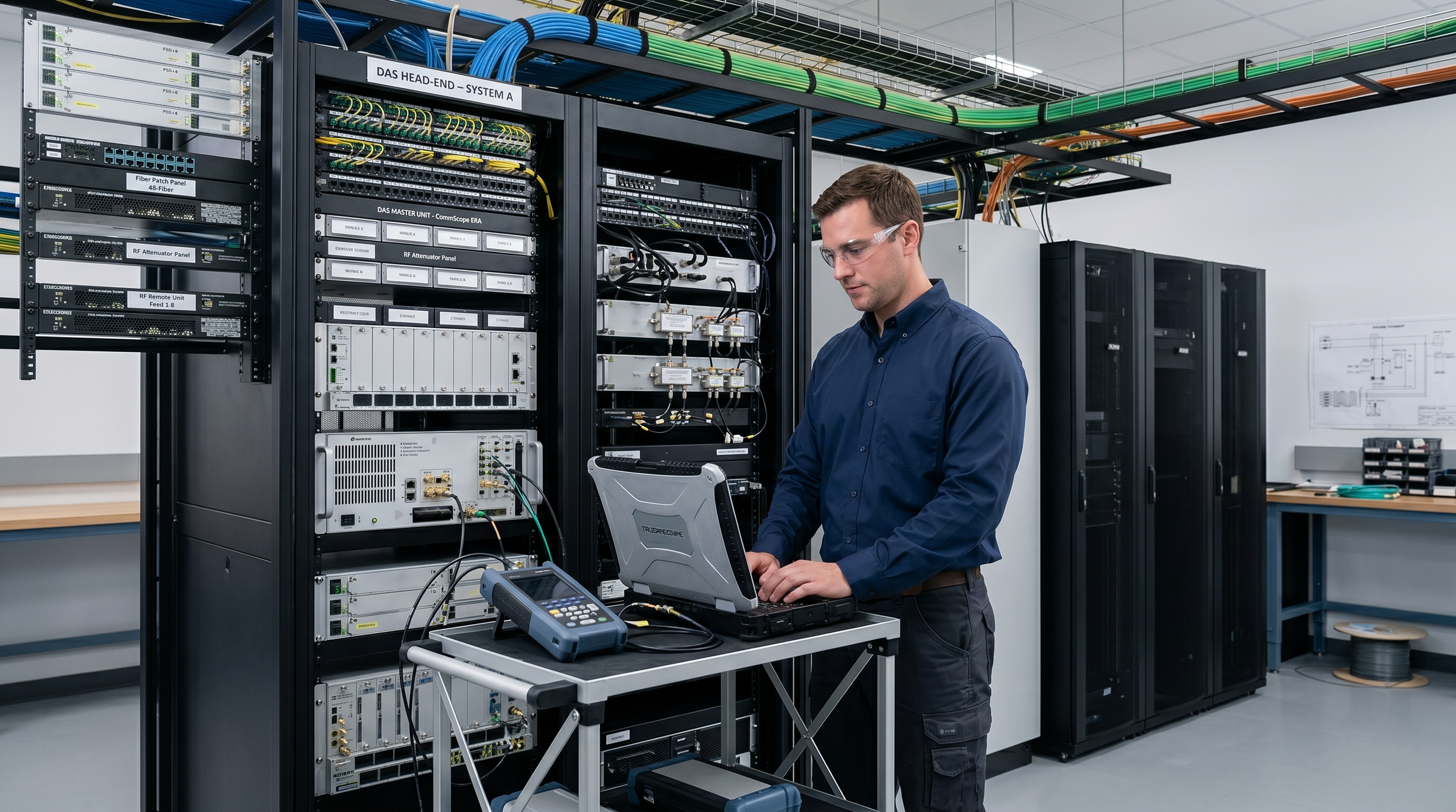
Schedule a DAS Lifecycle Risk Review
If you are responding to a carrier signal-source change, an EOL/EOS notice, uncertain DAS support or documentation, or another lifecycle concern, connect with CTS to discuss what has changed and determine the appropriate next step.
Complete the form below to schedule your DAS Lifecycle Risk Review.
The initial Risk Review is consultative and does not obligate your organization to proceed with a paid technical assessment or project.
Understand the Risks Affecting an Existing DAS
DAS lifecycle risk can show up in different ways, from aging equipment and changing carrier requirements to end-of-support notices and signal-source shutdowns. Explore these resources to better understand what may be changing and what it means for your existing system.
DAS Lifecycle Risk Frequently Asked Questions
-
A DAS Lifecycle Risk Review is a consultative process that helps organizations understand potential risks related to signal-source continuity, equipment lifecycle, carrier readiness, documentation, monitoring, maintenance, and support responsibilities. The goal is to clarify what is changing, what infrastructure may remain usable, and the appropriate level of action.
-
A DAS cannot provide cellular service without an active, carrier-approved signal source. If a carrier discontinues or stops supporting the existing source, the building may need a new carrier-approved source to maintain coverage. The existing DAS may still be usable, but it should be evaluated against current carrier requirements. CTS can help assess the affected DAS, required carriers, and potential paths for maintaining coverage continuity.
-
No. An EOL or EOS notice indicates that equipment support, software updates, replacement parts, or service options may become limited, but it does not automatically require full replacement. Depending on the condition, supportability, and performance of the system, the DAS Lifecycle Risk Review may recommend one of five paths: Monitor & Maintain, Remediate, Enhance / Upgrade, Lifecycle Plan, or Replace. When the recommended path requires a new managed signal source, CTS Forte may be part of the solution.
-
Possibly, but reuse cannot be confirmed without further evaluation. Forte is a CTS-managed signal-source solution that uses carrier-approved equipment and coordination to support one or more customer-required carriers. The existing DAS must be evaluated against current carrier standards and may require additional bands, technologies, capacity, or infrastructure upgrades before carrier approval and activation can proceed.
-
The DAS Lifecycle Risk Review begins with a consultative conversation to understand your system, concerns, and known risk factors. For qualified opportunities, onsite discovery is typically the next step, allowing CTS to gather additional system information and validate key conditions before recommending a path forward.
-
CTS can review the information that is available and identify documentation, ownership, credential, and support gaps that may affect troubleshooting or planning. Where feasible, CTS may also assist with documentation recovery through carriers, equipment manufacturers, previous integrators, or internal facility records. Complete documentation recovery cannot be guaranteed.
-
A paid technical scope may be recommended when the appropriate path cannot be confirmed without RF testing, engineering validation, carrier coordination, coverage verification, detailed upgrade planning, or formal remediation design. CTS will explain what additional work is needed and why before proceeding.
-
The DAS Risk Scorecard is a self-guided assessment that identifies visible risk indicators and provides a general risk result. The DAS Lifecycle Risk Review is a CTS-led consultation that considers the organization’s specific trigger event, signal-source status, required carriers, existing infrastructure, documentation, known issues, and business priorities. The Scorecard can help determine whether a Risk Review should be scheduled, but it does not diagnose system health or recommend a final technical solution.
Understand the Risk. Protect Coverage Continuity. Plan the Right Next Step.
If your DAS is affected by a carrier signal-source change, an EOL/EOS notice, uncertain support or documentation, or another lifecycle concern, CTS can help clarify what has changed and identify the appropriate path forward.