
DAS EOL/EOS RISK REVIEW

DAS Lifecycle Risk Review for Aging and End-of-Support In-Building Wireless Systems
If you have received an End-of-Life (EOL) or End-of-Service (EOS) notice from a mobile carrier or DAS OEM, or you know your in-building wireless system is aging, unsupported, or hard to maintain, CTS can help you understand the risk, identify what information may be missing, and determine the right next step.
As legacy in-building wireless systems reach end of support and carriers focus funding on a smaller group of venues, many healthcare systems and commercial property owners are being asked to make planning decisions that may have previously been handled through carrier-led programs. The question becomes: what do we know about the system we have, what remains unclear, and when should we act?
CTS provides a carrier-agnostic, OEM-agnostic DAS Lifecycle Risk Review that helps organizations assess lifecycle risk, documentation gaps, supportability, coverage concerns, and business priorities. The process may include a consultative discussion, an optional readiness assessment, a free onsite discovery visit when appropriate, and guidance on whether a formal paid walk test, engineering assessment, carrier coordination, or modernization plan is needed.
CTS supports DAS Lifecycle Risk Reviews for healthcare facilities, hospitals, medical campuses, office buildings, commercial real estate portfolios, and other complex environments that depend on reliable in-building cellular coverage.
Carrier Agnostic • OEM Agnostic • Nationwide DAS Expertise • 24/7 NOC Support • Experience in Mission-Critical Environments
QUICK ANSWER
WHAT IS A DAS LIFECYCLE RISK REVIEW?
A DAS Lifecycle Risk Review is a consultative discovery process that helps building owners and operators understand potential risk in aging, undocumented, or end-of-support in-building wireless systems.
The review starts with a conversation about known issues, EOL or EOS notices, available documentation, supported carriers, support history, coverage concerns, and business priorities. When appropriate, CTS can also conduct a free onsite discovery visit to walk the property, perform practical cellphone-based spot checks by carrier, review visible head-end equipment, collect available documentation, and identify information gaps.
The DAS Lifecycle Risk Review is not a formal engineering audit, RF walk test, or definitive system health validation. If deeper technical validation is needed, CTS may recommend a paid assessment, formal walk test, carrier coordination, modernization plan, or managed support proposal.
The In-Building Wireless Support Model has Changed
What EOS and EOL notices mean for building owners and operators
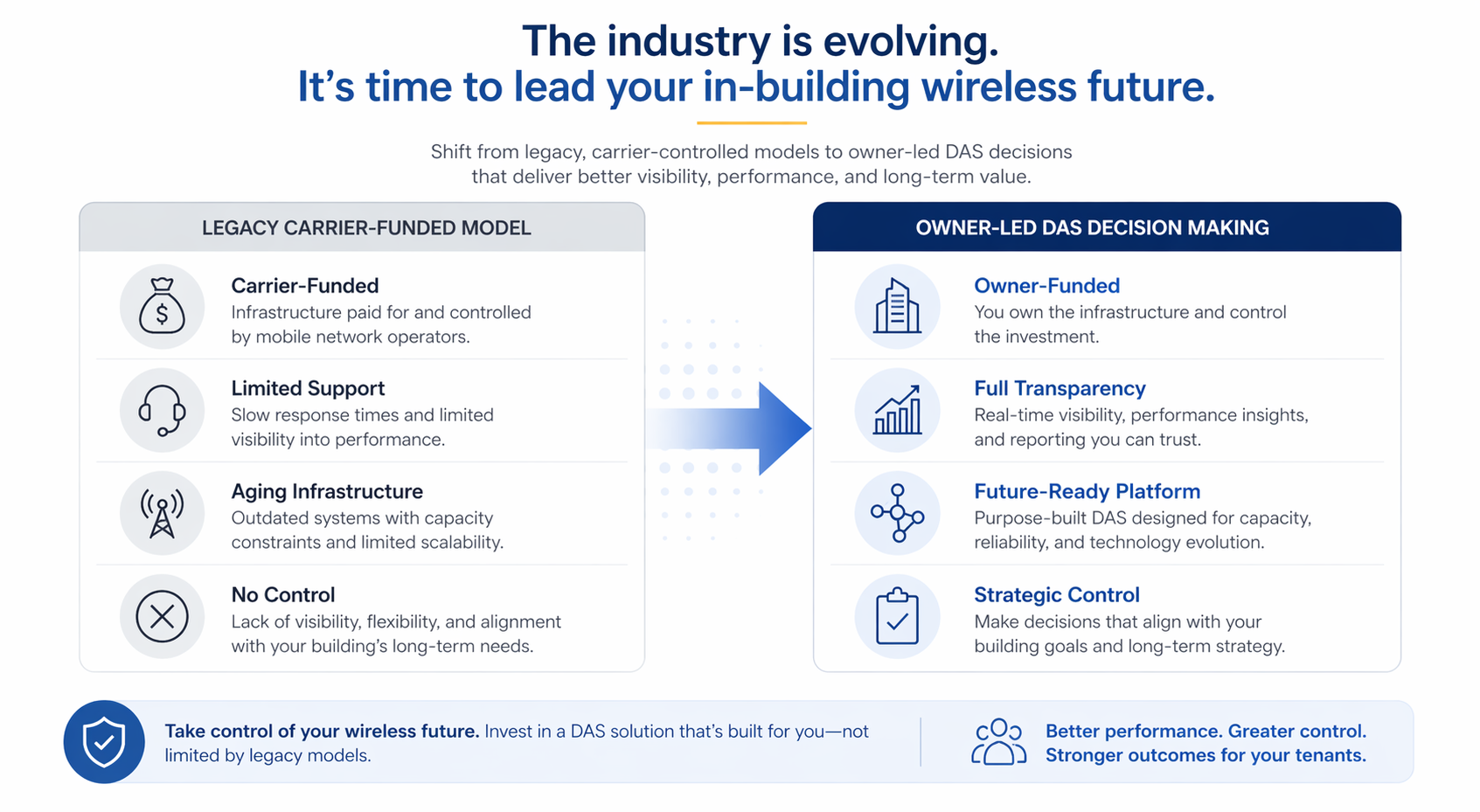
For years, many in-building wireless systems were deployed, funded, or supported under carrier driven models. That is no longer the norm for most properties. Today, owners are seeing EOL and EOS notices for older DAS platforms as carriers and OEMs focus their investments on a smaller set of flagship venues.
When that happens, the responsibility for evaluating, planning, and funding the next move increasingly shifts to your organization.
At the same time, older systems may face:
limited or sunset OEM support
limited access to current as-builts, carrier records, alarms, or system documentation
fewer viable repair and replacement options
outdated carrier configurations and bands
growing maintenance and lifecycle risk
declining alignment with current clinical, tenant, or business needs
An aging or EOL DAS is not just a technical issue. It is a planning issue. The challenge is understanding what is known, what information may be missing, what risk is increasing, and what level of action actually makes sense.
Why Aging DAS Infrastructure Becomes a Business Problem
Waiting too long to evaluate an aging or unsupported DAS can lead to more expensive and more disruptive decisions later. The question is not only whether the system still functions today. The question is whether it remains supportable, viable, and aligned with the needs of your building.
Once a system has been designated EOL or EOS, major failures, configuration changes, or carrier updates may take more time, create more complexity, and require less efficient workarounds, especially if there is no clear plan in place.

Support Risk
Unclear supportability when parts fail or carrier requirements change.

Cost Exposure
Greater risk of reactive spend, inefficient workarounds, or unplanned capital needs.

Coverage and Performance concerns
Potential decline in indoor wireless experience as systems age or carrier needs change.

Documentation Gaps
Limited access to as-builts, carrier records, OEM details, or current system documentation.

Planning Gaps
Difficulty aligning next steps to budget cycles, renovations, and building plans.
Not Every DAS Issue Requires the Same Next Step
Not every EOL/EOS notice or aging DAS concern means immediate replacement. Some environments may need documentation review, continued monitoring, or managed support planning. Others may require a formal walk test, engineering assessment, carrier coordination, targeted remediation, modernization planning, or replacement evaluation.
The DAS Lifecycle Risk Review helps identify what is known, what remains unclear, and whether deeper technical validation is needed before final recommendations are made.

Review
Clarify available documentation, known issues, supported carriers, and business priorities.

Discover
Use onsite discovery, visible equipment review, and practical cellphone spot checks where appropriate.

Validate
Recommend a formal paid assessment or walk test when measured RF validation is needed.

Plan
Define the next path based on findings, risk, priorities, and technical requirements.
After appropriate discovery and technical validation, possible paths may include maintain, repair, augment, or replace.
Why Organizations Choose CTS
CTS helps organizations understand DAS lifecycle risk before they commit to a repair, upgrade, managed support, or replacement path.
We provide independent guidance grounded in field experience, practical discovery, system documentation review where available, and real-world building conditions.
Carrier agnostic guidance
OEM agnostic assessment
Strategy-first approach
Nationwide DAS experience
24/7 NOC and managed support capabilities
Experience in enterprise and mission-critical environments
Support for formal assessment, maintenance, modernization, and replacement planning
What the DAS Lifecycle Risk Review May Include
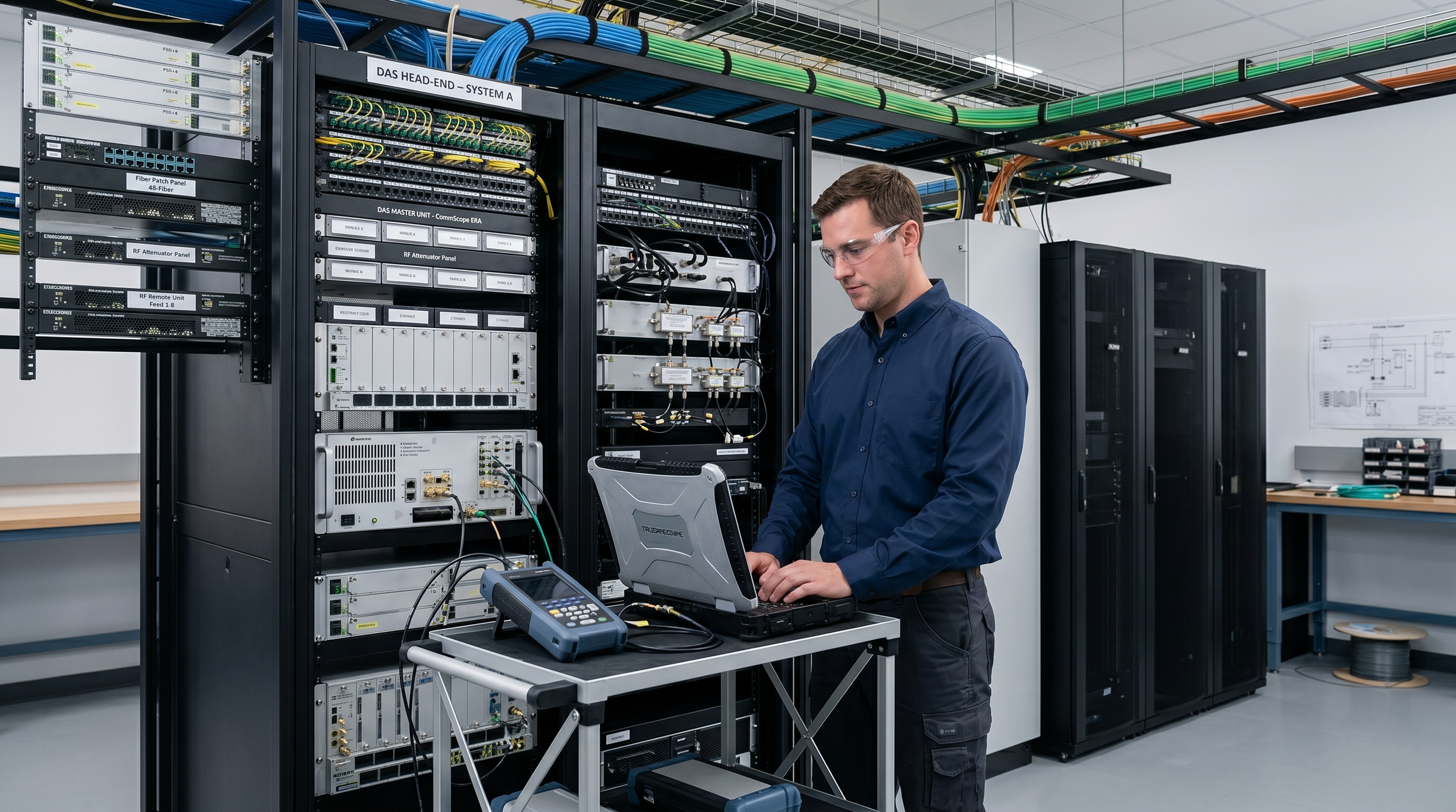
The DAS Lifecycle Risk Review is designed to help you understand your current situation, interpret any EOL or EOS notices, identify information gaps, and determine whether onsite discovery or a formal paid technical assessment is warranted.
It is not a formal RF walk test, engineering audit, or definitive system health validation.
Initial risk review conversation
Review of EOL/EOS notices, known issues, timelines, and business priorities
Discussion of site profile, supported carriers, coverage concerns, and support history
Review of available customer-provided documentation
Free onsite discovery visit, when appropriate
Walkthrough of relevant coverage areas
Practical cellphone-based spot checks by carrier
Review of visible head-end equipment where accessible
Collection of available documentation and site observations
Identification of information gaps that may require deeper evaluation
Recommended next step
Email summary or follow-up discussion of observed findings and known gaps
Recommendation on whether a formal paid walk test, engineering assessment, carrier coordination, managed support discussion, or modernization planning is needed
The process begins with a short call and can progress to an on-site assessment if appropriate.
For Healthcare Environments, Reliability Is Operational
Healthcare organizations depend on reliable indoor wireless performance to support staff mobility, clinical communications, and day-to-day operations. As aging DAS and in-building wireless systems lose vendor or carrier support, hospitals and medical campuses may receive EOL or EOS notices for systems that still appear functional, but lack clear documentation, support visibility, or next-step guidance.
CTS helps healthcare organizations:
understand lifecycle risk in active care environments
identify documentation, visibility, supportability, and coverage concerns
plan around renovations, additions, and modernization efforts
determine whether onsite discovery, formal assessment, phased planning, managed support, or replacement evaluation is appropriate

For Commercial Properties, Indoor Wireless Is Part of Tenant Experience
Reliable indoor cellular coverage is increasingly part of what tenants expect from a modern building. As older in-building wireless systems lose support and carriers step back from funding, many owners receive EOL or EOS notices without a clear framework for documentation, ownership responsibility, supportability, or what should happen next.
CTS helps commercial property owners:
understand DAS lifecycle risk in the context of tenant experience and asset planning
identify documentation, ownership, support, and visibility gaps
align next-step planning to leasing strategy, capital plans, and building operations
determine whether onsite discovery, formal assessment, managed support, modernization planning, or replacement evaluation is appropriate

How the DAS Lifecycle Risk Review Process Works
Step 1
Start with a risk review conversation
CTS reviews your current situation, known issues, EOL or EOS notices, available documentation, supported carriers, site profile, and business priorities.
Step 4
Review findings and next steps
CTS provides an email summary or follow-up discussion outlining observed findings, known gaps, and recommended next steps.
Step 2
Complete the DAS Readiness Assessment, if helpful
If you are not ready to schedule a call, the DAS Readiness Assessment can help identify potential lifecycle, documentation, support, visibility, and coverage risk.
Step 5
Move to formal technical scope if needed
When deeper validation is required, CTS may recommend a paid walk test, engineering assessment, carrier coordination, managed support proposal, or modernization plan.
Clear next steps. No one-size-fits-all answer.
Step 3
Conduct onsite discovery when appropriate
CTS may perform a free onsite discovery visit to walk the property, conduct practical cellphone-based spot checks, review visible head-end equipment, and collect available documentation.
Not Ready to Schedule a Call? Take the DAS Readiness Assessment
The DAS Readiness Assessment is a short online tool designed to help organizations identify potential lifecycle, documentation, support, visibility, and coverage risk. It is intended for prospects who are not yet ready to schedule a call but want to better understand whether their DAS environment may require further review.
The assessment does not diagnose system health or recommend a final technical path. It provides a readiness profile and helps CTS prepare a more informed follow-up conversation if the prospect chooses to engage.
Schedule a DAS Lifecycle Risk Review
If your building is relying on an aging, unsupported, undocumented, or increasingly hard-to-maintain DAS, CTS can help you understand risk, identify what information may be missing, and determine whether onsite discovery or formal technical assessment may be appropriate.
A CTS representative will use this information to follow up about your DAS Lifecycle Risk Review request and related communications.
CTS will use this information to follow up about your DAS Lifecycle Risk Review request and related communications. Not ready to schedule a call? Take the DAS Readiness Assessment.
DAS Lifecycle Risk Review Frequently Asked Questions
-
A DAS Lifecycle Risk Review is a consultative discovery process that helps organizations understand potential risk in aging, undocumented, or end-of-support DAS environments. It starts with a conversation and may include a free onsite discovery visit when appropriate.
-
No. The free review is not a formal engineering audit, RF walk test, or system health certification. If deeper technical validation is needed, CTS may recommend a paid assessment or formal walk test.
-
The initial review is led by CTS sales. When appropriate, CTS can conduct a free onsite discovery visit to collect available information, perform practical cellphone-based spot checks, review visible equipment, and identify information gaps.
-
CTS provides an email summary or follow-up discussion outlining observed findings, known gaps, and recommended next steps. Those next steps may include a formal assessment, walk test, carrier coordination, managed support discussion, modernization planning, or remediation planning.
-
That is common, especially when the system was originally carrier-funded or carrier-managed. CTS can help identify what information is available, what may be missing, and whether a formal assessment is needed to move forward.
-
Not necessarily. An EOL/EOS notice is a planning trigger. The right next step depends on supportability, documentation, carrier requirements, coverage needs, budget timing, and technical findings.
-
Yes, when appropriate for a qualified opportunity. The onsite discovery visit is intended to collect available information and identify visible risks or gaps. Formal RF testing, engineering assessment, or technical validation would require a separate paid scope.
-
The DAS Readiness Assessment is a short online assessment that helps prospects self-identify potential lifecycle, documentation, visibility, support, and coverage risk. It does not diagnose system health or recommend a final technical path.
Ready to Understand Your DAS Risk?
Start with a DAS Lifecycle Risk Review to understand what is known, what may be missing, and what next step makes sense for your building or portfolio.