
Wireless Strategy for Commercial Real Estate: DAS, Private 5G, Wi-Fi and ERRCS
Commercial properties depend on wireless connectivity more than ever. Tenants expect reliable mobile service. Visitors expect easy Wi-Fi. Building owners need code-compliant public safety communications. Enterprise users may also need secure, high-performance wireless for operations, IoT, automation, or mission-critical applications.
But not every wireless problem should be solved with the same technology.
A modern commercial property wireless strategy should define the right role for each network layer:
DAS or small cells for public cellular coverage.
Private LTE or private 5G for enterprise-controlled wireless operations.
Wi-Fi for general enterprise and guest connectivity.
Public Safety DAS / ERRCS for first-responder radio coverage and code compliance.
The goal is not to force every building into one standard architecture. The goal is to match each connectivity requirement to the right solution.
CTS helps commercial real estate owners, operators, and enterprise tenants design, deploy, and manage wireless infrastructure that supports coverage, capacity, compliance, and long-term property value.
Commercial property connectivity is no longer solved by public cellular coverage and Wi-Fi alone. Modern buildings need a layered wireless strategy that matches each requirement to the right solution: DAS or small cells for reliable indoor mobile service, private LTE or private 5G for enterprise-controlled operations, Wi-Fi for everyday tenant and guest access, and Public Safety DAS / ERRCS for first-responder communications and code compliance. The right strategy improves tenant experience, reduces connectivity risk, supports new operational use cases, and creates a stronger foundation for long-term property value.
In This Guide
What Is a Wireless Strategy for Commercial Real Estate?
Why Public Cellular + Wi-Fi Is No Longer Enough
DAS for Public Cellular Coverage
Small Cells and Distributed Radio
Which Wireless Solution Does Your Property Need?
How CTS Builds Commercial Property Wireless Strategies
Wireless Strategy by Property Type
What Is a Wireless Strategy for Commercial Real Estate?

A wireless strategy for commercial real estate is a plan for how a property will support cellular coverage, Wi-Fi, private wireless, and public safety communications across the building or campus.
The right strategy answers questions such as:
Do tenants, visitors, employees, and guests need reliable public cellular service indoors?
Should public cellular coverage be delivered through DAS, small cells, or a distributed radio architecture?
Are there enterprise operations that need private LTE or private 5G?
Is Wi-Fi designed for the density, security, roaming, and guest access requirements of the property?
Does the building meet public safety radio coverage requirements?
Who will monitor, maintain, and support the network after installation?
Commercial properties often need more than one wireless technology, but that does not mean every technology belongs in every building. A good strategy separates the use cases clearly.
Why Public Cellular + Wi-Fi Is No Longer Enough
Commercial buildings can no longer assume that outdoor cellular coverage and indoor Wi-Fi will meet every wireless requirement.
In the past, lower-frequency cellular bands often provided enough signal penetration for mobile users inside many buildings. But modern LTE and 5G deployments rely more heavily on higher-frequency bands to deliver capacity and performance. Those signals are more easily weakened by distance, walls, glass, concrete, steel, and energy-efficient building materials.
At the same time, tenant expectations have changed. Mobile phones need to work everywhere. Guests expect seamless connectivity. Enterprise teams need secure wireless for operations and building systems. First responders need code-compliant radio coverage during emergencies.
That is why commercial properties increasingly require a dedicated in-building wireless strategy.
For public cellular coverage, that may mean DAS or small cells. For enterprise-controlled applications, it may mean private LTE or private 5G. For general data access, Wi-Fi remains essential. For emergency communications, Public Safety DAS / ERRCS should be treated as a separate compliance layer.
The goal is not to deploy every technology everywhere. The goal is to match each wireless requirement to the right solution.

DAS: Best for Multi-Carrier Public Cellular Coverage in Large or Complex Buildings

A Distributed Antenna System, or DAS, distributes licensed carrier signal throughout a building using a network of antennas, cabling, headend equipment, and signal sources.
For commercial real estate, DAS is often the right choice when the property needs reliable public cellular coverage across large, dense, or complex indoor environments.
DAS is well suited for:
Large office towers.
Mixed-use developments.
Multi-tenant commercial buildings.
Healthcare facilities.
Airports and transportation hubs.
Stadiums and venues.
Campuses and high-density properties.
Buildings where multiple mobile network operators need to be supported.
DAS is especially valuable when the wireless requirement is: “People using major mobile carriers need reliable cellular service throughout the property.”
For landlords and property owners, DAS can support tenant satisfaction, leasing value, visitor experience, and operational continuity. For enterprise tenants, DAS helps ensure employees, customers, and vendors can use public cellular networks inside the building.
When to consider DAS:
Choose DAS when the property requires broad, reliable, carrier-grade cellular coverage across a large or complex building, especially when multi-carrier support is important.
Small Cells and Distributed Radio: A Modern Indoor Cellular Architecture
Small cells and distributed radio systems are dedicated in-building cellular solutions for commercial properties that need reliable indoor LTE or 5G service.
Depending on the design, spectrum, and operating model, small-cell infrastructure may support public mobile network service, private LTE/5G, or a combination of both.
Rather than relying on outdoor network signal to reach users inside the building, these systems use indoor cellular radio infrastructure to support mobile network coverage within the property. They may be a strong fit when the building requires a compact architecture, has limited telecom room space, or needs an indoor cellular solution aligned with specific carrier, spectrum, private network, or 5G requirements.
Small-cell and distributed radio architectures may be appropriate for office buildings, enterprise campuses, hospitality properties, healthcare facilities, education environments, and mixed-use developments.
Modern platforms may also reduce the amount of centralized headend infrastructure required. Integrated radios, digital transport, and compact radio nodes can help simplify deployment and reduce space requirements compared with some legacy active DAS designs.
When to consider small cells:
Choose small cells or distributed radio when the property needs dedicated indoor LTE or 5G service and the project requirements favor a compact, distributed radio architecture.

Explore Commercial Real Estate Connectivity Solutions
See how CTS supports commercial real estate with purpose-built connectivity solutions, including in-building DAS, private wireless networks, public safety DAS, and managed wireless infrastructure.
Private Cellular: Best for Enterprise-Controlled Wireless Operations
Private cellular is different from public cellular coverage. It is not simply a way to make tenants’ phones work indoors. Private LTE and private 5G create an enterprise-controlled wireless network for business, operational, industrial, or mission-critical use cases.
Private cellular can support:
Secure enterprise mobility.
Industrial automation.
IoT sensors and connected equipment.
Robotics, AGVs, and AMRs.
Video, voice, and push-to-talk applications.
Warehouses and logistics operations.
Manufacturing and campus environments.
Healthcare, transportation, and mission-critical facilities.
Applications that require stronger control over access, performance, and traffic routing.
Private cellular is often deployed using dedicated radios or small-cell infrastructure, but it can also be integrated with DAS infrastructure when the system, spectrum plan, and design support it. The key point is that private cellular is a service layer and operating model, not just a radio architecture.
For commercial real estate owners, private cellular may be especially relevant when the property supports advanced tenant operations, smart building systems, industrial tenants, healthcare users, logistics facilities, or campus-style environments.
When to consider private cellular:
Choose private LTE or private 5G when the business needs secure, enterprise-controlled wireless connectivity for operations, devices, mobility, automation, or mission-critical applications.
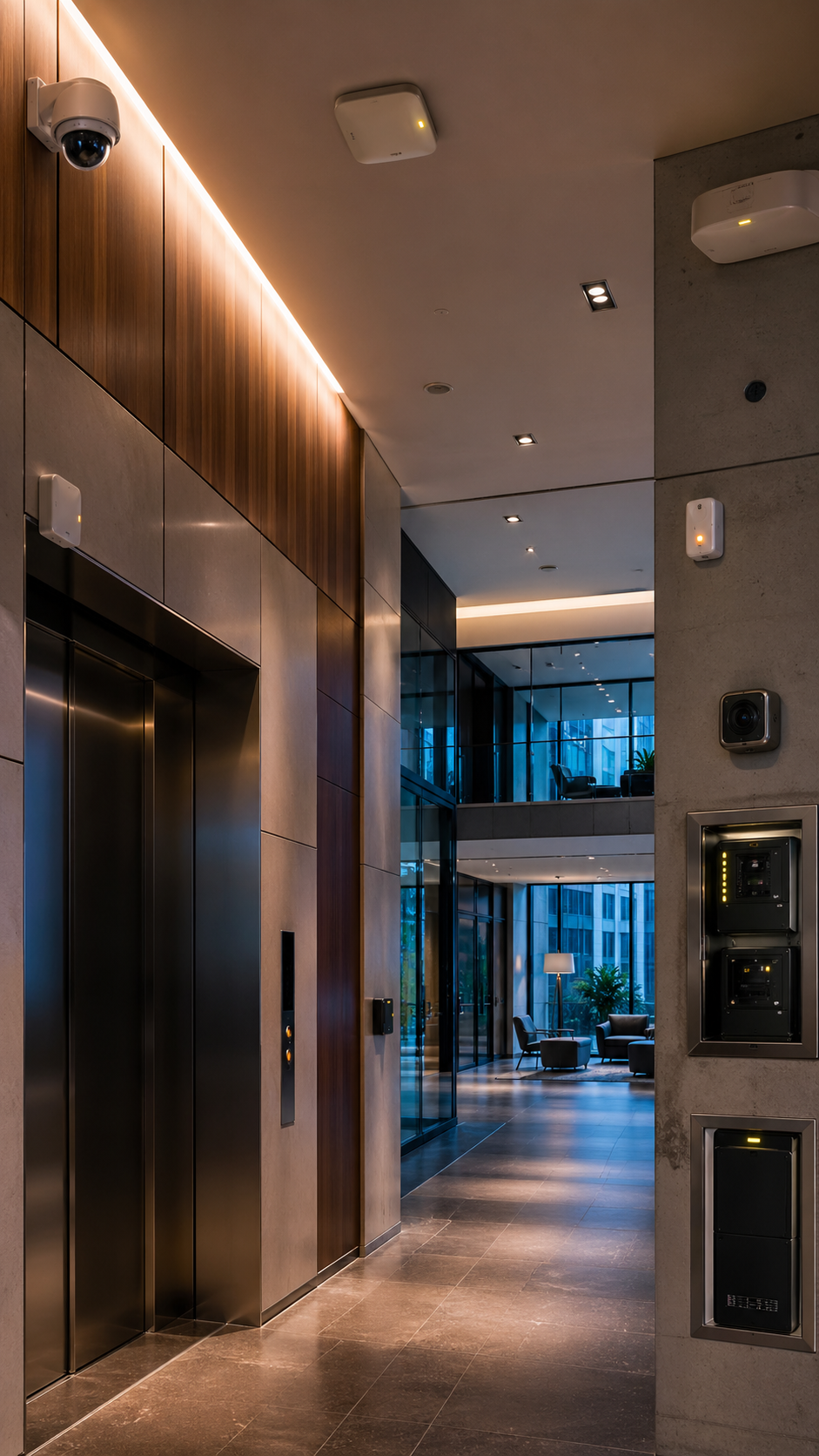
Wi-Fi: Best for Enterprise, Tenant, and Guest Data Access

Wi-Fi remains the default wireless network for most commercial properties. It is widely supported by laptops, phones, tablets, collaboration tools, building systems, and guest devices.
Wi-Fi is best suited for:
Employee connectivity.
Tenant internet access.
Guest networks.
Conference rooms and collaboration spaces.
Retail and hospitality environments.
General enterprise LAN access.
High-capacity local data connectivity.
Devices that already rely on Wi-Fi as the native access method.
Wi-Fi should not be positioned as a replacement for cellular, and cellular should not be positioned as a replacement for Wi-Fi. They solve different problems.
Wi-Fi is typically the best option for general-purpose data access. DAS and small cells are used to bring public mobile network service indoors. Private cellular is used when the enterprise needs more control, mobility, segmentation, or application-specific performance than Wi-Fi alone can provide.
When to consider Wi-Fi:
Choose enterprise Wi-Fi when users need high-speed local network access, guest connectivity, collaboration support, and broad compatibility across common devices.
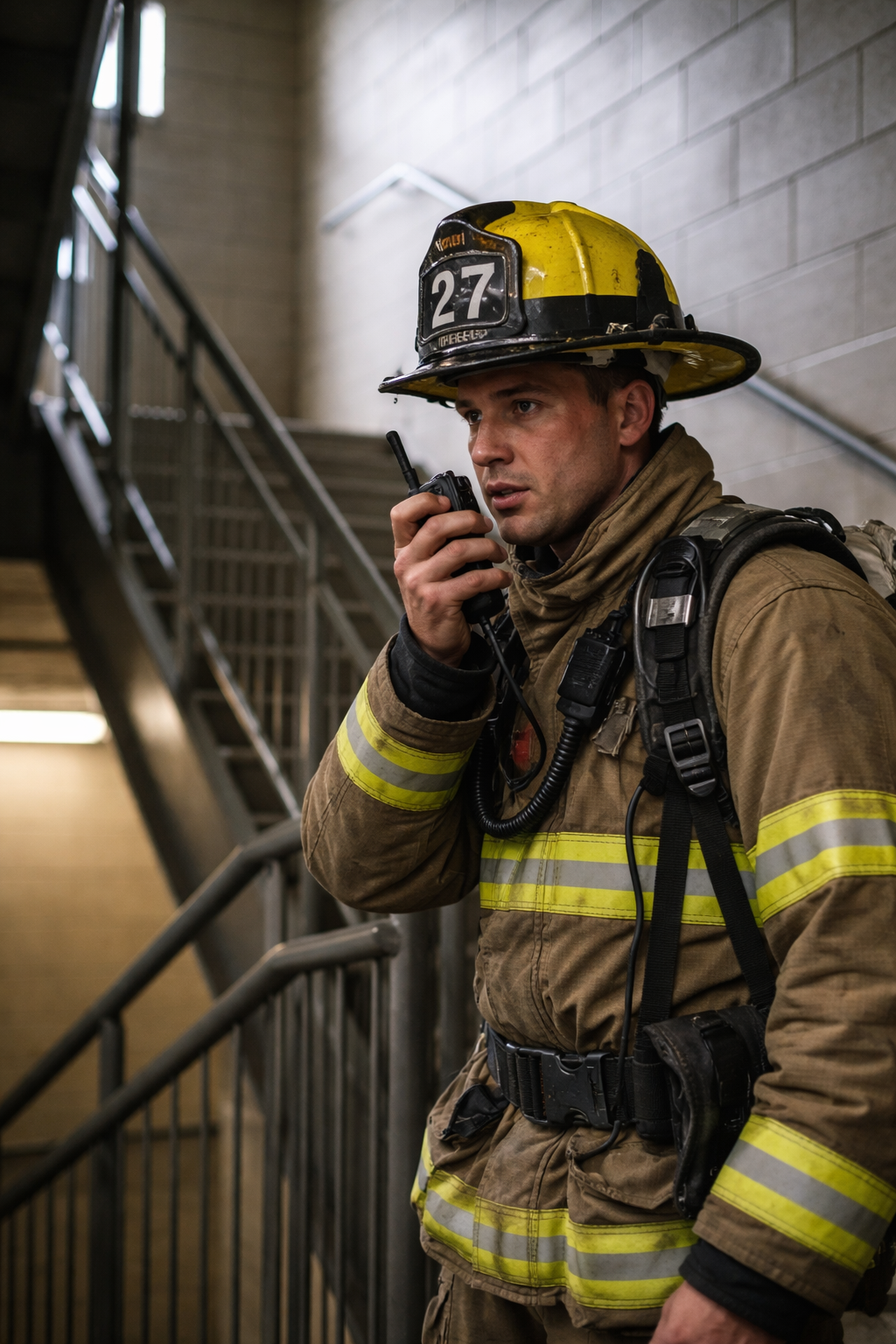
Public Safety DAS / ERRCS: A Separate Compliance Layer
Public Safety DAS, also known as an Emergency Responder Radio Communication System, is different from commercial cellular DAS, private cellular, and Wi-Fi.
Its purpose is to help police, fire, EMS, and other emergency responders maintain radio communication inside the building. Public safety systems are often driven by local code requirements, Authority Having Jurisdiction approval, testing, monitoring, survivability, and ongoing compliance requirements.
Because of those requirements, public safety DAS typically requires separate infrastructure from commercial cellular systems. It should be planned as its own compliance and life-safety layer, not as an add-on to a commercial wireless network.
CTS describes Public Safety DAS / ERRCS as a code-compliant system for first-responder radio communications, including RF testing, design, installation, AHJ coordination, and ongoing compliance testing.
When to consider Public Safety DAS:
Public Safety DAS should be evaluated when a building must meet first-responder radio coverage requirements or when testing shows that emergency radio signals do not meet the required coverage thresholds. Learn how to determine whether your building needs a Public Safety DAS based on code requirements, AHJ enforcement, building conditions, and radio coverage testing.
DAS vs. Small Cells vs. Private Cellular vs. Wi-Fi: Which Does Your Property Need?
The right wireless solution depends on what the property needs to support: public mobile service, enterprise-controlled connectivity, general data access, emergency responder communications, or long-term system operations.
For public cellular coverage, the primary decision is whether the building is better served by DAS or small cells / distributed radio. Both are dedicated in-building cellular solutions. The right choice depends on the size and complexity of the property, the carrier requirements, available infrastructure, performance goals, and long-term business case.
| If your property needs… | Start with… | Why |
|---|---|---|
| Reliable public cellular coverage across a large, complex, or multi-carrier property | DAS | Provides scalable, building-wide cellular coverage and is often the preferred architecture when multiple mobile operators need to be supported. |
| Dedicated indoor LTE or 5G service with a compact, distributed radio architecture | Small cells / distributed radio | Supports indoor cellular service when the building, spectrum strategy, carrier model, available space, or business case favors a compact radio-based deployment. |
| Secure wireless for enterprise operations, IoT, automation, or mobility | Private LTE / Private 5G | Gives the enterprise more control over users, devices, traffic, security, and operational performance. |
| Employee, tenant, and guest internet access | Enterprise Wi-Fi | Provides general-purpose LAN access for common devices, applications, and guest connectivity. |
| First-responder radio coverage | Public Safety DAS / ERRCS | Supports code-driven emergency responder communications and AHJ compliance. |
| Long-term network reliability | Managed wireless services | Provides monitoring, maintenance, repair, dispatch, and lifecycle support after deployment. |
The right solution depends on the building’s users, carrier requirements, spectrum strategy, operating model, compliance obligations, and long-term business case.
A commercial office building may need Wi-Fi plus DAS or small cells for public cellular coverage. A logistics facility may need Wi-Fi plus private cellular for operational devices. A high-rise may need commercial DAS and a separate Public Safety DAS / ERRCS system. A mid-size property may be better served by small cells or distributed radio. A large campus may need a coordinated plan across public cellular, private cellular, Wi-Fi, and public safety communications.
The important decision is not which technology sounds best in isolation. It is which architecture fits the building’s users, carrier requirements, operating model, compliance obligations, and long-term connectivity strategy. The right design also depends on who will own, fund, operate, and maintain the system: the building owner, a tenant, a carrier, a neutral-host provider, or an enterprise IT/OT team.
How CTS Builds Commercial Property Wireless Strategies
CTS helps commercial property owners and enterprise tenants move from disconnected wireless decisions to a coordinated infrastructure plan.
A CTS wireless strategy may include:
Assessment
CTS evaluates the property’s coverage, capacity, compliance, tenant, and operational requirements. This may include RF surveys, carrier requirements, Wi-Fi performance analysis, public safety testing, and review of building infrastructure.Architecture Selection
CTS helps determine whether the property is best served by DAS, small cells, private cellular, Wi-Fi, Public Safety DAS, or a combination of technologies.
Design and Deployment
CTS designs and deploys wireless infrastructure around the property’s physical environment, user needs, carrier requirements, and long-term support model.Carrier and AHJ Coordination
For cellular and public safety systems, CTS can help coordinate with mobile network operators, authorities having jurisdiction, and other stakeholders involved in approval and operation.Managed Operations
Wireless infrastructure requires ongoing monitoring, maintenance, and support. CTS provides lifecycle services for DAS, private wireless, Wi-Fi, public safety systems, and other in-building wireless infrastructure.
Wireless Strategy by Property Type
Different commercial properties require different wireless designs.
| Property Type | Common Wireless Priorities |
|---|---|
| Office towers | Public cellular coverage, enterprise Wi-Fi, tenant experience, public safety compliance |
| Mixed-use developments | Multi-carrier cellular, guest Wi-Fi, resident and retail connectivity, public safety coverage |
| Healthcare facilities | Public cellular, private wireless use cases, Wi-Fi, mission-critical communications, ERRCS |
| Warehouses and logistics facilities | Wi-Fi, private LTE/5G, IoT, mobility, automation, operational reliability |
| Hospitality properties | Guest Wi-Fi, indoor cellular coverage, staff communications, public safety compliance |
| Campuses | Coordinated public cellular, private cellular, Wi-Fi, public safety, and managed operations |
Wireless requirements vary by property type, tenant mix, building design, compliance obligations, and long-term operating model.
Why Commercial Properties Need a Modern Wireless Strategy
A strong wireless strategy can help commercial properties:
Improve tenant experience.
Support leasing and retention.
Reduce complaints about poor indoor cellular coverage.
Enable new smart building and operational use cases.
Support mission-critical communications.
Meet public safety communication requirements.
Prepare for private 5G, IoT, and future wireless applications.
Reduce complexity by aligning each technology to the right role.
Create a long-term lifecycle plan for monitoring and support.
Wireless infrastructure is no longer just an amenity. For many commercial properties, it is part of the building’s core operating platform.
Commercial Real Estate Wireless Strategy Frequently Asked Questions
-
The best wireless solution depends on the property’s requirements. DAS or small cells are used for public cellular coverage. Private LTE or private 5G is used for enterprise-controlled wireless operations. Wi-Fi is used for general tenant, employee, and guest data access. Public Safety DAS or ERRCS is used for first-responder radio coverage and code compliance.
-
DAS and small cells are alternative architectures for improving indoor public cellular coverage, and most buildings do not need both in the same coverage area. DAS is often better suited to large, complex, or multi-carrier properties, while small cells may fit more contained environments or buildings where an IP-based cellular architecture aligns with carrier requirements. The decision should consider building size and layout, user density, coverage and capacity requirements, carrier participation, available infrastructure, budget, and the long-term operating model.
-
Yes. Private cellular can be integrated with DAS infrastructure when the DAS, spectrum plan, signal source, and system design support it. Private LTE and private 5G can also be deployed using dedicated radios or small-cell infrastructure. The right architecture depends on the building, use case, spectrum, and operational requirements.
-
Private 5G does not usually replace Wi-Fi. Wi-Fi remains the best fit for general-purpose enterprise and guest connectivity. Private 5G is better suited for enterprise-controlled use cases that require mobility, security, segmentation, reliability, or support for operational technology, IoT, automation, and mission-critical applications.
-
Commercial DAS supports public cellular coverage for mobile phone users. Public Safety DAS, also known as ERRCS, supports first-responder radio communications for police, fire, EMS, and emergency personnel. Public Safety DAS is typically governed by building codes, local fire requirements, AHJ approval, testing, monitoring, and ongoing compliance obligations.
-
Wi-Fi is still important because it supports general local network access for laptops, phones, tablets, guests, collaboration tools, and enterprise applications. Cellular coverage helps users connect to mobile networks indoors. Wi-Fi supports the property’s enterprise LAN and guest connectivity needs.
-
A property owner should start with the use case. If the goal is public mobile coverage, evaluate DAS or small cells. If the goal is enterprise-controlled operations, evaluate private LTE or private 5G. If the goal is general data access, use Wi-Fi. If the goal is first-responder communication compliance, evaluate Public Safety DAS or ERRCS.
Build the Right Wireless Strategy with CTS
Every commercial property has different wireless requirements. Some buildings need multi-carrier DAS. Others may be better served by small cells or distributed radio. Some enterprises need private LTE or private 5G for operations. Nearly every property needs Wi-Fi. Many buildings also require Public Safety DAS or ERRCS for first-responder communications.
CTS helps organizations evaluate the full wireless ecosystem and build the right strategy for the property, the tenants, the users, and the long-term business case.
From design and deployment to monitoring, maintenance, and lifecycle support, CTS delivers enterprise-grade wireless infrastructure for commercial real estate and mission-critical environments nationwide.
Related Resources
Commercial Real Estate Connectivity Solutions
Explore wireless infrastructure solutions designed to support cellular coverage, private wireless, public safety communications, and managed connectivity across CRE environments.
Why Commercial Real Estate Buildings Struggle with Wireless Connectivity
Learn why modern CRE buildings often experience poor indoor cellular coverage, from signal-blocking building materials and higher tenant expectations to the growing need for DAS, private cellular, and smart building connectivity.
Making the Business Case for In-Building Wireless in CRE
Explore how in-building wireless can help property owners improve tenant experience, support retention, create more predictable operating models, and strengthen long-term property value.
Planning a Commercial Real Estate Wireless Strategy?
CTS works with commercial real estate organizations to assess connectivity environments, identify performance gaps, and design infrastructure aligned with tenant experience, building operations, public safety requirements, and long-term property value.Connect with our team to evaluate your current network and plan your next phase of wireless connectivity.
CTS designs and deploys wireless systems for commercial real estate buildings and campuses across the United States.