
Cellular Coverage Gaps Are Creating Hidden Risk in Commercial Real Estate
Commercial properties depend on reliable wireless connectivity more than ever. Tenants expect mobile service to work throughout the building. Visitors expect to stay connected. Property teams rely on mobile communication, cloud-based tools, and connected systems to support daily operations.
When indoor cellular coverage is inconsistent, the problem is no longer just a minor inconvenience. Coverage gaps can create operational disruptions, tenant complaints, leasing challenges, and long-term risk to asset value.
For many commercial properties, addressing these gaps requires a dedicated in-building wireless strategy. Distributed Antenna Systems, or DAS, are often one of the most effective ways to deliver reliable, building-wide cellular coverage, especially in large, complex, or multi-carrier environments.
Cellular coverage gaps are no longer just a tenant inconvenience. In commercial real estate, poor indoor mobile service can affect operations, tenant satisfaction, leasing performance, and long-term asset value. DAS is a proven in-building wireless solution for closing coverage gaps in large, complex, and multi-carrier properties, while other approaches such as small cells, neutral host models, and Wi-Fi calling may also play a role depending on the building and business case.
In This Guide
Why Cellular Coverage Gaps Matter in Commercial Real Estate
Why Commercial Buildings Have Poor Indoor Cellular Coverage
How Coverage Gaps Disrupt Operations
Why Poor Cellular Coverage Hurts Tenant Experience
How Coverage Gaps Affect Leasing and Asset Value
How DAS Helps Close Cellular Coverage Gaps
Is DAS the Only Solution for Indoor Cellular Coverage?
Why Cellular Coverage Gaps Matter in Commercial Real Estate
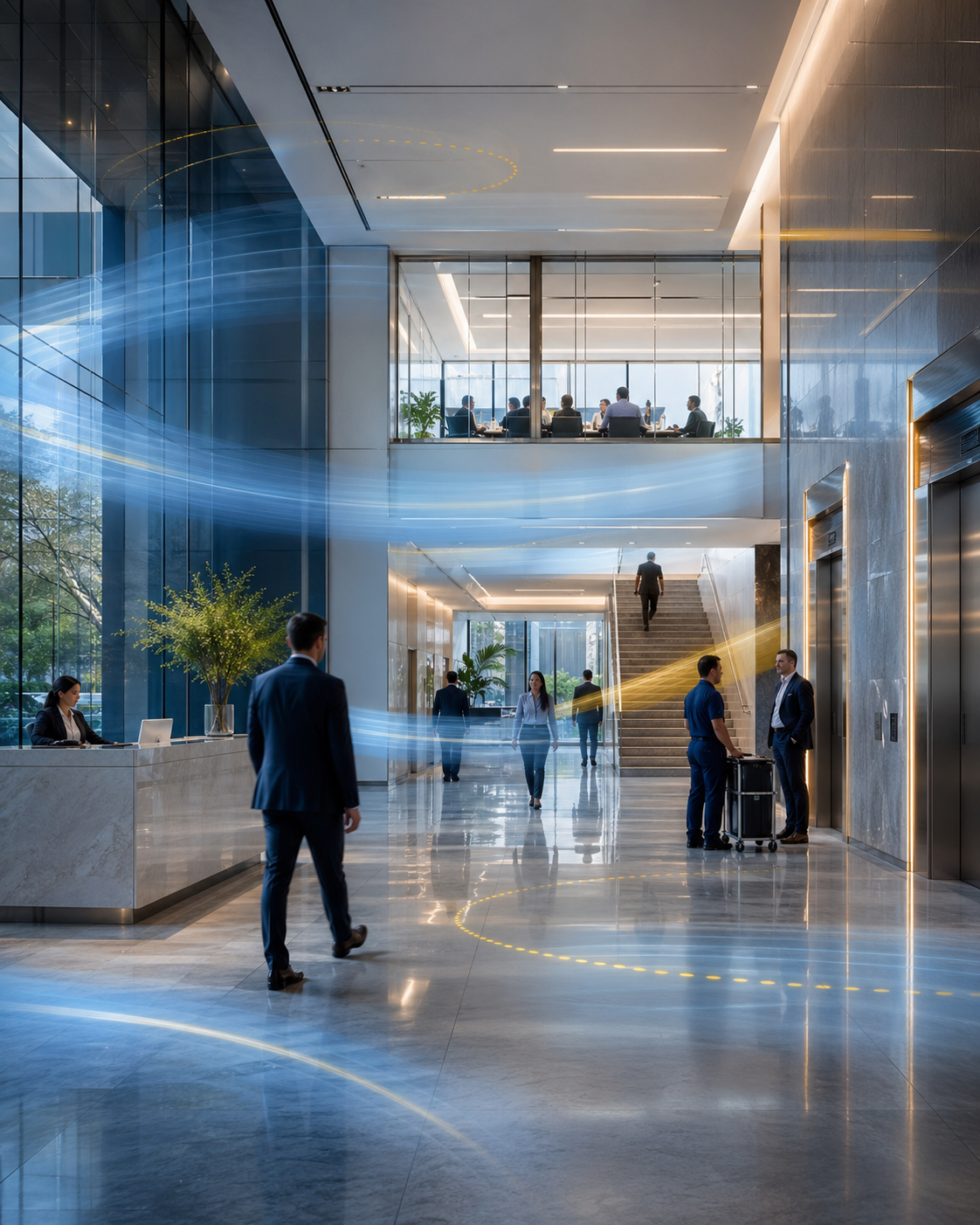
Indoor cellular coverage has become part of the baseline experience for modern commercial properties. Employees, tenants, visitors, vendors, and property teams all expect mobile devices to work reliably inside the building.
When cellular service fails in lobbies, elevators, parking areas, stairwells, amenity spaces, conference areas, or tenant suites, the impact can extend beyond inconvenience. Poor coverage can create communication delays, reduce tenant satisfaction, and make the property feel outdated compared with competing buildings.
For owners, developers, and asset managers, reliable indoor cellular coverage is increasingly tied to operational performance, tenant retention, and long-term property value.
Why Commercial Buildings Have Poor Indoor Cellular Coverage
Many commercial buildings were not designed for today’s wireless demands. In the past, outdoor cellular networks operating on lower-frequency bands often provided enough signal penetration for users inside many properties.
That model is less reliable today.
Modern LTE and 5G networks often use higher-frequency spectrum to deliver greater capacity and performance. At the same time, commercial buildings increasingly use materials and design standards that can weaken or block outdoor cellular signal, including low-emissivity glass, concrete, steel, dense insulation, below-grade construction, and energy-efficient building envelopes.
Coverage gaps are especially common in:
Elevators and stairwells.
Parking garages and below-grade spaces.
Interior corridors.
Amenity areas.
Conference centers.
Mechanical and service areas.
Large floor plates.
High-rise buildings.
Dense urban properties.
Buildings with energy-efficient glass or modern exterior materials.
When outdoor signal cannot reliably reach users inside, the property may need dedicated in-building wireless infrastructure.

How Coverage Gaps Disrupt Operations
Commercial property operations depend on communication. Property managers, security teams, maintenance teams, vendors, and tenants rely on mobile devices to coordinate work, respond to issues, and access cloud-based systems.
Cellular coverage gaps can contribute to:
Missed calls and delayed messages.
Slower response to tenant requests.
Disruptions for mobile workforces.
Inefficient coordination between property teams and vendors.
Reduced productivity for tenant organizations.
Friction when users cannot access cloud applications or mobile tools.
As businesses rely more heavily on mobile communication and cloud-based workflows, even small coverage gaps can create visible operational problems. As businesses rely more heavily on mobile communication and cloud-based workflows, even small coverage gaps can create visible operational problems.
Why Poor Cellular Coverage Hurts Tenant Experience
Tenants increasingly view connectivity as a baseline expectation. Employees expect mobile service to work throughout the building, not only near windows or in common areas. Visitors expect to stay connected. Tenants expect their customers, employees, and vendors to have a reliable experience when they are on-site.
Poor indoor cellular coverage can lead to:
Tenant complaints.
Frustration among employees and visitors.
Lower satisfaction with the property.
Perception that the building is outdated.
Reduced confidence in the building’s infrastructure.
Increased pressure during lease renewals.
Connectivity is no longer a premium amenity. For many tenants, it is part of how they evaluate whether a building can support their business.
Explore Commercial Real Estate Connectivity Solutions
See how CTS supports commercial real estate with purpose-built connectivity solutions, including in-building DAS, private wireless networks, public safety DAS, and managed wireless infrastructure.
How Coverage Gaps Affect Leasing and Asset Value
Cellular coverage issues can affect more than daily user experience. Over time, poor connectivity can influence how a property competes in the market.
In competitive leasing environments, tenants may compare buildings not only on location, amenities, and cost, but also on whether the property can support modern digital operations. Buildings with persistent wireless issues may face a disadvantage against properties with stronger in-building connectivity.
Coverage gaps can affect:
Leasing performance.
Speed to occupancy.
Tenant retention.
Renewal conversations.
Market positioning.
Perceived quality of building infrastructure.
Long-term valuation and investor confidence.
For owners and asset managers, these risks make cellular coverage part of the property’s broader infrastructure, leasing, and valuation strategy.
How DAS Helps Close Cellular Coverage Gaps
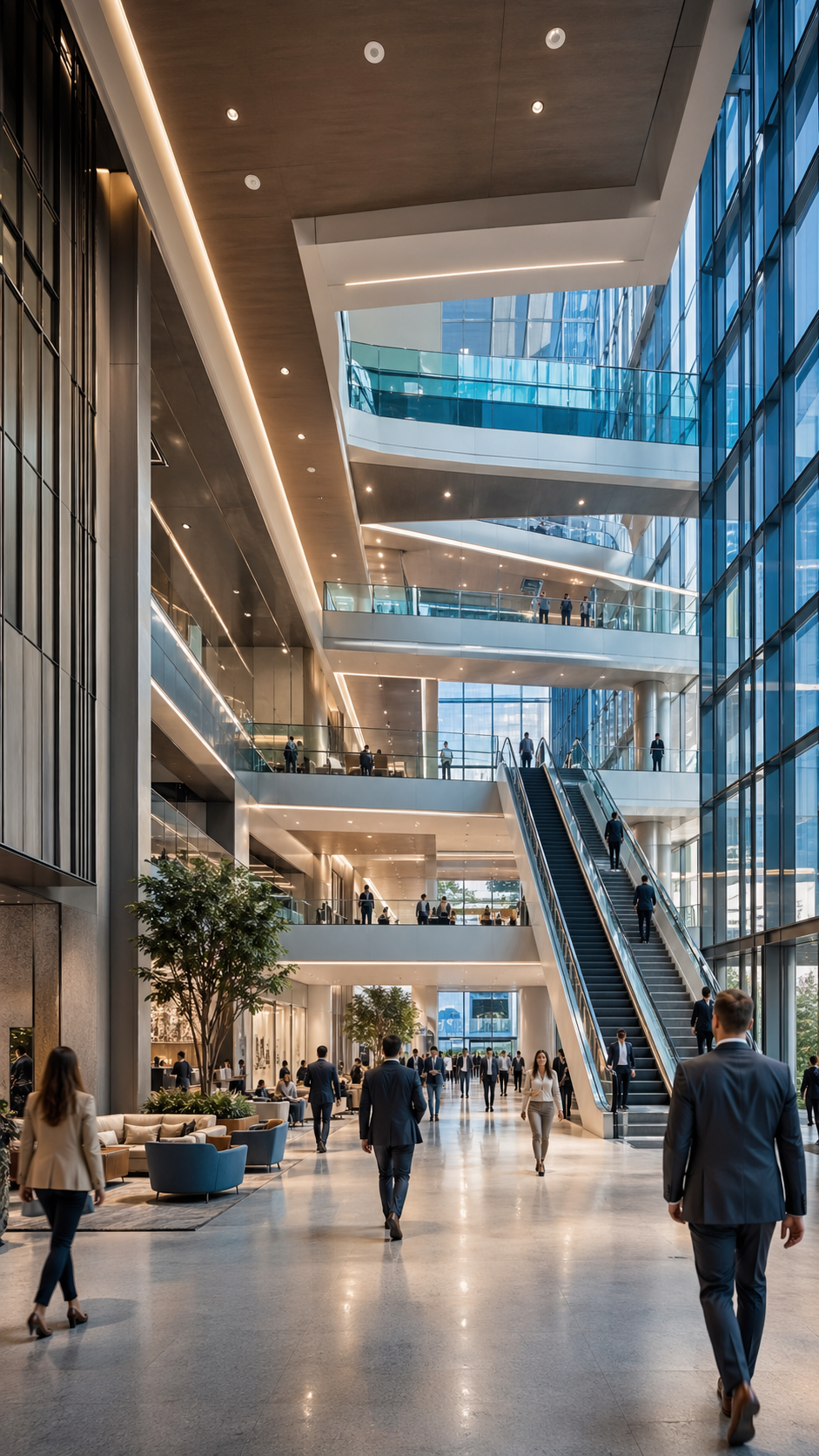
Distributed Antenna Systems, or DAS, are designed to distribute cellular signal throughout a building using a network of antennas, cabling, headend equipment, and signal sources.
For commercial real estate, DAS is often a strong fit when the property needs reliable indoor cellular coverage across a large, dense, complex, or multi-carrier environment.
DAS can be designed to support coverage across:
Office towers.
Mixed-use developments.
Multi-tenant buildings.
Campuses.
Hospitality properties.
Healthcare facilities.
Transportation facilities.
High-density venues.
Parking areas and below-grade spaces.
Elevators, stairwells, and other difficult coverage areas.
DAS is especially valuable when the requirement is consistent mobile network service across the property for users on multiple major wireless carriers.
A well-designed DAS can help commercial properties:
Improve indoor cellular coverage.
Reduce tenant complaints related to poor mobile service.
Support multiple carriers and diverse tenant needs.
Improve the mobile experience across common and tenant spaces.
Strengthen the building’s connectivity infrastructure.
Reduce operational and tenant-experience risk.
The key is that DAS addresses cellular coverage at the infrastructure level. Rather than relying on outdoor signal to penetrate the building, DAS creates an intentional in-building coverage layer designed around the property’s layout, materials, user needs, and carrier requirements.
Is DAS the Only Solution for Indoor Cellular Coverage?
DAS is one of the most established solutions for improving indoor cellular coverage in large, complex, or multi-carrier commercial properties. But it is not the only possible approach.
The right solution depends on the building, the coverage problem, the number of carriers, available space, spectrum requirements, ownership model, budget, and long-term operating plan.
| Solution | When It May Fit |
|---|---|
| DAS | Best suited for large, complex, or multi-carrier properties that need scalable, building-wide public cellular coverage. |
| Small cells / distributed radio | May fit buildings that need a compact LTE or 5G architecture, specific carrier support, private cellular, or a deployment model aligned with available space and business requirements. |
| Neutral host / MORAN-style models | May be relevant where shared infrastructure or shared radio access approaches can support multiple operators more efficiently than separate carrier-specific deployments. |
| Wi-Fi calling | Can help individual users make calls where Wi-Fi is strong, but it is not a complete substitute for dedicated in-building cellular infrastructure across common areas, tenant spaces, elevators, parking levels, and multi-carrier environments. |
| Private LTE / Private 5G | May be appropriate when the goal is enterprise-controlled connectivity for operations, IoT, automation, mobility, or mission-critical applications rather than general public cellular coverage. |
The right approach depends on the building size, coverage gaps, carrier requirements, spectrum strategy, ownership model, budget, and long-term operating plan.
For many commercial properties, DAS remains the leading option when the goal is broad, multi-carrier public cellular coverage. However, small cells, distributed radio, neutral host models, and private cellular may also be part of the evaluation depending on the use case.
A wireless assessment can help determine whether DAS is the right architecture or whether another in-building wireless solution is better aligned with the property’s needs.
How CTS Helps Commercial Properties Assess Coverage Gaps
CTS helps commercial property owners, developers, asset managers, and enterprise tenants evaluate indoor cellular performance and identify the right path to reliable in-building connectivity.
A CTS assessment may include:
1. Coverage and Performance Review
CTS evaluates where mobile service is weak, inconsistent, or unavailable across the property. This may include common areas, tenant spaces, garages, stairwells, elevators, below-grade areas, and high-traffic zones.
2. Building and Infrastructure Evaluation
CTS reviews building materials, layout, telecom spaces, cabling pathways, equipment locations, power, cooling, and other infrastructure factors that may affect the wireless design.
3. Carrier and User Requirements
CTS helps identify carrier needs, tenant expectations, user density, device requirements, and areas where cellular service is most critical to property operations and tenant experience.
4. Solution Design
CTS determines whether DAS, small cells, distributed radio, neutral host models, private cellular, or another in-building wireless approach is the best fit for the property.
5. Deployment and Lifecycle Support
CTS supports design, deployment, coordination, monitoring, maintenance, and long-term support so the system continues to meet property and tenant needs after installation.
Why Property Owners Should Address Coverage Gaps Proactively
A strong wireless strategy can help commercial properties:
Improve tenant experience.
Support leasing and retention.
Reduce complaints about poor indoor cellular coverage.
Enable new smart building and operational use cases.
Support mission-critical communications.
Meet public safety communication requirements.
Prepare for private 5G, IoT, and future wireless applications.
Reduce complexity by aligning each technology to the right role.
Create a long-term lifecycle plan for monitoring and support.
Wireless infrastructure is no longer just an amenity. For many commercial properties, it is part of the building’s core operating platform.
Commercial Real Estate Cellular Coverage Frequently Asked Questions
-
Commercial buildings often have poor cellular coverage because outdoor cellular signals are weakened by distance, building materials, low-emissivity glass, concrete, steel, below-grade spaces, and dense interior layouts. Modern LTE and 5G networks may also use higher-frequency spectrum that is more easily blocked by building materials.
-
Cellular coverage gaps can affect commercial real estate by creating tenant complaints, operational delays, poor visitor experience, leasing challenges, and weaker market perception. In competitive properties, reliable indoor cellular coverage is increasingly part of the expected building experience.
-
Yes. DAS can be designed to distribute cellular signal throughout a commercial building, helping improve mobile service across common areas, tenant spaces, parking levels, elevators, stairwells, and other difficult coverage areas. DAS is often a strong fit for large, complex, or multi-carrier properties.
-
DAS is often the best fit for large, complex, or multi-carrier commercial properties that need scalable indoor cellular coverage. However, the right solution depends on the building, carrier requirements, available infrastructure, budget, and operating model. Some properties may also evaluate small cells, distributed radio, neutral host models, or private cellular.
-
DAS distributes cellular signal through a network of antennas and infrastructure across the building. Small cells use compact cellular radio infrastructure inside the property. DAS is often used for large or multi-carrier environments, while small cells or distributed radio may be a better fit when the building requires a compact LTE or 5G architecture, specific carrier support, or a different deployment model.
-
Wi-Fi calling can help users place calls when Wi-Fi is strong, but it does not replace dedicated in-building cellular infrastructure for many commercial properties. Wi-Fi calling depends on Wi-Fi quality, device settings, and user behavior. It may not provide consistent multi-carrier mobile coverage across common areas, elevators, parking levels, tenant spaces, and high-traffic environments.
-
A property owner should evaluate in-building wireless when tenants report poor mobile service, coverage is inconsistent in key areas, the building is preparing for leasing or renovation, the property has dense occupancy, or mobile connectivity is important to tenant experience and building operations.
-
No. Public Safety DAS / ERRCS is designed for first-responder radio communications and code compliance. Commercial cellular DAS is designed to improve public mobile network service for tenants, visitors, employees, and building users. These systems usually serve different requirements and are often designed separately.
-
Yes. CTS can assess indoor cellular performance, identify coverage gaps, review building and carrier requirements, and recommend whether DAS, small cells, distributed radio, neutral host infrastructure, or another wireless approach is the right fit for the property.
Build the Right Wireless Strategy with CTS
Closing cellular coverage gaps starts with understanding where service is weak, why the gaps exist, and which in-building wireless architecture fits the property.
CTS helps commercial real estate owners, developers, asset managers, and enterprise tenants evaluate indoor cellular performance across common areas, tenant spaces, parking levels, elevators, stairwells, and other difficult coverage environments.
From there, CTS can help determine whether DAS, small cells, distributed radio, neutral host infrastructure, private cellular, or another in-building wireless approach is the right fit based on the building layout, carrier requirements, spectrum strategy, ownership model, budget, and long-term operating plan.
Related Resources
Commercial Real Estate Connectivity Solutions
Explore wireless infrastructure solutions designed to support cellular coverage, private wireless, public safety communications, and managed connectivity across CRE environments.
Commercial Real Estate Wireless Strategy
Learn how DAS, small cells, private cellular, Wi-Fi, and Public Safety DAS fit into a modern commercial property wireless strategy.
Why Commercial Real Estate Buildings Struggle with Wireless Connectivity
Learn why modern CRE buildings often experience poor indoor cellular coverage, from signal-blocking building materials and higher tenant expectations to the growing need for DAS, private cellular, and smart building connectivity.
Making the Business Case for In-Building Wireless in CRE
Explore how in-building wireless can help property owners improve tenant experience, support retention, create more predictable operating models, and strengthen long-term property value.
Planning a Commercial Real Estate Wireless Strategy?
Cellular coverage gaps are no longer just a building inconvenience. They can create operational disruption, tenant dissatisfaction, leasing risk, and long-term exposure for commercial properties.

Connect with our team to evaluate your current coverage environment, identify DAS or in-building wireless requirements, and plan a solution aligned with tenant experience, building operations, carrier requirements, and long-term property value.CTS designs and deploys wireless systems for commercial real estate buildings and campuses across the United States.